

Elgin Pocket Watch Restoration: Dents & Polish Guide
Elgin Pocket Watch Case Restoration: How to Remove Dents & Polish Like a Pro
My grandfather’s 1908 Elgin sat in a coffee tin for forty years. When I finally opened it, the hunter case had a dent the size of a thumbnail on the back cover and a ring of scratches around the bezel that looked like someone had used it as a key fob. A local watchmaker quoted me $350 to “clean it up.” I handed over $220 in tools instead, spent a Saturday afternoon in my garage, and walked away with a case that looked — genuinely looked — like it had been sitting in a display cabinet since 1908.
Elgin pocket watch restoration isn’t magic. It’s controlled metalwork, patience, and knowing exactly which mistakes will ruin your case before you make them. This guide covers everything: how to identify your case material before you touch it with a polishing wheel, the planishing technique that removes dents without grinding away the gold, and the #1 mistake that permanently destroys more gold-filled cases than anything else.
If you’re just getting started with vintage watch repair, this post will show you that the case work — the outer shell — is often more forgiving than the movement inside. Often. With the right approach.
Step One: Know What You’re Holding
Before you pick up a single tool, you need to identify your case material. This is not optional. Gold-filled cases and solid gold cases look nearly identical, but they behave completely differently under a polishing wheel. Getting this wrong is how you expose a brassy base-metal core that no amount of polishing will ever fix.
Hunter, Open Face, or Swing-Out?
Roughly 60% of Elgin cases are hunter-style — that hinged front cover that snaps shut over the dial. The other 35% are open face, with the dial exposed. A small percentage are swing-out cases where the movement pivots out of the case body on a hinge.
Why does this matter? Because dents follow the damage pattern. On a hunter case, the back cover takes the most punishment (it’s the side people set face-down). On an open-face Elgin, it’s the bezel and crystal edge. Know your case type before you plan your work.
The Three-Test Material Check
Weight test: Pick up the case without the movement. A gold-filled case (base metal core with a bonded gold layer) feels noticeably lighter than a solid gold case of similar size. Not dramatically lighter — but if you’ve handled a few, you’ll feel it.
Magnet test: Hold a strong magnet near the case. Gold-filled cases often have a brass or steel core. Brass won’t react, but steel will give a faint pull. Solid gold is non-magnetic. If it sticks even slightly, you’re looking at a steel-core gold-filled case — treat it gently.
Hallmark inspection: Pop open the case back (use a case knife or a proper case-back tool — never a screwdriver edge). Look inside. You’ll find stamps: “14K GF” means 14-karat gold-filled. “14K” or “18K” alone means solid gold. “Sterling” or “925” means silver. “Nickel Silver” or no precious metal stamp at all is cupronickel — durable but brittle.
Elgin Case Makers and Why They Matter
Elgin didn’t make their own cases. The movement was manufactured in Elgin, Illinois, and then sold to customers who paired it with a case from one of several manufacturers. The most common:
- Keystone Case Company — stamped “K” or “Keystone” on the interior. Premium construction, common on Grade 291 and Grade 274 movements from 1899 onward.
- Wadsworth Case Co. — “Wadsworth” or “W” mark. High-quality gold-filled, used on Lord Elgin and other upper-tier grades.
- Illinois Watch Case Co. — “IWC” or “Illinois.” More widely used, solid construction, common on mid-range grades.
- Star Case Company — “Star” or a star symbol. Mid-range, frequently found on open-face models.
This matters practically because Keystone cases tended to use thicker gold fill layers than budget-tier makers. A Keystone 14K GF case gives you a little more margin for error during polishing. A thin Star case? You’re working with less gold and need to be more conservative.
The Tools You Actually Need (And What They Cost)
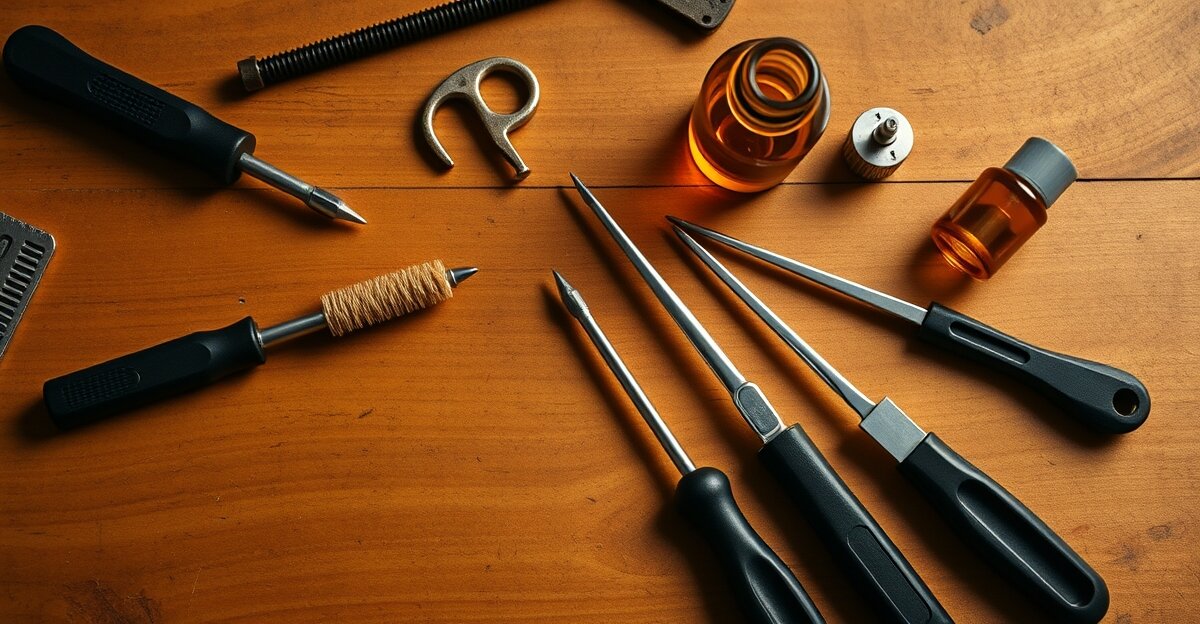
You don’t need a professional jeweler’s bench. Here’s the honest list for a competent beginner setup:
For dent removal:
- Jeweler’s vise with soft-jaw protection — $30–60. The jaw protectors are not optional. Hard metal jaws will leave marks in gold-filled cases that you can’t polish out without hitting base metal.
- Planishing hammer set — $40–120. [AFFILIATE: planishing hammer set 2-3 oz] The quality differential here is real. Cheap hammers have uneven faces that leave dimples in the case. Spend the extra $30.
- Planishing stakes (set of 4–6) — $30–80. These are the shaped anvils the case rests against. You need one that matches your case curvature — typically a half-round stake for pocket watch cases.
- Leather or rawhide jaw inserts — $5–10. Or cut your own from scrap leather and glue them on.
- Adjustable backlighting lamp — $15–30. You’ll use this to inspect for remaining dents by holding the case up to the light. A desk lamp works; a flexible gooseneck lamp is better.
For polishing:
- Buffing wheel assortment (10 pieces, various hardness) — $15–30. Cotton wheels, sizes 2–3 inches.
- Tripoli compound (coarse) — $10–15 per stick
- Medium polishing compound — $8–12 per stick
- Fine polishing compound — $10–18 per stick
- Jeweler’s rouge (ultra-fine, final stage) — $6–12 per stick
- Corded drill press or bench grinder — $80–200. [AFFILIATE: bench grinder or drill press] Yes, you can use a Dremel. No, I don’t recommend it for gold-filled cases. The Dremel runs hot and the RPM control on cheaper models is inconsistent. A drill press gives you steadier, cooler operation.
- [AFFILIATE: jeweler’s loupe 10x] — $8–20. Essential for inspecting your work between stages.
- 0000 steel wool — $3–5. For hand polishing engraved sections where you can’t use a wheel.
Total beginner investment: $275–640, depending on what you already own. Compare that to a professional restoration quote of $200–500, and you come out ahead on the second or third watch you restore.
Removing Dents: The Planishing Technique
Planishing is controlled metal spreading. You’re not grinding the dent away — you’re persuading the metal back to where it was, using a hammer and a shaped stake to move the dented material outward and sideways until it fills the depression.
Done right, planishing leaves zero metal removal. The case weighs exactly what it did before. The gold fill layer stays intact. Done wrong — heavy blows, wrong stake shape, skipping the assessment — you can crack the case wall or create a warped surface that’s worse than the original dent.
Before You Start: Photograph Everything
Take macro photos of the case from every angle. Use your phone’s camera in portrait mode, or use [AFFILIATE: jeweler’s loupe 10x] against the lens for a macro effect. Document every dent, every engraving, every hallmark. If something goes wrong during restoration, you want a record of what you started with.
If the case has personalized engravings — initials, a date, a dedication — photograph them and then think carefully before polishing. Engravings are irreplaceable. They’re also part of the case’s story. A satin finish around engraved text is perfectly acceptable. Aggressively polishing over it to achieve mirror shine is how you destroy someone’s name forever.
Step-by-Step Planishing
- Mount the case in your jeweler’s vise with leather jaw protectors on both sides. The case should be held firmly without any deformation. If the vise pressure alone is denting the case, you’re clamping too hard.
- Select your planishing stake. Match the stake’s curve to the case surface. A half-round stake works for most convex back covers. Too flat a stake and you’ll create a faceted surface; too curved and you’ll over-correct.
- Choose your planishing hammer. For pocket watch cases, use the lightest head available — 2 to 3 oz. You’re not blacksmithing. You’re coaxing.
- Work from the perimeter of the dent inward. Start your hammer strikes at the outer edge of the dented area, not the center. Work in a circular pattern, overlapping each strike by about 50%. Rotate the case periodically to approach the dent from different directions.
- Use light, consistent taps. Each strike should feel like tapping a hard-boiled egg — firm but not forceful. The goal is gradual metal movement, not a single correction. Patience here will save the case.
- Check your progress with backlighting. Every 10–15 minutes, hold the case up to your lamp and look at the surface at a low angle. Remaining dents will cast shadows you can’t see in normal lighting. This step is how you know when to stop.
- Stop when the dent is 90% gone. The last 10% of a dent is usually better left to polishing than to continued planishing. Over-working the metal creates a different kind of surface distortion — a stretched, slightly raised area that looks worse than a faint depression.
When Planishing Won’t Work
Sharp creases where the metal has folded — not dented — can’t be planished. The metal fibers have been sheared. Any attempt to hammer a sharp crease will crack the case wall, especially on thin gold-filled cases. If you’re looking at a crease rather than a round dent, stop and consult a professional metalsmith.
Deep dents greater than 2mm are also beyond beginner territory. The metal displacement is too significant for hand planishing alone without risking warping the entire case shape.
The case knife method — inserting a specialized blade tool through the case opening and pressing outward from inside — is an option for accessible interior dents on hunter cases where you can reach the back of the damage. But this requires knowing your way around case opening and closing, and there’s genuine risk of damaging the movement if you slip. I wouldn’t recommend it for a first restoration.
Polishing the Case: The Sequence That Matters
Polishing is where most beginners damage their cases. Not because the technique is hard — it’s actually straightforward — but because the temptation is to skip stages and because the consequence of over-polishing gold-filled cases is permanent and immediate.
Here’s the correct progression:
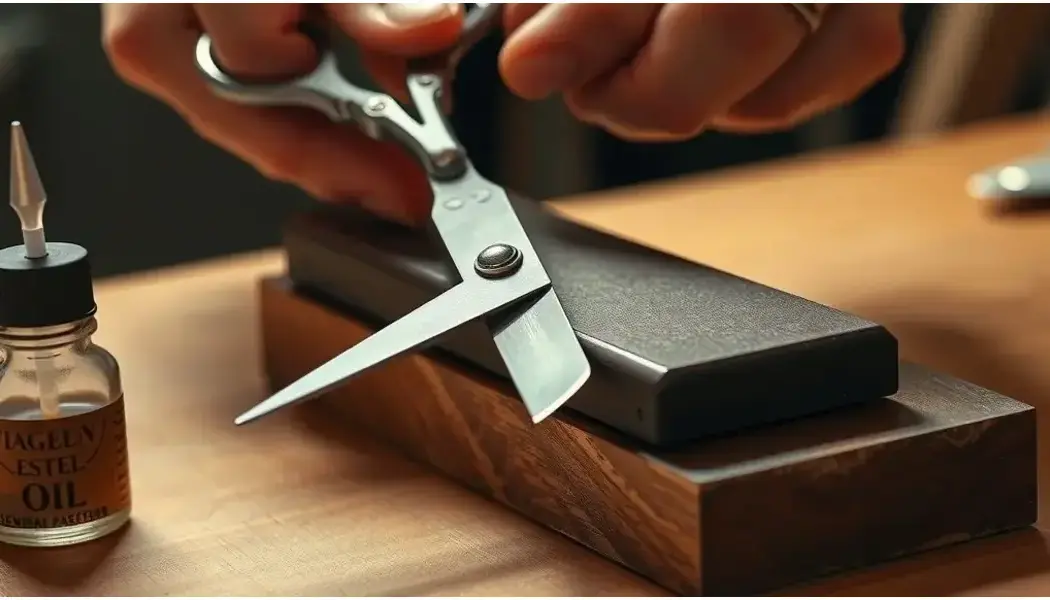
Stage 1 — Tripoli (coarse, ~320 grit equivalent): Brown/reddish-brown compound. Removes planishing marks, deep scratches, and surface oxidation. Apply with a cotton buffing wheel at 800–1200 RPM in 10–15 second bursts.
Stage 2 — Medium compound (~600 grit): Gray or tan. Removes the scratches left by Tripoli. Switch to a clean wheel — Tripoli residue on a medium-compound wheel reintroduces coarse scratches. 1000–1200 RPM, same burst duration.
Stage 3 — Fine compound (~1000 grit): Light gray or white. Removes medium scratches, begins building real shine. New clean wheel. 1200 RPM.
Stage 4 — Jeweler’s rouge (~2000 grit): Red. This is your mirror polish stage. Fresh wheel, 1200–1500 RPM, 5–10 second final passes.
Between every stage: inspect with your loupe. Confirm you’ve actually removed the previous stage’s scratches before moving forward. Jumping from Tripoli to rouge because you’re impatient will leave you with a shiny case full of scratches.
Polishing Gold-Filled Cases: The 30-Second Rule
This is the most important thing in this entire article.
Gold-filled cases have a bonded gold layer that’s typically 5 to 20 microns thick. That’s 0.005 to 0.020 millimeters. A buffing wheel removes metal. Every pass takes a little gold with it. Spend 90 seconds on a gold-filled case with Tripoli and you will expose the base metal underneath. That exposure is permanent. The case value drops 60–80% the moment base metal shows.
The rule: maximum 30 seconds total per side on a gold-filled case, broken into 10–15 second bursts with cooling time between.
Watch for the warning signs: if the color starts looking lighter, brassy, or uneven — stop immediately. That’s base metal beginning to show. It will only get worse.
For gold-filled cases with light scratches, skip Tripoli entirely. Start at Stage 2 with medium compound. You don’t need the aggressive compound; you need patience and multiple finer passes.
For solid gold cases, you have more margin. Solid gold is what it says. A full progression from Tripoli to rouge, up to 2–3 minutes per side, produces a proper mirror finish without risk.
Silver cases follow similar rules to gold-filled — go light, and know that silver re-oxidizes quickly after polishing. If you’re storing the watch, a light coat of Renaissance Wax will slow the tarnish significantly.
Hand Polishing Over Engravings
When you reach an engraved section — monogram, decorative pattern, anything with relief — stop the wheel and switch to hand polishing. Wrap a small piece of 0000 steel wool around your finger, apply a tiny amount of fine compound, and work in small circles. The steel wool conforms to the engraving’s topography without flattening it. Follow with a microfiber cloth and a touch of rouge. This preserves the depth of the engraving while still improving the surface finish.
If you’re curious about related metalwork on vintage cases, our guide to restoring tarnished brass watch bezels covers some similar compound progression principles.
The #1 Mistake That Destroys Elgin Cases
We’ve touched on it, but let’s be explicit: over-polishing a gold-filled case is the single most common way to permanently ruin an Elgin pocket watch case.
The mechanism is simple. Gold-filled cases were manufactured by bonding a thin gold layer to a base metal core under heat and pressure. The gold layer is cosmetically perfect — it looks like solid gold, it polishes like solid gold. But it’s finite. It cannot be replaced at home. You cannot add gold back once it’s gone.
I’ve seen people post before/after photos in watch forums where they were proud of their work — and the “after” photo showed a brassy, discolored case with patchy gold remaining in the recesses. They polished a collector’s piece into scrap.
The fix is simple: time your passes, cool between bursts, watch for color changes, and err on the side of doing less. A satin-bright finish on a gold-filled case is correct and appropriate. Trying to achieve a mirror finish by polishing longer is how you blow through the gold layer.
The second most destructive mistake is doing dent removal after polishing — the exact reverse of the correct order. Planishing leaves small hammer marks and scratches. Those marks need to be polished out. If you polish first and then planish, you’ve introduced new scratches into a polished surface and you have to start over. Always do ALL dent work before ANY polishing.
Pro vs. DIY: When to Step Back
The honest answer is that most cosmetic Elgin pocket watch case restoration is within reach of a careful beginner. Shallow dents, surface scratches, light tarnish — these are learnable skills with a modest tool investment and an afternoon of focused work.
Here’s when to hand the case to a professional:
- Sharp creases or deep deformations — Professional metalworking required. Expect $100–300.
- Case has rare or historically significant engravings — The risk of DIY work isn’t worth it.
- The case is solid 18K or 22K gold — The value makes professional care justified.
- You see cracks — Cracked cases require soldering. Not a beginner skill.
- The movement is still inside — Before doing ANY case work, remove the movement. Planishing with the movement installed risks damaging the escapement, mainspring, or pivot points from vibration alone.
If you’re unsure about the movement removal process, start with mechanical watch repair basics before you begin any case work. Getting the movement out safely is step zero.
For Elgin watches with known collector value — the Lord Elgin 23J grades, the B.W. Raymond railroad grades, early pre-1880 models — a professional evaluation from an NAWCC-certified watchmaker is worth the cost before you touch the case. Some of these watches are worth more with honest, untouched patina than with an amateur polish job.
For a broader sense of restoration economics, comparing vintage watch repair costs gives useful context on what professional service actually delivers.
Identifying Your Elgin’s Grade and Value
You can date your Elgin precisely using the serial number. Pop open the movement side (the back cover, or sometimes the front under the bezel depending on case style), and look for the serial number engraved on the movement’s plate. Then cross-reference it at elginwatches.org — a volunteer-maintained database of Elgin production records that’s remarkably accurate.
A few grades worth knowing:
- Grade 291 (19 jewels, 1899–1920): Keystone cases common, serial numbers in the 6–10 million range. Restored value $200–400.
- Grade 274 (17 jewels, 1888–1920): Open face and hunter, Wadsworth and Keystone cases. $150–300 restored.
- Lord Elgin (23 jewels, 1924–1960): The top-tier railroad-quality grade. Serial 15 million+. $250–500 restored.
- B.W. Raymond (19 jewels, 1878–1900): Early, sought-after railroad grade. Hunter case typical. $180–350 restored.
These are ballpark figures for a well-restored example in working condition. A case with significant gold-fill damage — visible base metal — reduces those values by more than half. This context should inform how carefully you approach polishing.
Frequently Asked Questions
How do you remove dents from a pocket watch case?
The primary method is planishing — using a shaped metal stake and a small planishing hammer to gradually push dented metal back into position. Work from the perimeter of the dent inward using light, overlapping hammer strikes, checking progress with a backlighting lamp every 10–15 minutes. Planishing works best on shallow round dents under 1mm deep. Sharp creases and deep deformations require professional metalworking.
Can you fix a dented Elgin pocket watch case yourself?
Yes, with the right tools and technique. Shallow dents in most Elgin cases can be planished at home using a jeweler’s vise, planishing stakes, and a light hammer. The limiting factors are dent severity (deep creases are not DIY-safe), case material (gold-filled requires more caution than solid gold), and whether the case has rare engravings worth protecting. Budget about $200–400 for a beginner tool setup.
How do you polish a gold-filled watch case without damaging it?
Use a cotton buffing wheel on a drill press or bench grinder at 800–1200 RPM. Apply compound in stages — medium compound first (skip Tripoli for light scratches), then fine, then jeweler’s rouge. Limit total polishing time to 30 seconds per side, in 10–15 second bursts with cooling breaks. Stop immediately if you see any color change toward brass or lighter tones — that’s base metal exposure. Never try to achieve a mirror finish; a satin-bright finish is the realistic and correct goal for gold-filled cases.
What tools do you need to restore a pocket watch case?
For dent removal: jeweler’s vise with leather jaw protectors ($35–70), planishing hammer ($40–120), planishing stakes set ($30–80), and a backlighting lamp ($15–30). For polishing: buffing wheels in multiple sizes and hardness levels ($15–30 set), Tripoli compound, medium compound, fine compound, and jeweler’s rouge ($30–55 total), plus a drill press or bench grinder ($80–200). A [AFFILIATE: jeweler’s loupe 10x] ($8–20) is essential for inspecting work at every stage.
Is it worth restoring a vintage Elgin pocket watch?
Usually, yes — with caveats. A $200–400 tool investment yields professional-quality results across multiple watches, making the per-watch cost drop sharply after the first project. Sentimental value aside, a properly restored Grade 291 or Lord Elgin in working condition is worth $200–500. A case with exposed base metal from amateur over-polishing may be worth $50–80. Do the work carefully and the economics are clearly in your favor. For rare grades or historically significant pieces, consult an NAWCC specialist first.
How do I identify an Elgin pocket watch case maker?
Open the case back and look for hallmark stamps on the inner surface. “Keystone” or “K” indicates Keystone Case Company (premium, common 1899–1920s). “Wadsworth” or “W” is Wadsworth Case Co. (high-quality gold-filled). “IWC” or “Illinois” is Illinois Watch Case Co. (mid-range, solidly built). A star symbol indicates Star Case Company (mid-grade, common on open-face models). Material stamps to look for: “14K GF” (gold-filled), “14K” or “18K” (solid gold), “Sterling” (silver), or unmarked (likely nickel silver or base metal). —
Conclusion: The Restoration Is Already Telling You What It Needs
Every Elgin case is different. The 1908 hunter case I started with needed planishing first, then a conservative medium-to-rouge polish sequence. A silver-cased open-face from the same era might need silver-specific polish and a wax coat. A Lord Elgin with a thin Star case and visible base metal might be better left with its honest patina than touched with a wheel.
The skill in Elgin pocket watch restoration isn’t memorizing every technique — it’s learning to read what the case is telling you. Is the dent shallow or sharp? Is the gold layer thick or nearly spent? Are the engravings part of the case’s story? Slow down, assess, and let the answers guide your approach.
Once you’ve done one case properly, you’ll find the next one easier. The tools get paid off. The technique becomes instinct. And the watches that would have stayed in coffee tins for another forty years end up in someone’s pocket again — which is exactly where they belong.
If you’re tackling your first Elgin restoration, I’d love to see your results. Drop a comment below with before/after photos. What grade did you work on? What was the toughest challenge — the dent or the polish? The community here learns best from shared real-world experience, and your project might be exactly what someone else needs to see before they start their own.
For more on vintage watch mechanics and the movement inside that case, check out our guide to replacing a mechanical watch mainspring — a natural next step once the exterior looks the way it deserves to.