

Leica M3 Viewfinder Fogging: DIY Seal Fix & Professional Options
Leica M3 Viewfinder Fogging: DIY Seal Fix & Professional Options
Your Leica M3 was built to last a century, but the foam inside it wasn’t. If you’re squinting through a cloudy viewfinder wondering whether your $600 camera just became a shelf ornament, breathe — you probably don’t need a $400 professional CLA. Leica M3 viewfinder fogging is most often caused by degraded foam light seals releasing dust and particles onto the internal optics. You can fix dust-related fogging yourself in 2–3 hours with a $30 foam seal kit and basic tools, though fungal growth or balsam separation does require professional service. This guide covers how to diagnose which type you’re dealing with, how to do the DIY repair safely, and when to hand it off to a pro.
The M3 — produced between 1954 and 1967 with over 220,000 units sold — has the highest viewfinder magnification of any M-series camera at 0.91×. That gorgeous, bright optical system is also why fogging hits you hard. When it degrades, the rangefinder patch loses contrast and focus confirmation gets genuinely difficult. That matters. A fogged M3 isn’t just cosmetically annoying; it’s harder to use as a camera.
The good news: most M3s showing up at this point in their lives have foam degradation. It’s expected. And it’s fixable.
Understanding Viewfinder Fogging: Root Causes & Diagnosis
Before you open anything up, spend 5 minutes diagnosing. The fix depends entirely on what you’re looking at.
Hold the M3 up to a bright, evenly lit surface — a white sky or a lit wall works well. Look through the viewfinder and observe the rangefinder patch (the rectangular area in the center where you see the double image for focusing). Note what the fogging actually looks like.
There are four root causes, and they sit in completely different repair categories:
| Fogging Type | Visual Description | DIY Safe? | Typical Fix |
|---|---|---|---|
| Degraded foam seals (dust) | Visible particles; still translucent; haze near edges | ✅ Yes | Seal kit + 3 hours |
| Fungal growth | White/greenish spots, web-like bloom, etching on glass | ❌ No | Professional CLA |
| Balsam separation | Cloudiness that looks inside the optics, not on the surface | ❌ No | Professional re-cementing |
| Condensation | Clears when camera warms up | ✅ Yes | Seal replacement helps |
| Mirror damper foam | Particles floating in rangefinder area, general haze | ✅ Maybe | Same disassembly as seal replacement |
The Diagnosis Decision Tree
Work through these questions before committing to anything:
1. Does the fogging clear completely after the camera warms to room temperature for 30 minutes?
- YES → Condensation. New seals will help prevent future moisture ingress. Proceed with DIY.
- NO → Move to question 2.
2. Can you see individual particles or floating dust, or is the fogging uniform like frosted glass?
- Individual particles, dusty appearance → Degraded foam seals. This is your most likely scenario. Proceed with DIY.
- Uniform milky haze with spots, or a web-like pattern → Possible fungal growth. Stop here and read “When NOT to DIY” below.
- Cloudiness that appears to be inside a lens element rather than on any surface → Balsam separation. Professional-only. See below.
3. Is the fogging mostly near the edges of the viewfinder, or does it affect the rangefinder patch directly?
- Edges and frame lines look hazy → Perimeter sealing gaskets. Still DIY-safe.
- Rangefinder patch has reduced contrast → Mirror damper foam or prism area contamination. Still DIY, but requires careful disassembly.
One more check: look at the camera back. Rust on the brass tabs or rotted leather suggests past moisture ingress, which raises the fungal likelihood. If the camera spent time in a tropical climate or a damp basement, treat fungal contamination as a real possibility even if you’re not certain.
Most M3s that have been stored reasonably well will show foam degradation — not fungus. Foam on the M3 has an expected lifespan of 30–50 years, and every surviving camera is now 57–72 years old. The math says your seals are due.
For a broader look at handling fungal contamination in camera optics, see our guide on removing fungus from a camera lens — the principles apply to viewfinder elements too.
Tools & Materials You’ll Need
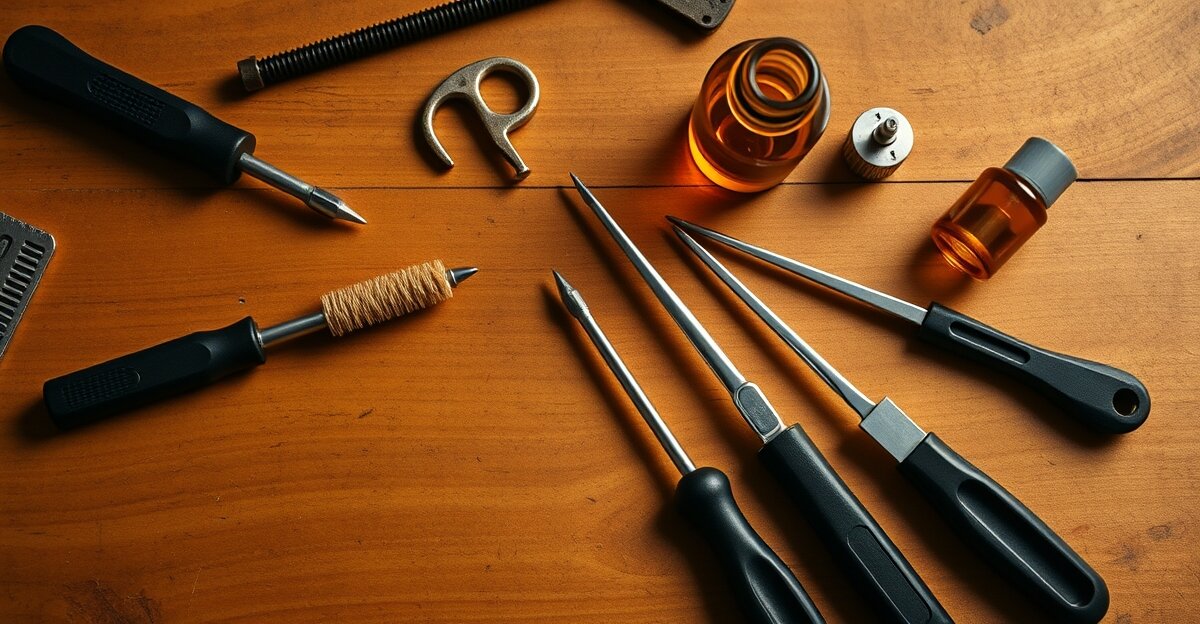
You don’t need a watchmaker’s bench or a UV curing station. Here’s what actually matters:
Essential:
| Tool/Item | Purpose | Approx. Cost |
|---|---|---|
| JIS #0 + #1 screwdriver set | M3 screws — NOT Phillips, which will chew the heads | $15–$25 |
| Foam seal kit (YellowFilter or CameraRepair.eu) | Replacement seals (pre-cut or roll stock) | $25–$40 |
| Naphtha or Ronsonol lighter fluid | Dissolve old foam adhesive residue on metal surfaces | $3–$5 |
| Artist’s brushes (soft natural bristle) | Apply naphtha, sweep particles | $5 |
| Cotton swabs | Precision cleaning in tight areas | $2 |
| UHU Stic or photo-safe adhesive stick | Adhere new seals — not super glue, not silicone | $4–$8 |
| Small flashlight or headlamp | See what you’re doing inside the camera | $5–$20 |
| Canned compressed air | Blow dust from optical surfaces (the only safe method) | $4 |
| Pill organizer or small containers | Keep screws sorted by location — do not skip this | $2–$5 |
Optional but useful:
| Tool/Item | Notes |
|---|---|
| Leica spanner wrenches (19mm, 22mm) | Only needed if removing optical barrel; can improvise with leather strap |
| Wooden toothpicks | For peeling old foam without scratching chrome |
| Hobby knife | Trim new seals flush after installation |
| Camera service manual PDF | Search eBay or archive.org for your serial number range |
The JIS screwdrivers deserve a dedicated mention. Japanese Industrial Standard screws look like Phillips but aren’t — the angles are different. Use a regular Phillips on an M3 screw and you’ll cam out and ruin the head. A set of JIS screwdrivers costs $15–$25 and I’ve found it pays for itself on the first camera. I’ve seen people wreck beautiful original M3 screws by ignoring this, and it’s heartbreaking. Don’t do it.
For sourcing the seal kit itself: YellowFilter (UK) and CameraRepair.eu (Germany) are the most commonly recommended suppliers in the M-series repair community. Both sell M3-specific kits — confirm your specific variant, since internal dimensions vary slightly between the early and late production runs. Budget 1–2 weeks for international shipping, or check Etsy for domestic sellers.
Total first-repair investment: $110–$190. After that, every subsequent camera costs $25–$40 in seals.
Step-by-Step Light Seal Replacement
This is the actual work. Take your time. The M3 is a precision camera, but it’s also a mechanical one — designed to be serviced, not sealed forever. Careful hands and decent organization are more important than speed.
Phase 1 — Pre-Disassembly Prep
Before touching a single screw:
- Take reference photos. Shoot 4–5 photos from multiple angles, including a close-up of the prism chamber area (visible through the top plate gap) and the viewfinder window assembly. These are your reassembly bible.
- Make sure the shutter is uncocked. A cocked shutter during disassembly can release unexpectedly. Advance and fire it to release tension.
- Check humidity. Work in a dry environment — below 50% relative humidity if you can manage it. Don’t open the camera after bringing it in from a cold, damp day; let it acclimate for an hour first.
- Set up your screw organizer. A cheap pill organizer with labeled compartments works perfectly. Label compartments before you start: “bottom plate screws,” “top plate screws,” etc. Screws mixed up = assembly nightmare.
⚠️ Rangefinder Calibration Warning: The M3’s rangefinder couples to the focusing helicoid via a precision eccentric cam and mechanical linkage. Rough handling or accidentally nudging the coupling will throw off focus alignment — and recalibration requires professional service ($75–$150). The good news: you won’t accidentally disturb it if you avoid touching the top plate linkage area. Take a reference photo of the coupling position. Then don’t touch it.
Phase 2 — Safe Disassembly
Step 1: Remove the bottom baseplate.
Use your JIS #0 screwdriver on the 4–6 small screws around the baseplate perimeter. Note that the baseplate is attached to the film advance tensioner inside — lift it straight up gently rather than yanking it to the side. Place the screws immediately in your labeled container.
Step 2: Document the viewfinder window assembly.
Before doing anything else, photograph the metal eyepiece frame, the orientation of any gaskets, and the optical window position. Do it again if you weren’t sure the first time. This takes 60 seconds and saves 60 minutes of confusion later.
Step 3: Locate the old foam seals.
Shine your flashlight into the interior. You’re looking for the dark foam strips around the viewfinder window perimeter and the eyepiece frame. On a camera this old, the foam has typically turned to a powdery black residue, or it’s crumbled into chunks. That’s normal — it’s exactly what causes the fogging.
Step 4: Assess top plate access.
For most seal replacements, you won’t need to remove the top plate. The viewfinder perimeter seals are accessible from the bottom or sides. If the mirror damper foam is your primary suspect — and your reference photos suggest the fogging is originating from the prism chamber area — you’ll need to unbolt the rangefinder top plate (3–4 screws).
⚠️ If you access the prism chamber: Do NOT disturb the optical stack or the eccentric cam. Take a photo, identify the foam location, and work only at the foam edges. The prism is cemented and positioned precisely — bumping it means a trip to a professional.
Phase 3 — Cleaning & Residue Removal
Step 5: Remove old foam debris.
Use a soft artist’s brush to sweep away loose particles first. Then use a wooden toothpick to gently peel away stuck foam layers from metal surfaces. Avoid metal scrapers entirely — they scratch chrome and brass that’s survived 60+ years fine. Take your time here.
Step 6: Naphtha cleaning on metal surfaces only.
Dampen (not soak) your brush with naphtha or Ronsonol lighter fluid. Gently brush the areas where foam was glued — brass body surfaces, metal channels. The naphtha dissolves the old adhesive and lifts residue cleanly.
⚠️ Naphtha Safety: Use in a well-ventilated space. Keep a small amount on the brush — you don’t need much. Allow 2–3 minutes to air-dry fully before applying new seals. And critically: never use naphtha on optical glass, balsam-cemented elements, or painted surfaces you want to preserve. For the optical surfaces themselves, compressed air only.
Step 7: Inspect the optical surfaces.
Once the debris is cleared, shine your flashlight into the viewfinder window area and take a hard look. Dust particles on glass? Safe — 3–4 gentle bursts of compressed air will clear them. Spots, etching, or web-like patterns? That’s fungal contamination — stop here and read the next section. Uniform internal cloudiness that compressed air won’t touch? Likely balsam separation. Same outcome: professional service.
Most of you won’t find either. You’ll find a clean optical surface that was just dusty. That’s the good outcome.
Phase 4 — New Seal Installation
Step 8: Measure and cut new foam.
Your old seal residue tells you exactly what shape to cut. Measure the width of the seal channel, estimate the thickness of the original foam (common M3 thicknesses are 1.5mm, 2mm, and 3mm — your seal kit will include all three), and cut slightly oversized. Round the corners gently to match the profile. Scissors work fine; a hobby knife gives cleaner cuts for tight fits.
Step 9: Apply adhesive.
Apply a thin, even coat of UHU Stic to the metal surface — not to the foam. Wait 30 seconds for the adhesive to become tacky. This matters: applying to wet adhesive lets the foam slide around before bonding.
I’ve tried a few adhesives over the years, and UHU Stic is genuinely the right call here. Cyanoacrylate (super glue) makes foam brittle, outgasses, and eventually causes the seal to crack. Silicone sealant attracts dust and keeps outgassing for weeks. UHU Stic bonds firmly, stays flexible, and doesn’t off-gas into your optics.
Step 10: Press and seat the new seal.
Align the foam with the old seal channel using your reference photos. Press firmly for 10–15 seconds. Use a smooth wooden dowel or the back of a pencil to ensure good contact along the full length — especially on corners. Any excess foam can be trimmed flush after an hour with a hobby knife.
Step 11: Cure time.
Leave it alone for 24 hours before reassembly. The adhesive needs to fully bond. Store the camera open-side-down on a clean cloth in a cool, dry spot while it cures.
Phase 5 — Reassembly & Testing
Step 12: Verify the rangefinder coupling.
Before reassembling, compare the current state of the prism chamber to your reference photo. The eccentric cam should be in the same position as when you started. If something looks different, gently rotate the focusing ring back and forth to see if the cam returns to position — it often does.
Step 13: Reattach the bottom plate.
Ensure the film advance tensioner isn’t pinched. Install screws in a cross pattern (opposite corners alternating) to avoid twisting the baseplate. Snug, not tight — M3 brass threads are soft, and over-torquing cracks the housing. You should feel resistance and then stop.
Step 14: Functional test before film.
Don’t load film yet. Run through the whole checklist:
- Focus ring: smooth movement throughout range, no binding
- Shutter advance: normal resistance, no grinding
- Viewfinder: look through — the rangefinder patch should show noticeably improved contrast. Not perfect yet (you may still see residual haze), but clearly better.
- Check for unintended light gaps around the newly sealed areas
Step 15: Load test film and shoot.
Use a roll of cheap expired film first. Shoot in varied lighting — inside and out, bright and dim. Keep your negatives as a reference. If the rangefinder focus seems off (images consistently back- or front-focused), that’s a recalibration job for a professional. It’s a $75–$150 adjustment and doesn’t indicate you broke anything — it’s more likely the camera was already slightly out of spec before you started.
For more on what’s involved in getting rangefinder focus dialed in, our post on rangefinder camera calibration walks through what the process looks like and when to pursue it.
When NOT to DIY: Fungal Growth & Balsam Separation
Let’s be direct about this. Two of the four fogging causes are not DIY projects, and attempting them can make things worse.
Fungal growth is a living contamination. Fungal spores become airborne when disturbed — attempting to wipe or brush them off without proper containment spreads them to other surfaces and makes the problem worse. Professional shops use ultrasonic cleaning baths and specialized solvents in controlled environments. The process costs $100–$200 on top of standard CLA fees, but it’s the only method that actually works. I’ve seen forum posts where someone tried to DIY a fungal cleaning and ended up spreading contamination to the lens they were using the camera with. Not worth it.
An estimated 15–20% of M3s that spent time in tropical or coastal climates show fungal issues. If you bought your camera from somewhere humid, treat a white spotty bloom as fungus until proven otherwise.
⚠️ Fungal Safety Note: Disturbing fungal contamination can spread spores. If you see web-like patterns, spots, or bloom in your viewfinder, do not attempt to clean it yourself. Seal the camera in a bag, and bring it to a professional.
Balsam separation is a structural failure in the cemented optical elements. The balsam cement that bonds glass elements together breaks down over decades — heat cycling and humidity are the accelerants. When it separates, you see an internal cloudiness that looks like it’s inside the glass itself rather than on any accessible surface. Re-cementing requires specialized optical equipment and fresh balsam, costing $200–$400 depending on which elements are affected. No amount of cleaning touches it.
The practical distinction: if compressed air and a careful cleaning eliminate the fogging, it was dust. If it persists unchanged, you’re in professional territory.
For context on what a professional service involves and when it makes financial sense versus DIY, see our analysis on film camera light seal replacement — the cost comparison framework there applies directly to the M3 decision.
DIY vs. Professional CLA: The Real Cost Comparison
Let’s put numbers on the three realistic options:
| Option | Cost | Time | What You Get |
|---|---|---|---|
| DIY seal replacement (dust/foam) | $110–$190 first repair; $25–$40 after | 2–3 hours your time | Viewfinder cleared; you learned the camera |
| Professional basic CLA | $350–$600 | 4–10 weeks + shipping | All seals replaced, lubricated, adjusted, focus verified |
| Buy a replacement M3 | $500–$1,200 (depending on condition) | Immediate | Working camera, but no guarantee of different problems |
The math tips toward DIY for dust-related fogging in most cases. Your tools pay for themselves if you ever touch a second camera (and you will — the hobby is contagious). Professional CLA makes clear sense for fungal/balsam cases, for full mechanical overhaul if the camera hasn’t been serviced in decades, or if you want focus verification included and you’re shooting seriously.
The 4–10 week wait for professional service is real and worth factoring in. Some shops are backed up 6+ months. If your M3 is your main shooting camera and you have a simple dust issue, a successful DIY seal replacement gets you back to shooting in a weekend.
Prevention & Aftercare: Make These Seals Last
New M3-specific foam seals, properly applied, should last 25–30 years. That’s longer than you’ll wait for your next professional CLA. A few habits protect the repair:
Storage: Keep relative humidity between 40–50%. The enemy of foam is heat cycling combined with humidity. A sealed camera bag or hard case with a silica gel packet inside handles this well. Replace the silica gel every 6 months — it loses effectiveness as it saturates.
Acclimation: Never open a camera that’s come in from cold outdoors straight into a warm, humid room. Let it sit sealed for 30–60 minutes to equalize temperature before the exterior metal cools below the dew point inside.
Annual inspection: Once a year, run through the same visual check you did at the diagnosis stage. Look through the viewfinder at a bright white surface. Catching seal degradation early means cleaning up a little dust — catching it late means particles embedded in optical surfaces.
Storage position: Store the camera with a silica gel packet loose inside the case — not touching the lens or body directly. Check every 6 months.
For more detail on long-term climate management for film equipment, our post on vintage equipment restoration covers environmental storage principles that apply to cameras, watches, and most mechanical precision instruments.
Frequently Asked Questions
Will seal replacement affect my M3’s rangefinder calibration?
Not if you follow the disassembly steps carefully and avoid touching the eccentric cam or top plate linkage. The coupling between the focusing helicoid and rangefinder prism is sensitive but not fragile — it won’t shift from normal handling near it. Take reference photos before you start so you have a baseline. If focus seems slightly off post-repair, it’s more likely the camera was already marginally out of calibration before you touched it (common in cameras this age) and just hadn’t been noticed. A professional rangefinder adjustment costs $75–$150 and is a routine service item.
How long do replacement foam seals last?
With proper storage — humidity 40–50%, stable temperatures, silica gel in the case — new seals should last 25–30 years. The original seals lasted 30–50 years before degrading, and modern replacement foams are generally comparable or better. The main enemies are heat cycling, high humidity, and UV exposure. Keep the camera away from all three and the seals will outlast the rest of the mechanical system.
Where do I buy a foam seal kit for the Leica M3?
The two most trusted sources in the M-series repair community are YellowFilter (UK, approximately £25) and CameraRepair.eu (Germany). Both sell M3-specific pre-cut kits. Always confirm the kit specifies M3 — internal dimensions differ between the M2, M3, and M4, and the wrong thickness foam will either gap or compress incorrectly. Etsy has domestic sellers worth checking if you want to avoid international shipping delays. Budget 1–2 weeks for overseas orders.
Can I use super glue to attach the new seals?
No. Cyanoacrylate (super glue) makes foam brittle within weeks, outgasses fumes into the optical cavity, and eventually causes the seal to crack and crumble — which puts you back where you started. Use UHU Stic or a comparable photo-safe adhesive stick. Apply it to the metal surface (not the foam), let it tack for 30 seconds, then press the foam in place. This is one of those cases where the “obvious” household substitute is genuinely worse than the recommended product.
What if I accidentally disturbed the rangefinder coupling?
You’ll know immediately — the focusing ring will feel different, or the rangefinder patch images won’t converge properly at any distance. This is fixable. Don’t force anything. Take photos of the current state, reassemble the camera carefully, and bring it to a professional for recalibration. Most “accidents” during this repair are actually misalignment rather than damage, and an experienced Leica tech can set it right in under an hour. The camera is not ruined.
Is there a risk of light leaks after seal replacement?
Light leaks in an M3 typically come from deteriorated body gaskets or corroded metal joints — not from the viewfinder foam seals you’re replacing. New viewfinder seals actually reduce the risk of future light intrusion into the viewfinder cavity. If you’re experiencing frame-edge light leaks on your negatives, that’s a separate issue (body seals, not viewfinder seals) and worth addressing in the same repair session if you find visible degradation during disassembly. —
Your Next Step
Your M3’s viewfinder fogging is almost certainly fixable for under $150 and an afternoon of careful work. Here’s where you stand:
- Diagnosed as dust/particles: You have everything you need in this guide. Order the seal kit and JIS screwdrivers, and schedule a weekend for the repair.
- Discovered fungus or balsam separation: You’ve actually learned something valuable about your camera. Take it to a professional CLA shop — knowing the diagnosis saves time and money when you make the call.
- Still not sure: Post a clear photo of the viewfinder view to r/Leica or r/analog. The community is genuinely good at remote diagnosis, and someone has almost certainly seen exactly your pattern before.
The M3 was built to be serviced. At 57–72 years old, it’s asking for basic maintenance — not retirement. A foam seal kit, an afternoon, and some patience is all it takes to get another decade of reliable use out of one of the finest viewfinder cameras ever made.
Order your M3-specific foam seal kit from YellowFilter (UK) or CameraRepair.eu (Germany), along with a quality JIS screwdriver set — both are essential for this repair.