
Restore Tarnished Brass Watch Bezels Without Damage
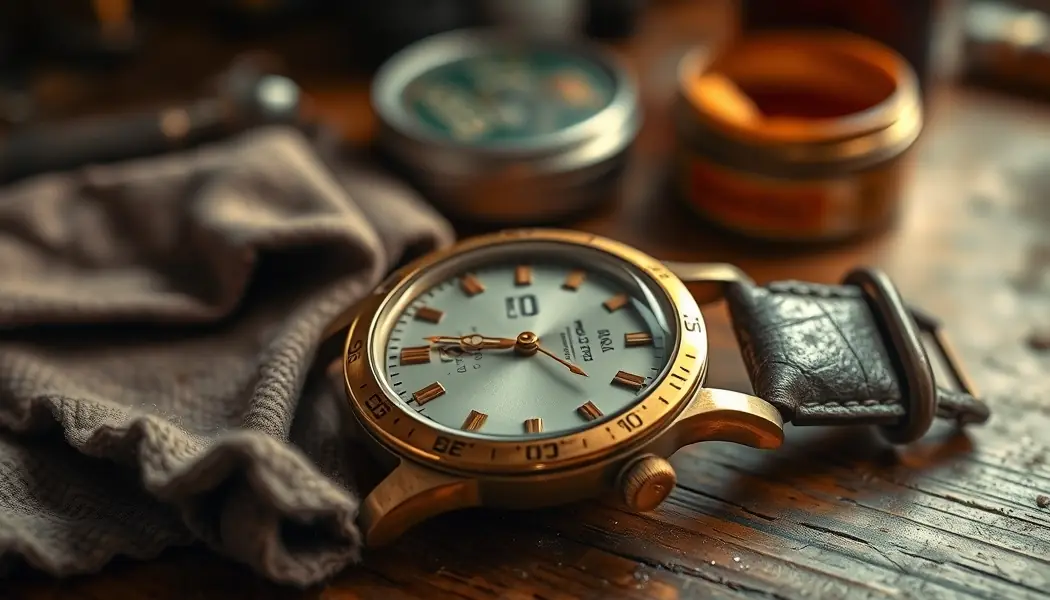
My grandfather’s 1971 Omega Seamaster sat in a shoebox for nearly thirty years. When I pulled it out, the brass bezel had turned a deep bruised purple-black — the kind of tarnish that makes a beautiful watch look like something dredged from a shipwreck. My first instinct was to scrub it with whatever I had under the sink. That would have been a disaster.
Brass watch bezel restoration means reversing oxidation and sulfidation with the right polish, in the right order, while protecting gaskets and crystals. Done correctly, most vintage bezels come back in 15–60 minutes. Done wrong, you’ll etch the crystal, wreck water resistance, or sand through a 0.2mm plating layer you can’t get back.
Below: why brass tarnishes, which products work, three restoration methods ranked by risk, mistakes that end in regret, and model-specific tips for Seiko 5, Omega Seamaster, and Longines.
Why Brass Watch Bezels Tarnish
The Chemistry Behind the Discoloration
Brass is a copper-zinc alloy — typically 60–90% copper, 10–40% zinc. Zinc is mostly along for the ride. Copper is the reactive troublemaker.
Three processes cause what you’re seeing on a neglected bezel:
- Oxidation — Copper reacts with atmospheric oxygen to form copper oxide (CuO), producing a dark brown or reddish layer first.
- Sulfidation — Atmospheric sulfur dioxide and hydrogen sulfide react with copper to form copper sulfide (CuS), the source of the distinctive dark purple, blue, or near-black discoloration common on 50-year-old bezels. Urban air and acidic sweat accelerate this.
- Patina formation — Over years, both layers combine into stable basic copper carbonate. It actually offers some chemical protection, but it looks dull and aged. This is what you’re dealing with on a watch that’s been in a drawer since 1983.
The color is diagnostic. Brown tarnish is mostly surface oxidation and lifts quickly. Purple or blue points to sulfidation. Near-black matte discoloration is heavy patina. All of it is reversible.
What Accelerates Tarnishing
- Humidity — A damp watch box tarnishes in months what dry storage takes years.
- Sweat and salt water — Chlorides in sweat are particularly corrosive, especially for dive watches worn and not rinsed.
- Urban pollution — Sulfur compounds in city air drive sulfidation faster than rural storage.
- UV and poor ventilation — Sunlight degrades coatings; sealed damp boxes trap moisture against the metal.
Why Vintage Watches Used Brass Bezels
From the 1940s through the early 1980s, brass was the practical choice. It machines cleanly, holds tight tolerances, and cost less than stainless steel. Better initial corrosion resistance than mild steel in salt environments mattered for early dive watches too.
Brass bezels are most common on Seiko 5 Sports models (6309 and early 7S26-based watches), Omega Seamaster models from the 1960s–70s, Longines dress watches from the 1950s–70s, and Soviet-era watches (Raketa, Vostok). Early Rolex Datejust and Submariner references used brass too, though those rarely end up on the DIY bench.
For context on how material choices affect restoration approach across different categories of vintage gear, the Complete Guide to Vintage Equipment Restoration covers the full picture.
The Product Guide: What Actually Works
Chemical Polishes — For Moderate to Heavy Tarnish
These are your workhorses. Each has a different risk profile, and choosing the wrong one is how bezels get ruined.
Brasso ($5–8, widely available) is an ammonia-based liquid that cuts through moderate tarnish fast. Apply to cloth, never directly to the watch; ammonia can seep into gasket grooves; it etches acrylic crystals on contact. Good for experienced hobbyists, not for first-timers on valuable pieces.
Flitz ($12–15) is a cream-based polish with foam applicator pads. Milder than Brasso, less prone to running into gasket gaps, and the cream consistency gives more precise control. Preferred by experienced restorers for delicate vintage bezels.
Wenol ($10–15, specialty suppliers) is a German cream polish with an oil component. Not aggressive enough for heavy tarnish alone — use it after Brasso or Flitz as a step-two product to achieve a display-quality finish and slow re-tarnishing.
Peek ($8–12, automotive) is a heavy-duty abrasive cream that’s fast on thick patina. Also the most likely to damage inexperienced hands — brass bezels are thin plating (0.1–0.3mm), and Peek can expose base metal in minutes. Leave it alone unless you know what you’re doing.
Mechanical Polishing Tools — Safe and Reversible
Cape Cod polishing cloths ($8–12) are the community’s go-to. Pre-treated microfiber, dual-sided (light and heavier abrasive), no liquids, no chemical contact with gaskets or crystals. The self-limiting abrasiveness is the real advantage — they can’t remove material at the rate liquid polish can. Best for light to moderate tarnish and anyone doing this the first time.
A plain microfiber cloth ($3–5) won’t touch actual tarnish — use for final buffing only. A soft brass wire brush ($4–8; never steel) handles heavy caked patina on severely neglected pieces before polishing.
Protective Coatings — Locking In Your Work
Renaissance Wax ($25–35 per tin) separates a restoration that lasts two years from one that stays clean for five. A microcrystalline wax used by museum conservators — invisible protective barrier, reversible, doesn’t change the appearance of polished brass. Apply thin, set five minutes, buff to minimal residue. Reapply every 6–12 months.
Clear coat lacquer spray ($5–10) gives 1–2 years of protection but creates a visible coating on polished brass. Fine for beaters. Most restorers with collector pieces use Renaissance Wax instead.
Three Restoration Methods: From Beginner-Safe to Advanced
Successful brass watch bezel restoration depends on knowing which method matches your watch’s condition and your skill level. Below are three approaches, ranked from safest to most aggressive.
Method 1: Cape Cod Cloth + Masking (Beginner-Friendly, 15–30 Minutes)
Risk level: Low. Best starting point for any watch restoration. Reversible — if the result isn’t satisfying, you can move up to Method 2.
What you need: Cape Cod polishing cloth, painter’s tape, clean microfiber cloth, Renaissance Wax (optional but worth it).
- Place the watch under raking light (a desk lamp at a low angle reveals tarnish overhead lighting misses).
- Mask crystal edges, crown, and case sides with painter’s tape — at least 2mm around the bezel perimeter.
- Start with the light-abrasive side of the cloth. Moderate circular pressure, 30–60 seconds per area. Removes loose oxidation.
- Assess. Wipe with microfiber. If tarnish is mostly cleared, jump to step 5. For heavier discoloration, switch to the heavier-abrasive side and apply firm circular pressure for 2–3 minutes.
- Final buffing with clean microfiber.
- Apply Renaissance Wax: thin layer, 5 minutes to set, gentle buff. Extends how long the bezel stays clean.
Stop when the bezel looks clean. Vintage pieces don’t need a mirror finish.
Method 2: Liquid Polish + Manual Buffing (Intermediate, 20–40 Minutes)
Risk level: Moderate. Moderate to heavy tarnish on well-built watches. Masking is mandatory.
What you need: Brasso or Flitz, cotton cloth (not microfiber), painter’s tape, distilled water, clean dry cloth.
- Mask the gasket line first — painter’s tape over crystal, crown, case sides, and the gap where bezel meets case. Multiple layers at the gap. If Brasso gets into that groove, you’re looking at a $50–150 re-gasketing job.
- Apply polish to cloth. Shake Brasso well or dispense a pea-size amount of Flitz onto cotton cloth. Never apply liquid directly to the watch.
- Work in small circular sections with continuous moderate pressure, 1–2 minutes per half-square-inch. The polish darkens as suspended tarnish lifts off the metal.
- Inspect and repeat. Wipe dry, assess, and apply another pass if needed. Most moderate tarnish clears in 2–3 passes.
- Remove all residue with distilled water (tap water leaves mineral deposits). Wipe thoroughly and dry completely. Residual polish left on the surface re-tarnishes in days.
- Final buff with microfiber, then apply Wenol or Renaissance Wax.
If Brasso contacts the crystal, wipe immediately — it etches acrylic. Ventilate the workspace.
Method 3: Aggressive Polishing + Protection (Advanced, 45–60 Minutes)
Risk level: High. For severely neglected pieces, Soviet-era watches with heavy patina, or bezels being re-plated afterward. Never done this before? Start with Method 1.
What you need: Peek, soft brass brush (not steel), cotton cloth, Dremel on lowest speed with foam pad (optional), painter’s tape, safety glasses, gloves, Renaissance Wax.
- Mask with multiple tape layers — crystal, crown, case, all gasket lines. Wear safety glasses with a rotary tool.
- Pre-clean with brass brush — light circular pressure, 30 seconds per area, following the bezel curve.
- Apply Peek to cloth in one-square-inch sections with firm pressure, 3–4 passes. Let polish dry slightly between passes for best cutting action.
- Optional Dremel work: 400 RPM maximum, foam pad, constant motion — never dwell. Two to three passes per area.
- Inspect every 1–2 minutes. Stop when tarnish is gone. Over-polishing is permanent.
- Finish with Wenol, then apply Renaissance Wax in two thin coats, buffing each to minimal residue.
- Test bezel rotation once fully dry (30 minutes). Stiffen mechanism? Rinse with distilled water, dry, and add one drop of watch oil at the bezel seat.
The real risk: Brass plating is 0.1–0.3mm thick. Peek can remove it in one session. Through to the base steel, the bezel tarnishes worse than before and re-plating is the only fix.
Common Mistakes That Ruin Brass Bezels
Using Steel Wool or Harsh Abrasives
Steel wool embeds fine steel fibers in brass. They oxidize and leave rust stains within weeks. Even 0000 grade is too aggressive for polished bezels. Use only brass brushes, copper pads, or labeled “safe for brass” cloths.
Skipping the Masking Step with Liquid Polishes
The most common regret on r/Watches: “I polished my Seiko 5 and got water in the movement.” Ammonia-based polishes seep into the gasket groove, degrade rubber seals, and compromise water resistance — often invisibly at first. Painter’s tape costs nothing. Gasket replacement costs $50–150.
Always mask, and have the watch pressure-tested after restoration. For what gasket failure means for a movement, mechanical watch repair basics is worth reading first.
Letting Polish Contact the Crystal
Brasso etches acrylic crystals on contact, leaving permanent cloudiness. On mineral glass, it dries into stubborn residue. If polish touches the crystal, wipe immediately. If you’re working on an acrylic crystal, Cape Cod cloth only. Already scratched it? The complete guide to removing watch crystal scratches covers acrylic, mineral, and sapphire.
Over-Polishing Through the Plating
Tell-tale sign: the bezel looks clean after restoration, then shows dull patches that won’t come off within a few weeks. You’ve removed the brass plating and exposed base steel, which tarnishes faster and more deeply. Only fix: professional re-plating.
Start with the gentlest method, stop when the bezel looks clean. Chasing a mirror shine on a 50-year-old piece is how they get destroyed.
Polishing Over Bezel Insert Markings
Rotating bezels on Seiko divers and vintage Omegas have painted numbers, markers, and lume plots on the insert. Heavy polishing removes them permanently. Focus on the brass ring at the edge only. Tarnished insert? That’s a professional refinishing job.
Not Testing Water Resistance Afterward
Even gentle polishing can disturb gasket seating. Have the watch pressure-tested at a watchmaker after any restoration work ($10–20). Don’t take it swimming first.
Model-Specific Restoration Tips
Brass watch bezel restoration requires different techniques depending on the watch model and its original construction. Let’s walk through the most common platforms.
Seiko 5 Sports (1960s–1980s Rotating Brass Bezels)
The Seiko 5 platform — 6309, 7005, early 7S26 — features rotating brass bezels with aluminum or plastic inserts. These are among the most commonly restored vintage watches on the hobbyist circuit: affordable ($30–100), solid, and forgiving.
Cape Cod cloth is the right starting point. Focus on the brass ring at the edge, not the insert. A worn but readable insert beats a smooth, unreadable one. If you over-polish the ring, replacement bezels run $15–30 from eBay or Seiko parts suppliers. The Seiko 5 is the ideal learning piece before working on anything with real stakes.
Omega Seamaster (1960s–1970s Vintage)
Vintage Seamaster models — the 300 (ref. 165.024) and 600 series — range from $800 to $5,000+. Two rules apply absolutely: don’t sand or polish any luminous bezel insert on a 1960s–70s Omega (early lume was radioactive), and don’t use aggressive techniques on high-value pieces.
For the brass ring itself, gentle chemical polish with careful masking is appropriate. But given the value, most experienced collectors recommend professional restoration for anything beyond Cape Cod maintenance. “If in doubt, send it” is the right call. The Rolex vs. Seiko repair cost comparison covers when professional care stops being optional.
Longines Vintage Dress Watches (1950s–1970s)
Longines Flagship, DolceVita, and Conquest models often have integrated bezels — a thin brass overlay (0.1–0.15mm) bonded to a steel case. There’s no discrete bezel to remove, so you’re polishing right next to the crystal with no margin for error. Cape Cod cloth only. No liquid polishes without extensive masking.
Tarnished brass hands are a job for a watchmaker who removes them before any polishing. Attempting it on the dial risks scratched crystals and bent hands. These are often heirloom pieces — preserve the patina where acceptable.
Frequently Asked Questions
Can I use regular metal polish on my watch bezel?
Only if labeled “safe for brass” and “non-abrasive.” For successful brass watch bezel restoration, stick exclusively to Brasso, Flitz, Wenol, or Cape Cod cloths specifically designed for soft metals. General-purpose polishes contain steel particles that permanently scratch delicate brass. If the product doesn’t specify the metals it’s safe for, don’t use it.
Will polishing damage my watch’s water resistance?
Possibly. Polish or cloth residue can seep into gasket grooves if unmasked. After polishing any water-resistant watch, have it pressure-tested at a watchmaker ($10–20) before wearing it near water.
How often should I polish a brass bezel?
Cape Cod cloth maintenance every 6–12 months is fine. Heavy chemical polishing: no more than every 3–5 years — each session removes material. Apply Renaissance Wax after any restoration to extend the interval.
Can I use a Dremel or rotary tool on a watch bezel?
Only at lowest speed (400 RPM maximum) with a foam pad, and only if you’ve done this before. The risks are overheating, uneven finish, and gasket damage if the spinning pad catches a tape edge. Beginners: stick to manual buffing.
What’s the difference between a brass bezel and a gold-plated bezel?
A gold-plated bezel has an electroplated gold layer (typically under 0.05mm) over a brass base. Polishing a gold-plated bezel with any abrasive risks cutting through to bare brass or copper underneath. If you’re unsure whether your bezel is solid brass or gold-plated, treat it as plated and clean with only warm water and a soft cloth. A watchmaker can tell you in thirty seconds.
Is it worth restoring a badly tarnished bezel, or should I just replace it?
For most vintage watches, try restoration first — a 30-minute Cape Cod attempt costs nothing and is reversible. Replacement makes more sense when the bezel is pitted or physically damaged. On Seiko 5 models where bezels run $15–30, replacement is a reasonable fallback. On vintage Omegas where authentic bezels cost $200–500 and affect collector value, restoring the original is almost always the right call.
One thought on “Restore Tarnished Brass Watch Bezels Without Damage”
Comments are closed.