

Your Pocket Watch Stopped? Here’s What a Broken Hairspring Really Costs to Fix
Your Pocket Watch Stopped? Here’s What a Broken Hairspring Really Costs to Fix
You’ve inherited a beautiful Waltham or Elgin pocket watch from your grandfather. Wind it, set it on the dresser, and for a day or two it ticks perfectly — then silence. Cracking open the case with a case knife and peering through a jeweler’s loupe, you spot it: the hairspring. That impossibly delicate coiled ribbon of steel, maybe slightly kinked or even snapped clean. Panic is understandable.
Pocket watch hairspring repair is one of those repairs where the decision tree genuinely matters. Because unlike a stuck crown or a scratched crystal, a broken hairspring puts you at a fork: pay $200–$600 to a specialist, attempt it yourself (risky), or quietly buy another working watch of the same model for $150 on eBay. The right answer depends on what’s actually wrong with the spring, what the watch is worth, and how honest you’re willing to be about your own skill level.
This guide walks you through how to assess the damage, understand your options, and make a confident call — without guessing.
What’s a Hairspring? The Tiny Part That Keeps Your Watch Ticking
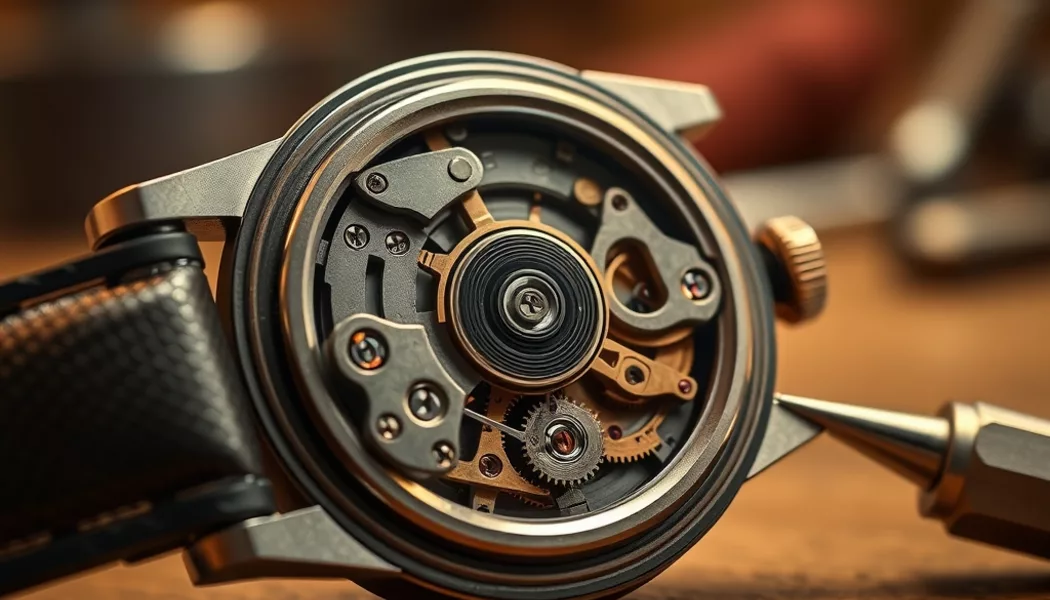
The hairspring — technically the balance spring — is a coiled strip of steel roughly 0.1mm thick (thinner than a human hair) that wraps around the balance wheel staff. It’s the heart of the timekeeping system.
How the Hairspring Regulates Time
The balance wheel oscillates back and forth at a precise frequency — typically 2.5 to 3 Hz in most American pocket watch movements. The hairspring controls how fast those oscillations happen, which in turn controls how quickly the gear train advances the hands. Mess with the spring’s length, tension, or shape, and your watch runs fast, runs slow, or stops entirely.
Why Hairsprings Break So Easily
The spring itself is engineered to last a lifetime — and it usually does, for 40 or 50 years. After 80 to 100 years, though, the steel work-hardens and becomes brittle. Add a single drop onto a hard floor, a decade in a drawer next to a magnetic clasp, or moisture that crept through a worn gasket, and that tiny coil gives out. It’s not your fault. It was always going to happen eventually.
Six Types of Hairspring Damage — And How to Spot Them
Before spending a dollar or making a phone call, you need to know what you’re actually looking at under the loupe. The damage type changes everything: some springs can be professionally nursed back to life, others need outright replacement. Here’s the quick visual inventory.
Bent Hairspring (Coil Deformation)
Under 10x magnification, the coil looks like it should be a perfect circle — but one section bulges inward. Usually caused by a drop or rough handling during disassembly. Repair potential: high. An experienced watchmaker who specializes in hairspring work can often coax a minor bend back into shape. A 90-year-old Waltham 625 picked up at an estate sale with a modest bend like this can often be fixed for $150–$250.
Broken/Fractured Hairspring (Clean Break)
You’ll see an obvious crack, or in bad cases, two separate pieces of coil floating loose. Metal fatigue after decades of oscillation is the most common cause — sometimes combined with a single shock event. Repair potential: zero. This one always requires replacement. It’s the most common reason hairspring work turns into a full parts search.
Tangled Hairspring (Coil Touching Balance Wheel)
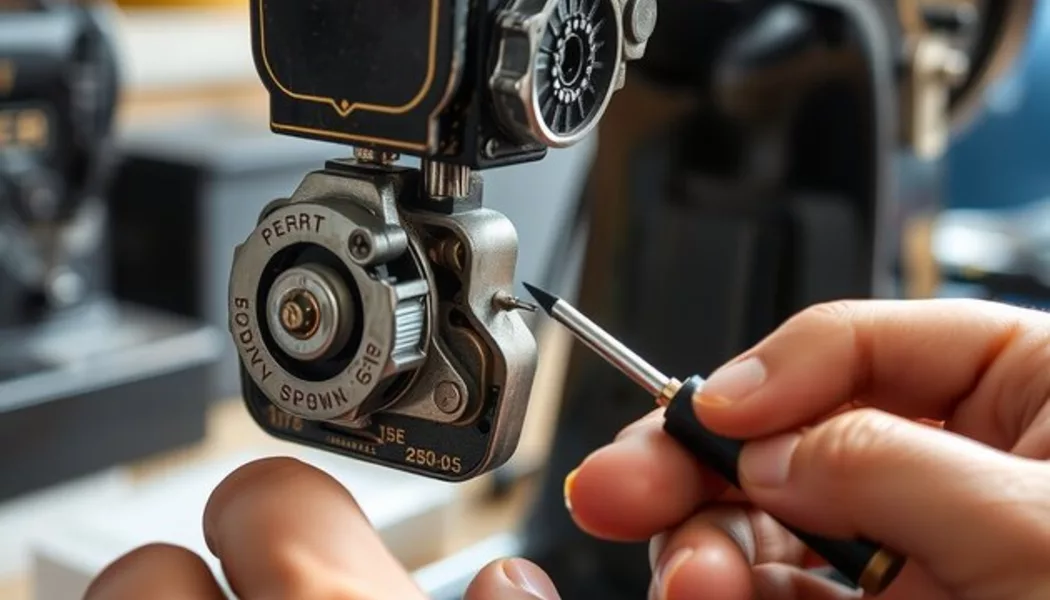
The hairspring is coiled around the balance wheel staff instead of hanging cleanly. Looks like a mess. Feels catastrophic. Often isn’t. This happens when oxidation or moisture shifts the spring’s position. Repair potential: excellent. Many times, what someone thinks is a “broken” hairspring is actually a tangled one that a careful set of fine-pointed tweezers and a skilled hand can separate — sometimes without even removing the balance assembly.
Rust and Corrosion (Surface vs Deep)
Brown discoloration or white deposits on the coil surface. Surface rust can sometimes be cleaned in an ultrasonic bath; deep pitting that has eaten into the metal cannot. If you can see the coil has thinned at any point — meaning the metal surface is uneven or pitted — replacement is the only safe path. Repair potential: low. Surface cases: maybe. Anything deeper: replace.
Magnetized Hairspring (Loss of Accuracy)
Here’s the overlooked culprit. No visible damage at all. The watch just runs 10–15 minutes fast per day. Magnetization causes adjacent coils to stick together, shortening the effective spring length. Repair potential: high. A Weishi or similar demagnetizer ($100–$300) can fix this without touching the spring itself. Always rule out magnetization before assuming structural damage.
Coil Separation (Endstone Damage)
The inner end of the hairspring attaches to the collet — a small brass collar staked to the balance staff. If that joint fails, the coil drifts free. You’ll see a visible gap where the spring should be anchored. Repair potential: very low. This requires a new spring with proper collet staking, which is technically demanding even for experienced watchmakers.
The Repair vs Replace Decision Framework
This is where most guides leave you hanging with vague advice like “consult a professional.” Here’s an actual decision process.
Step 1: Assess Damage Severity
Start here before worrying about cost:
- Visible fracture in the coil? → Replacement required. Skip to Section 5 (sourcing parts) or Section 6 (finding a watchmaker).
- Deep rust pitting or coil thinning? → Replacement required.
- Coil separated from collet? → Replacement required.
- Only a minor bend, tangle, or magnetization? → Proceed to Step 2. These may be repairable.
Step 2: Estimate Your Watch’s Market Value
Spend two minutes on eBay. Search your movement’s grade and size under “sold listings.” This one step saves people hundreds of dollars in repair mistakes.
- Under $150 (working unit): Common Elgin Grade 1, Illinois Bunn grades. Repair threshold is $200 max — above that, a replacement watch makes more financial sense.
- $150–$400 (working unit): Waltham Grade 625, Hamilton 992. Repair at $280–$400 is justified.
- $400+ (working unit): Hamilton 992B, rare military issue, high-jewel dress grades. Repair is almost always warranted.
- Sentimental/heirloom value: This overrides all cost math. Full stop.
Step 3: Check Rarity and Parts Availability
Is your movement commonly available? A Waltham 645, Elgin Grade 3, or Hamilton 950B shows up on eBay weekly. For common movements, NOS (new old stock) hairsprings are relatively easy to source, and the repair-vs-replace decision is purely financial.
For rarer movements — military-issue Illinois Sangaree, high-grade Hampden, or uncommon Hamilton calibers — the calculus shifts toward repair. Replacement hairsprings are harder to match, and the movement itself is hard to replace if you set it aside.
Step 4: Calculate the Cost-Benefit Ratio
The formula is simple: if [professional repair cost] > [cost of buying another working watch of the same model], then hairspring repair alone is not your best option. You’re better off buying a working replacement and using your watch as a parts donor or a learning project.
Example: Waltham 645 professional repair comes in at $350. A working 645 on eBay sells for $180. The math says: buy the working watch. Unless this one has your grandfather’s initials engraved on the case.
Decision Tree Summary
Visible fracture, deep rust, or coil separation?
  YES → Replacement required (professional or DIY)
  NO ↓
Magnetization symptoms only (runs fast, no visible damage)?
  YES → Try demagnetizer first ($100-300) before anything else
  NO ↓
Is this a rare or uncommon movement?
  YES → Repair is worth it (parts hard to replace)
  NO ↓
Is the watch worth over $200 as a working unit?
  YES → Professional repair is justified
  NO ↓
Can you buy a working unit for less than the repair cost?
  YES → Buy the replacement; use yours for parts
  NO → Repair makes sense
Cost Breakdown by Watch Model: Real Numbers
Vague price ranges help no one. Here’s what you’re actually looking at for three of the most common American pocket watch movements.
| Model | Market Value (Working) | Professional Repair Estimate | Replacement Movement | Verdict |
|---|---|---|---|---|
| Waltham Grade 625 (16s, 23j) | $150–$300 | $280–$400 | $150–$250 | Repair justified up to ~$350; above that, buy a replacement 625 |
| Elgin Grade 1 (10s, 15j) | $80–$180 | $200–$300 | $100–$150 | Threshold is $250; above that, replacement watch wins |
| Hamilton 992B (16s, 21j) | $300–$500 | $350–$550 | $280–$400 | Repair almost always justified — movement rarity supports investment |
On regional pricing: A specialist watchmaker in New York City or Los Angeles will typically charge 30–50% more than a budget shop in a smaller city. Mail-in services (shipped to a specialist, not a chain jeweler) often run 15–25% less than walk-in rates. Get at least two quotes before committing.
One thing worth noting about the 10-size Elgin movements: the smaller scale makes hairspring work genuinely more difficult, and some watchmakers will quote higher for that reason even though the watch itself is worth less. Factor that in when evaluating quotes.
When DIY Makes Sense — And When to Walk Away
Real talk: hairspring replacement is not a weekend project for someone who’s never opened a watch before. It’s also not impossible for a motivated hobbyist with the right tools and the right attitude toward failure.
DIY Hairspring Replacement: Is It Really Possible?
Yes — but expect a learning curve measured in ruined springs, not afternoons. The job requires removing the balance wheel, separating the hairspring from the collet, fitting a new spring, restaking the collet to the correct tension, and verifying the result on a timing machine. Every step has a failure mode that can damage the replacement spring or the balance wheel itself.
Experienced hobbyists on r/pocketwatch and r/Watches document this journey regularly. The consistent advice: practice on $20–$50 beater movements first. Budget for five or more learning failures before attempting anything valuable. On mechanical watch repair basics — cleaning, lubrication, and movement handling — before hairspring work makes a real difference in outcome.
Tools Required and What They Cost
| Tool | Estimated Cost |
|---|---|
| Hairspring removal/installation tool | $40–$100 |
| Collet staking tool or specialized clamp | $30–$80 |
| Balance wheel removal tool | $20–$50 |
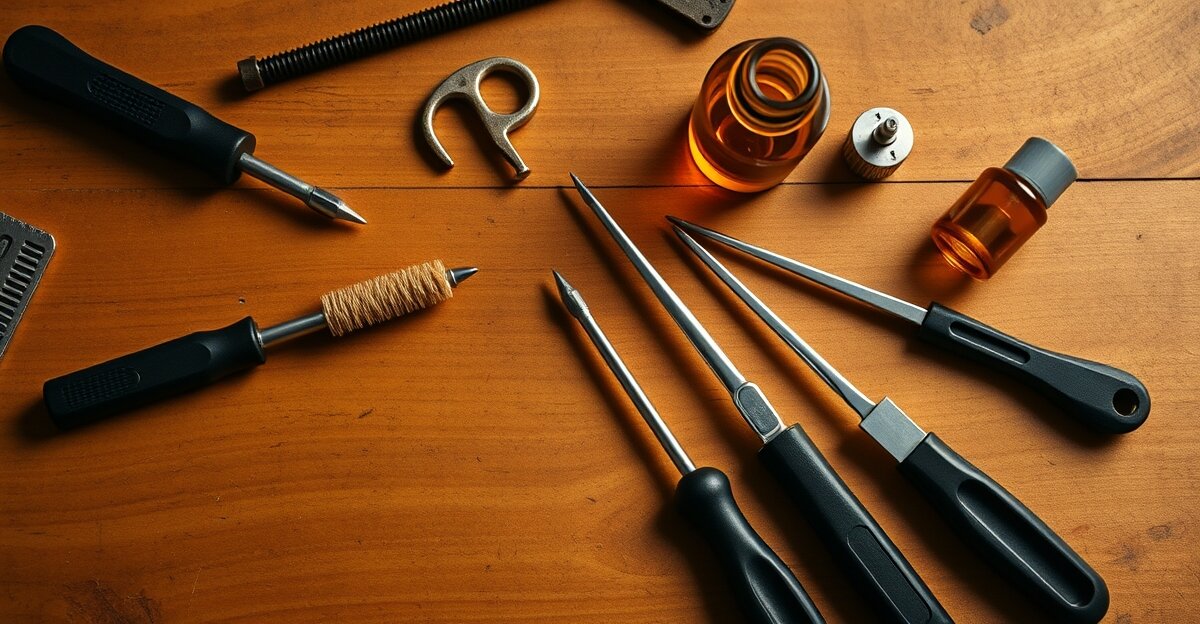
| Watchmaker screwdrivers (full set, e.g. Bergeon) | $50–$150 |
| Jeweler’s loupe (10x–40x) | $10–$40 |
| Precision tweezers | $5–$15 |
| Timing machine (highly recommended) | $200–$1,000 |
Without a timing machine: $155–$435 in tools. With one: $355–$1,435. If you’re planning more than one or two repairs, the tool investment pays for itself. For a single repair, professional service is almost certainly cheaper.
When DIY Makes Sense
- You already own precision watchmaking tools from other projects
- The watch has sentimental value but low market worth ($50–$100 movement)
- You’ve successfully replaced hairsprings on practice movements at least three to five times
- You have access to a timing machine to verify your work
- You’re comfortable with the possibility of failure — and okay with starting over
The Red Lines: Send It to a Pro
- Watch is rare, collectible, or worth over $300 as a working unit
- The hairspring is fractured (not bent) — replacement requires precision staking
- You’ve never done this before and haven’t practiced on beaters
- This is a family heirloom with irreplaceable sentimental value
- You don’t own or have access to a timing machine
Bottom line: professionals charge $300–$500 for this work because it’s genuinely difficult. That’s cheaper than destroying a $400 movement through a well-intentioned but under-equipped first attempt.
Finding a Qualified Watchmaker and Getting a Quote
Not every jeweler with a sign in the window does pocket watch hairspring work. This is a specialized skill, and picking the wrong shop can mean a botched repair — or your watch sitting in a drawer for four months.
Where to Find Watchmakers
- NAWCC (National Association of Watch and Clock Collectors): Their online directory lets you search by location and specialty. This is the first stop.
- Local jewelers: Call ahead. Specifically ask: “Do you do pocket watch hairspring replacement, or do you send that work out?” Many jewelers subcontract watch repair, which adds cost and time.
- Reddit communities: r/pocketwatch and r/Watches regularly field “who should I use in [city]?” questions. Recommendations there tend to be honest.
- Mail-in services: Search for “pocket watch repair mail-in” — there are established specialists who accept shipped movements and return them serviced. Slower, but often cheaper than urban walk-in shops.
Questions to Ask Before Sending Your Watch
- How many years of experience with pocket watch movements specifically? (5+ is good; 10+ is excellent.)
- Do you specialize in hairspring work, or subcontract it?
- What’s your typical turnaround time for a hairspring replacement?
- Will you provide a diagnostic report with photos before starting work?
- What warranty do you offer on completed work? (Anything less than 6 months is a red flag.)
Always get a written estimate that breaks out parts and labor separately. “General service including hairspring: $275” is not a diagnostic — it’s a guess.
Red Flags in Quotes
A quote under $150 total should raise questions: hairspring work alone typically requires $20–$80 in parts plus skilled labor. A vague quote that doesn’t mention diagnosis is a different kind of warning sign. And no warranty means the watchmaker isn’t confident in their own work.
Sourcing Replacement Hairsprings: NOS vs Aftermarket
If you’re going the DIY route, or if a watchmaker asks you to source the part yourself (it happens), here’s what you need to know.
NOS vs Aftermarket: The Real Difference
NOS (new old stock) hairsprings are original parts manufactured 50–100 years ago, never installed, often found in old dealer stock or watchmaker estate sales. They match the original specifications exactly. Expect to pay $30–$80 for a verified NOS spring.
Aftermarket (modern reproductions, primarily from India and China) run $15–$40. Quality varies — some are excellent, some are dimensionally off in ways that only become apparent after the watch has been running for a few weeks. For a valuable or rare movement, NOS is worth the premium. For a common beater you’re learning on, aftermarket is fine.
Where to Buy
- eBay: Search “[movement caliber] hairspring NOS” — e.g., “Hamilton 992B hairspring.” Prices $25–$70. Check seller feedback carefully (98%+ positive, with watch-specific reviews).
- NAWCC forum classifieds: Often cheaper than eBay ($20–$50), and sellers are typically knowledgeable members who’ll confirm fitment.
- Ofrei (Jules Borel) or Cousins UK: Specialty watchmaker suppliers. More expensive ($40–$100) but guaranteed authentic and returnable if the fit is wrong.
Verifying the Right Part
Before ordering: confirm the movement caliber (check the movement cock or use the pocket watch database at pocketwatchdatabase.com), measure the outer diameter with calipers if possible, and verify the seller will accept a return if the spring doesn’t fit. The last thing you want is a non-returnable spring that’s 0.5mm too large.
For a full walkthrough of movement disassembly before sourcing any part, the guide on mechanical watch repair basics covers the cleaning and inspection process that should precede any parts order.
Frequently Asked Questions
How much does it cost to replace a pocket watch hairspring?
Professional replacement runs $200–$600 in most cases. The breakdown: hairspring part ($20–$80), labor ($150–$400), and diagnosis/testing ($30–$100). Budget watchmakers in smaller cities charge $200–$300. Specialists in major markets or those handling particularly rare movements may quote $500–$800. Get two or three quotes — pricing varies significantly by watchmaker and location.
Can a bent hairspring be repaired, or does it need replacement?
Minor bends — affecting less than 20% of the coil’s circumference — are often repairable by a watchmaker who specializes in hairspring work. Success rate is high for small deformations. Major bends that crush multiple coils, or any clean fracture, require a new spring. A watchmaker with experience can usually assess the damage from good loupe photos before you commit to shipping the watch.
Is it worth fixing a broken hairspring on an antique pocket watch?
It depends on three things: market value (if the working watch is worth over $300, repair is usually justified), rarity (uncommon movements are harder to replace than repair), and sentimental value (which overrides the cost math entirely). A rough guide: if the professional repair quote is less than 1.5x the watch’s current market value as a working unit, repair makes sense. Much beyond that, and buying a replacement movement is worth considering.
What causes a pocket watch hairspring to break?
The six main causes: mechanical shock (dropped watch), age-hardening and brittleness after 80+ years, magnetization from exposure to phones or speaker magnets, corrosion from moisture inside the case, cumulative metal fatigue from decades of oscillation, and — rarely — manufacturing defects. Most breaks involve a combination of age and a single shock event, not user error.
Can a hobbyist replace a pocket watch hairspring themselves?
Technically yes, but not recommended as a first watchmaking project. The tolerances involved are in the micron range — the spring is 0.1mm thick, and correct coil spacing matters for accurate timekeeping. Expect to spend 10–20 hours studying the process, then practice on three to five cheap movements before touching anything valuable. The tool investment runs $155–$435 without a timing machine. If you only have one repair to do, professional service is almost certainly cheaper and safer.
How do I know if my hairspring is broken or just needs cleaning?
Broken means a visible crack or two separate pieces under a loupe. Tangled means the coil is wound around the balance wheel shaft — fixable, not broken. Bent means deformed but intact — often repairable. If there’s no visible damage and the watch just runs badly, try a demagnetizer before assuming structural damage. And if you genuinely can’t tell from your own inspection, most experienced watchmakers will assess from photos at no charge. —
Your Action Plan
A stopped pocket watch with a hairspring problem isn’t a death sentence for the movement. It’s a decision point.
Work through the framework: What kind of damage do you actually have? Does the coil have a visible fracture, or is it a tangle that looks worse than it is? Check sold listings to understand what a working version of your specific movement is worth. Then decide: if repair costs approach or exceed the watch’s market value, buying a replacement movement is the rational choice. If this watch has sentimental weight, or if it’s a high-grade movement like a Hamilton 992B, repair is almost always worth the investment.
Consider reviewing the mainspring-replacement” rel=”internal”>mainspring replacement guide for a related spring component repair workflow.
Professional repair is the right call for valuable watches, rare movements, and anything irreplaceable. DIY is viable for experienced hobbyists with proper tools and a few practice movements already behind them. And buying a working replacement is a legitimate choice — not a defeat — when the math doesn’t support repair. Vintage pocket watch movements on the vintage equipment restoration guide can help you think through that broader restoration context.Whatever you decide: grab a jeweler’s loupe first. Document what you see. That single step — knowing exactly what type of damage you’re dealing with — determines everything that comes after.