
Bernina 830 Motor Seized After Storage? Here’s the 48-Hour Fix
Your inherited Bernina sewing machine won’t start. The motor is seized. Before you panic — or pay $300 for professional repair — try this simple 48-hour fix. Most vintage Bernina motors respond to oil and gentle heat treatment within 24–48 hours. In this guide, we’ll walk through the exact steps to bring your machine back to life, plus show you when it’s time to call a professional.
A Bernina sewing machine motor seized after storage can almost always be recovered without spending a fortune. The key is understanding why it seized, then working with the right technique in the right order. If the handwheel moves even slightly, you’re already in good shape.
When a Sewing Machine Motor Seizes (And Why It Happens)
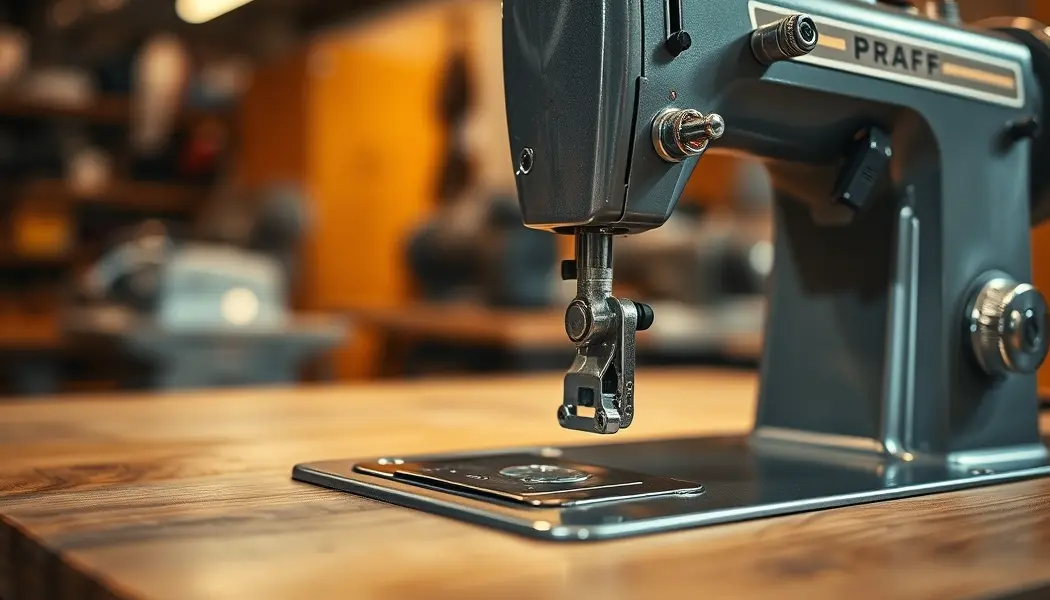
There’s a particular kind of heartbreak in pulling your grandmother’s Bernina 830 out of storage and watching the handwheel refuse to budge. You haven’t done anything wrong. Storage happens — life happens. And these machines, built to last decades, can still fall victim to a few predictable enemies during long periods of rest.
The main culprit is almost always oil that’s gone bad.
Old sewing machine oil doesn’t just evaporate. It slowly oxidizes and breaks down into a varnish-like residue that coats the motor’s internal surfaces — the commutator, the brushes, the bearing surfaces. After six months in a basement or attic, that oil film hardens. The motor tries to turn against a coating that’s basically grip-tape. That’s the “varnish layer” that repair techs talk about, and it’s the same thing that happens to old car engines that sit unused.
Moisture compounds the problem. Basements and attics see wide humidity swings, and metal components — especially the bearings and shaft — oxidize when they sit damp. Even moderate corrosion creates enough resistance to stop a motor that would otherwise spin freely.
The third factor is brush wear. On vintage Bernina DC motors, the carbon brushes that make contact with the commutator can stiffen and stick when they haven’t been exercised. Dust settles into the commutator gaps. Over time, the whole assembly gets sluggish, then frozen.
Models most vulnerable to storage seizure:
- Bernina 830 Record / 830 Record Electronic — The most commonly inherited model from the 1970s–80s. The DC motor design with commutator brushes is particularly susceptible to varnish buildup. If you’ve seen a thread on r/sewing about an inherited Bernina that won’t start, it’s almost always an 830.
- Bernina 930 — Similar architecture to the 830, same risks, though the motor housing is slightly more accessible for oil application.
- Bernina 1000 and 1130 — Heavier, more powerful motors that resist seizure better, but they’re not immune. Long storage in humid conditions still gets them.
- Modern Bernina 7-series and newer — Better-sealed motors, but even these can seize if stored unused for 12+ months.
The risk timeline is roughly: six months in dry storage = low risk. Six months in a humid basement = high risk. Twelve months anywhere = oil has almost certainly gummed up.
Quick Diagnosis: Is Your Motor Actually Seized?
Before you crack anything open or apply a single drop of oil, spend five minutes doing a proper diagnosis. This isn’t just about knowing what’s wrong — it’s about knowing how wrong it is, so you pick the right fix.
The five-point check:
1. The handwheel resistance test. Try turning the handwheel by hand. Three outcomes:
- Completely frozen, won’t budge at all — significant seizure, likely varnish + corrosion. DIY possible but may take longer.
- Stiff but moves with pressure — classic storage seizure. Good odds with oil and heat.
- Moves normally but motor won’t engage — electrical problem, not mechanical. Different fix entirely.
2. Visual inspection. Look at the motor housing with a flashlight. Corrosion on the exterior casing, especially around vents, tells you moisture got in. Dust buildup packed into the vents is also common on storage machines. Neither is a deal-breaker, but both mean you’ll need to be patient.
3. The smell test. This one matters.
- Burnt smell — electrical insulation failure. Stop here. Don’t proceed with mechanical fixes. Call a professional.
- Musty or moldy smell — moisture damage, but likely mechanical. Proceed carefully.
- No unusual smell — probably a straightforward oil/gum seizure. Best case scenario.
4. The sound test. Try running the machine for two seconds (only if the handwheel isn’t rock-solid).
- Grinding or metal-on-metal — debris or gear damage. Stop.
- Clicking — brush contact issue, common and fixable.
- Humming without movement — motor is trying but mechanically blocked. Classic seized motor pattern.
- Silence — possibly electrical; check foot pedal connection first.
5. The foot pedal check. Before assuming a motor problem, wiggle the foot pedal connection. A loose controller connection is embarrassingly often the culprit on machines that “won’t start.”
If your handwheel moves at all and there’s no burning smell, you’re cleared to proceed with the revival method below.
The Safe 48-Hour Motor Revival Method (Step-by-Step)
This is the core of what you came for. The method works in five phases — and the most important thing I can tell you upfront is: don’t rush between phases. Chemistry takes time. The people who ruin seized motors are the ones who apply oil, wait two hours, decide it’s not working, and then force the handwheel. Don’t be that person.
Phase 1: Preparation and Oil Application (30 minutes active)
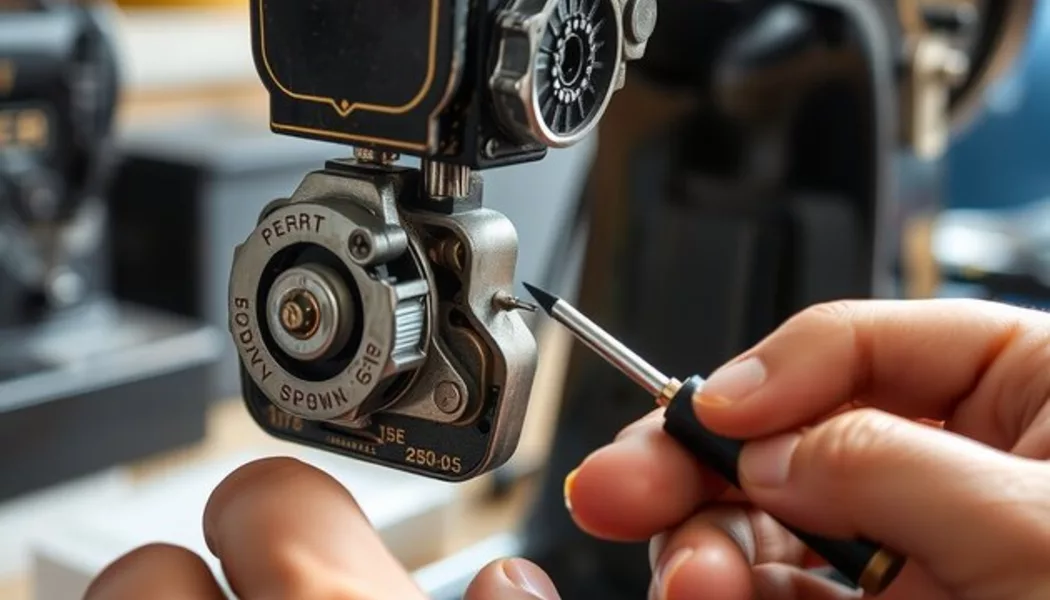
Start by locating your motor oil ports and ventilation slots. On the Bernina 830, the motor is in the lower-rear housing, accessible through small ports or by removing the bottom plate with a JIS screwdriver (these machines use Japanese Industrial Standard screws — a regular Phillips will chew them). The 930 has slightly better access, with oil ports visible from the rear without disassembly. The 1000 and 1130 may require removing the rear panel.
Check the machine manual if you have one — Bernina manuals mark oil points clearly. If you don’t have a manual, Bernina’s official support site has archived diagrams for vintage models.
What you’ll need for this phase:
- Penetrating oil — Liquid Wrench or PB Blaster, not WD-40 (more on that in the mistakes section)
- A clean cloth
- A small applicator tube or the straw nozzle that comes with most penetrating oil cans
The application:
- Wipe down the exterior of the motor housing to remove surface dust and grime.
- Apply two to three small drops of penetrating oil at each oil port or vent opening. Less is more — you’re not flooding it, you’re coaxing oil into the gap between seized surfaces.
- Tilt the machine at different angles after applying to help the oil work toward the shaft and bearing surfaces by gravity.
- Apply a small amount around the handwheel shaft where it meets the machine body.
- Wipe up any excess that runs onto exterior surfaces.
That’s it for Phase 1. Now you wait.
Phase 2: The Soak (24–48 hours)
Set the machine down and leave it. I know that’s hard. But the penetrating oil needs time to wick into micro-gaps and begin breaking down the varnish layer — that’s a chemical process that happens on its own schedule, not yours.
Check-in protocol every 8–12 hours:
- Try gentle handwheel rotation with hand pressure only (not the foot pedal).
- If it moves slightly more than before, that’s progress. Apply one more small drop at each port and continue waiting.
- If there’s no change at 24 hours, move to Phase 3.
- If there’s progress, extend the soak to a full 48 hours before testing under power.
What you’re feeling for: resistance that gives a little, then a little more. A motor that was frozen solid at hour zero and moves slightly at hour 12 is telling you the oil is working.
Phase 3: Controlled Heat Application (2–3 sessions)
If the soak alone isn’t breaking the seizure loose, controlled heat is your next tool. Heat causes micro-expansion of the metal components, which temporarily opens the gaps where oil needs to penetrate. It also thins the oil, helping it flow deeper.
Safe heat sources:
- Hair dryer on medium setting — hold 3–4 inches from the motor housing, work in 2–3 minute intervals.
- Heat gun on low setting — keep it 6+ inches away. These run hotter than you think.
- Never: direct flame, heat lamp up close, boiling water, or sustained heat above what you can comfortably touch.
Application sequence:
- Apply heat for two minutes to the motor housing exterior, moving the source around rather than concentrating on one spot.
- Immediately try gentle handwheel rotation while the metal is still warm.
- Wait five minutes and repeat.
- After three heat sessions, apply another small drop of penetrating oil.
- Wait 4–6 hours before the next heat session.
Stop if you smell anything — plastic, insulation, burning — or if the motor casing gets too hot to touch briefly with the back of your hand.
Phase 4: Gentle Mechanical Loosening (Use Only If Stalled)
If you’re 48 hours in and seeing some movement but the motor still won’t turn freely, the rubber mallet technique can help break a varnish layer that oil alone isn’t fully dissolving.
Get a small rubber mallet — not a metal hammer, not a heavy one. Tap the motor housing gently five or six times from different angles: top, both sides, bottom. You’re creating light vibration, not shock. The goal is to fracture the hardened varnish layer along its thinnest points.
After tapping, apply oil again and wait another 4–6 hours before testing.
One caution: don’t use this on the Bernina 830 Record Electronic (the version with the built-in control module) if you’re unsure about the housing material. The standard mechanical 830 Record handles this fine.
Phase 5: Testing for Success
When the handwheel rotates by hand with moderate resistance — not freely spinning, but no longer fighting you — it’s time to test under power.
Do this in sequence. Don’t skip steps.
- Turn the handwheel by hand through three full rotations. Listen for grinding. Feel for irregular resistance.
- Plug in the machine and press the foot pedal very gently — the equivalent of barely whispering on the accelerator. Let the motor run for 10–15 seconds, then stop.
- Smell check: anything burning? Stop and investigate.
- If clean, run the motor at low speed for 10 minutes without threading or sewing. You’re letting the oil redistribute through the motor.
- After the run-in, apply a few drops of proper sewing machine oil (ISO 32 spindle oil — ISMAC, Tri-Flow, or similar) to the oil ports. The penetrating oil did its job; now the machine needs its maintenance oil.
- Let that soak 30 minutes before actual sewing.
The machine is ready to sew when it runs smoothly through the low-speed break-in with no unusual sounds or smells.
Disclosure: This post contains affiliate links. If you purchase through them, we may earn a small commission at no extra cost to you.
Tools You’ll Need
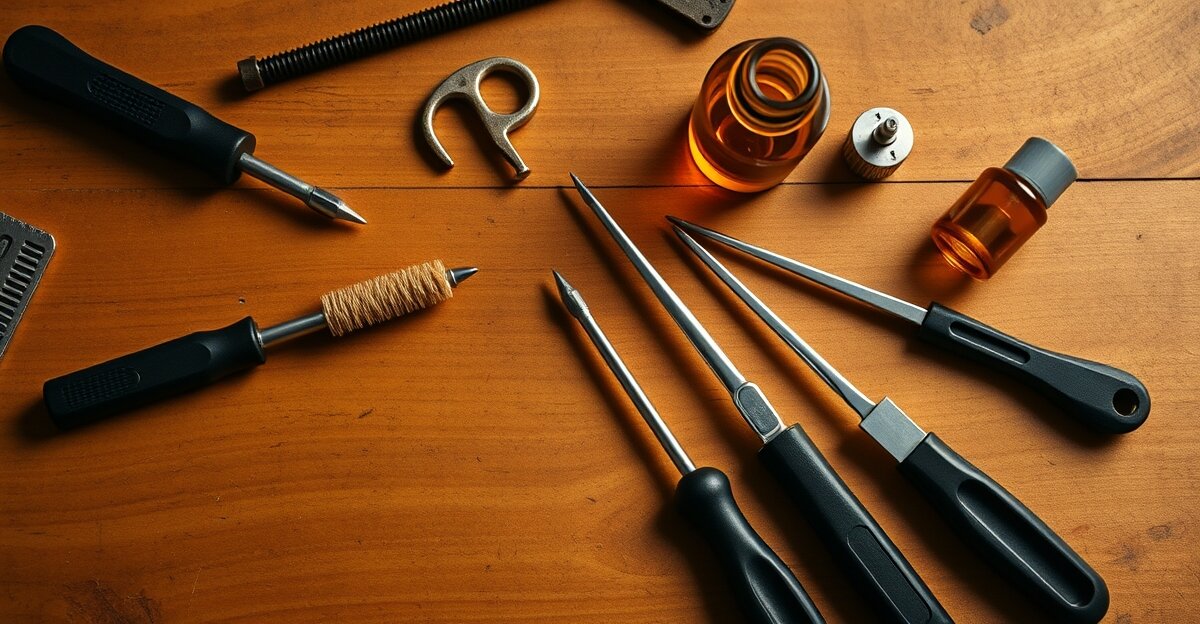
You don’t need much. Here’s everything in one place:
Essential:
- Penetrating oil — Liquid Wrench Penetrating Oil{rel=”nofollow”} or PB Blaster{rel=”nofollow”} (~$6–12)
- Sewing machine oil (for the final lubrication step) — ISO 32 spindle oil or ISMAC Sewing Machine Oil (~$8–15); see our full guide to choosing the right vintage sewing machine oil before buying
- Hair dryer — most people have one; medium setting
- Rubber mallet (small, soft-head) — (~$8–12)
- Clean cloths or shop towels
- Flashlight for inspecting motor vents and ports
- JIS #2 screwdriver if removing panels on the 830 (not a standard Phillips — pick one up for ~$10)
Optional but useful:
- Low-heat heat gun (~$20–30) — more precise than a hair dryer
- Oil applicator with a fine tip for precise delivery
- Multimeter if you want to rule out electrical issues before starting
- Inspection mirror for awkward-angle port access
Total cost for the essential kit: roughly $15–30. Compare that to the professional repair quote.
Common Mistakes That Ruin Seized Motors
These are the things I see mentioned over and over in repair forums and Reddit threads — the mistakes that turn a $20 fix into a $350 repair or a ruined machine.
Mistake 1: Forcing the handwheel. This is the big one. If the handwheel won’t move in five seconds of firm pressure, stop. Forcing it can shear internal shafts, collapse bearing cages, and crack armature windings — damage that makes the motor unrepairable. The seized motor is fixable. A physically broken motor often isn’t. If it won’t budge, more oil and more time is the answer. Not more torque.
Mistake 2: Using WD-40 inside the motor. WD-40 is great for external corrosion, hinges, and surface rust. Inside a motor, it leaves a waxy petroleum residue after the carrier evaporates. That residue worsens the blockage. Use Liquid Wrench or PB Blaster for initial penetration work — they’re designed to wick into tight spaces and break down varnish without leaving a gummy film.
Mistake 3: Using the wrong follow-up oil. After the penetrating oil does its job, you need proper sewing machine oil for the motor’s ongoing lubrication. That means ISO 32 spindle oil — light, clean, specifically formulated for high-speed metal contact. Engine oil (30W, 10W-40) is far too heavy and will gum up again quickly. Silicone spray coats surfaces and prevents proper oil adhesion. Graphite powder conducts electricity and can cause shorts. None of these belong inside a sewing machine motor.
Mistake 4: Running the machine immediately after applying oil. There’s a sequence here for a reason. Run the machine too soon and excess oil splatters onto the bobbin area and needle bar, clogs the fabric path, and burns off the commutator creating smoke. Follow the sequence: oil → soak → hand test → low-speed run-in → sewing.
Mistake 5: Ignoring electrical warning signs. A motor that hums but doesn’t turn could be mechanical seizure — or it could be the start of an armature winding failure. Add a burning smell, and you’re definitely in electrical territory, not mechanical. Electrical problems need a professional. Proceeding with heat and oil when the motor has an electrical fault won’t help and can make things worse.
Mistake 6: Giving up at 24 hours. Some motors — especially 1000 and 1130 models with their larger mass and tighter tolerances — need the full 48–72 hours. Check-in every 8–12 hours, note any progress, and stay patient. The community wisdom from r/sewing is pretty consistent on this: the people who succeed are the ones who waited.
Model-Specific Notes: Bernina 830, 930, 1000, 1130
The revival method is the same across all these models, but each has its quirks worth knowing.
Bernina 830 Record / 830 Record Electronic
This is the model that shows up most in inherited-machine threads — and for good reason. These were Bernina’s workhorse from the 1970s and 80s, built to last fifty years, which means a lot of them are still out there in closets and attic boxes. The DC motor with commutator brush design is effective but sensitive to storage. Expect 48–72 hours for full revival. DIY success rate with oil and heat: around 75–80%.
One note on the Electronic variant: it has a built-in speed control module. If the motor hums but doesn’t respond to the speed controller, check the controller connection before assuming motor seizure — these modules can fail independently of the motor.
Bernina 930
Similar architecture to the 830, with oil ports that are generally more accessible from the rear panel without disassembly. Same oil-and-heat protocol applies. Recovery time is usually faster than the 830 — 24–48 hours in most cases. Success rate: 80%+.
Bernina 1000 / 1130
These are heavier machines with more powerful motors — better storage resistance, but not immune. The larger motor mass means longer soak times: plan on 48–72 hours minimum. The upside is that when these motors do respond, they come back strong and tend to stay that way with proper maintenance afterward.
Across all models: vintage Berninas were engineered to be serviced. The oil ports exist precisely for this reason. These machines want to run. Give them the time and the right chemistry, and most of them will.
When to Stop DIY and Call a Professional
There’s no shame in calling a professional. For some machines and some situations, it’s simply the right call. Here’s how to know when you’ve hit that line.
Stop DIY and seek professional help if:
- The handwheel is rock-solid — zero movement after five seconds of firm pressure
- You’ve completed the full 72-hour oil/heat cycle with no progress
- There’s a burning smell or electrical warning signs
- Machine was stored 12+ months in a high-humidity environment (basement, shed)
- You’re hearing grinding or metal-on-metal sounds
- The machine has significant antique or sentimental value over $500 and you’re not confident in the process
What professional repair actually involves:
A proper shop will fully disassemble the motor, run it through an ultrasonic cleaning bath to strip hardened oil and varnish, inspect and replace the brushes and bearings as needed, and reassemble with premium lubricant. It’s thorough, it works, and the success rate is 90–98%. Most shops offer a 30–90 day warranty on the work.
The honest cost comparison:
| Option | Cost | Timeline | Success Rate |
|---|---|---|---|
| DIY (oil + heat) | $15–30 | 48–72 hours active | 65–80% |
| Professional repair | $150–350 | 2–4 weeks | 90–98% |
| Replacement motor (OEM) | $200–400 | 2–4 weeks | Near 100% |
| New Bernina (entry-level) | $800–2,500+ | Immediate | — |
Find a professional by searching “Bernina repair near me” or “sewing machine motor repair [your city].” Bernina also maintains a list of authorized service centers on their website. For a vintage 830 or 930, any experienced sewing machine tech should be comfortable with the work — you don’t necessarily need an authorized Bernina center.
Prevention: How to Store Your Bernina Long-Term
Once you’ve got the machine running again, the last thing you want is to be back here in five years with the same problem. Storage seizure is almost entirely preventable.
Before putting a Bernina away for more than three months:
- Oil the machine properly — motor ports, bobbin mechanism, all moving metal contact points. See our detailed guide on how to oil a vintage sewing machine without damaging it for exact oiling points.
- Run the machine at low speed for five minutes after oiling to distribute the lubricant.
- Clean lint and thread debris from the bobbin area.
- Cover with a breathable dust cover — not plastic, which traps humidity.
Storage environment matters enormously:
- Target 50–75°F (10–24°C) and 30–50% relative humidity
- Climate-controlled rooms beat basements and attics every time
- A closet in a conditioned living space is genuinely better than the “obvious” storage spot in the basement
If you’re seasonal storage (3+ months):
- Note the date you stored it. After six months, plan for a 24–48 hour “wake-up” period before full use — a brief oil application and a test run before threading.
- If possible, turn the handwheel by hand briefly every month or two. It’s a 30-second task that keeps oil distributed and prevents varnish from setting.
The machines that get stored in zip-lock bags, wrapped in plastic, in basement boxes are the ones that come back seized every time. The ones that get stored in breathable covers in climate-controlled rooms usually wake right up.
Frequently Asked Questions
How long does it typically take to unseize a Bernina motor?
With the oil-and-heat method, most motors respond within 24–48 hours. Severe cases — particularly the Bernina 1000 and 1130 with their larger motors, or machines stored in humid conditions — may need the full 72 hours or professional service. Don’t judge the method at 24 hours; let it run the full cycle before deciding it’s not working.
Can I use WD-40 to unseize my motor?
No — and this is one of the most common mistakes. WD-40 leaves a waxy petroleum residue after the carrier evaporates, which worsens the blockage over time. For initial penetration work, use Liquid Wrench or PB Blaster — they’re engineered to wick into tight gaps and break down varnish without leaving a gummy film. Follow up with proper ISO 32 sewing machine oil for ongoing lubrication.
What’s the success rate for DIY motor unseizing on a Bernina?
Roughly 65–80% with the oil-and-heat method, depending on the model and storage conditions. The 830 and 930 respond well when the handwheel has any movement at all. If the handwheel is completely rock-solid with zero movement, the odds drop and professional service becomes the stronger choice. The key predictor isn’t the model — it’s whether there’s any handwheel movement at all before you start.
Will applying heat damage my Bernina?
Not if you’re careful about it. A hair dryer on medium or a heat gun on low from 6+ inches away is safe for the motor housing and components. What causes damage is sustained high heat, concentrated on one spot, or anything approaching direct flame. Stop immediately if you smell burning plastic, insulation, or anything electrical. The machine case getting warm to the touch is fine; getting too hot to hold briefly is your stop signal.
How much does professional repair cost for a seized Bernina motor?
Typical professional repair for a seized motor runs $150–350, covering labor, ultrasonic cleaning, and any brush or bearing replacement. If the motor needs full replacement rather than restoration, add $200–400 for the part. For comparison, the DIY approach costs $15–30 in supplies. Getting a professional estimate is free, takes 2–3 weeks, and almost always comes with a 30–90 day warranty on the repair.
Can I use my Bernina immediately after applying oil?
No — and this step matters. You need to wait 24–48 hours after oil application, then test handwheel movement by hand before applying any power. Once you’re ready for a powered test, run the machine at low speed without threading for 10–15 minutes to let the oil redistribute and burn off any excess. Only then should you thread up and start sewing. Rushing this sequence leads to oil splatter in the fabric path and, in worst cases, smoke from oil burning on the commutator.