
Japanese vs. Swiss Watch Movements: Which Is Easier to Repair?
You got the quote. $120 to service your Seiko. $380 to service your friend’s Swiss-made dress watch. Same basic problem, wildly different bill. If you’ve ever wondered why Japanese vs Swiss watch movement repair costs diverge so dramatically, the answer lives inside the watch itself.
Japanese movements like the Seiko NH35 and Miyota OS20 use simpler designs with accessible parts, making them realistic candidates for DIY repair and affordable professional service. Swiss movements like the ETA 2824 and Valjoux 7750 rely on extremely tight tolerancing and jeweled pivot bearings that require professional-grade equipment to service correctly. Over ten years, that difference adds up to $500 or more.
This guide breaks down exactly what you’re dealing with for each type: the failure points, the actual repair difficulty (rated 1–10), what tools you need, where to get parts, and a straight-talking framework for deciding when to pull out your screwdrivers versus when to hand the watch to a professional.
Whether you own a modded Seiko diver, a vintage ETA-powered dress watch, or a Citizen with a Miyota movement in it, you’ll leave this page knowing exactly what you’re up against.
Understanding Movement Basics: Japanese vs. Swiss Design Philosophy
Before we talk about specific repairs, it helps to understand why these two families of movements behave differently under the screwdriver. It’s not about quality. It’s about philosophy.
What Is a Japanese Automatic Movement?
Japanese movements are built for the real world. That means durable enough to handle rough treatment, easy enough to service at scale, and cheap enough that replacement is always on the table.
The Seiko NH35 is the benchmark. It runs at 21,600 beats per hour (BPH), carries 24 jewels (jewels are synthetic ruby bearings that reduce friction at pivot points), and uses brass bushings at some wear points instead of jewels throughout. Those brass bushings wear faster than jeweled equivalents, but they’re cheap to replace and forgiving to work on with standard tools.
The Miyota OS20 and 8215 follow a similar playbook. The Miyota 8215 is one of the most copied movement architectures in the world precisely because it’s reliable and accessible. Both run at 21,600 BPH with straightforward layout designs.
Key design traits you’ll notice when you open one up: fewer components overall, more standardized part sizing across models, and a balance assembly that’s simpler to access and adjust. The manufacturing tolerances are looser compared to Swiss, which sounds like a criticism but is actually a feature for anyone who wants to work on these at home.
What Is a Swiss Automatic Movement?
Swiss movements are built around precision and longevity. The ETA 2824-2 runs at 28,800 BPH (higher frequency = better short-term accuracy, but more wear per unit time), uses jeweled pivot bearings throughout, and is manufactured to tolerances measured in microns.
The Sellita SW200 is a near-clone of the ETA 2824 with some improved finishing, and it’s gained ground as ETA has increasingly restricted parts sales to non-certified watchmakers. The Valjoux 7750 is in a different category entirely: a self-winding chronograph movement with a column-wheel mechanism so intricate that many experienced hobbyists won’t touch it.
What you’ll notice when you open a Swiss movement: more components, tighter spacing, surfaces that have been hand-finished or machine-finished to a degree you won’t find in Japanese movements, and a balance assembly with adjustment screws that require proper timing equipment to set correctly.
Core Differences at a Glance
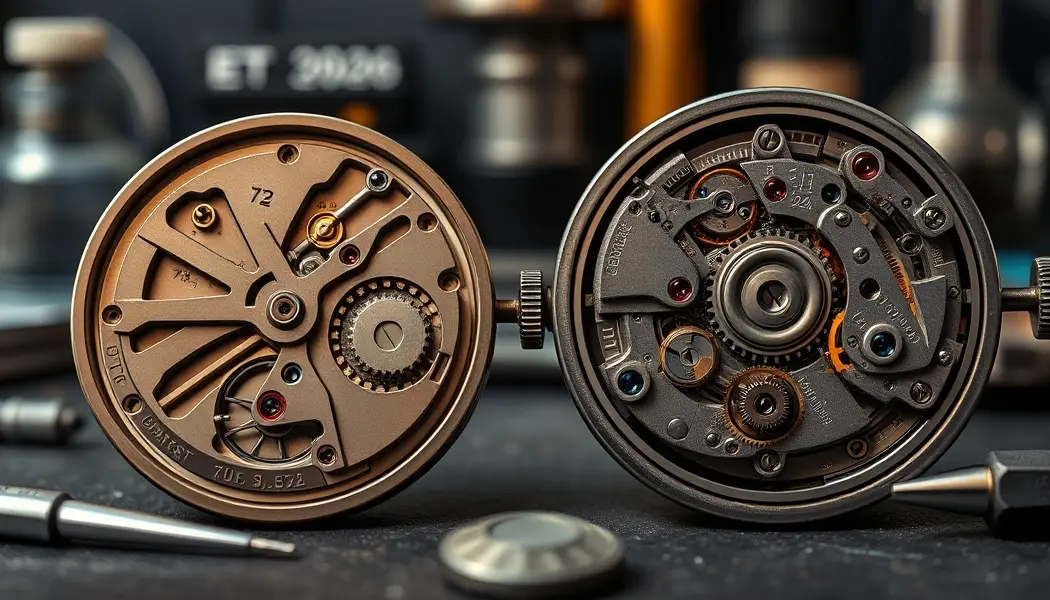
| Aspect | Japanese (NH35/OS20) | Swiss (ETA 2824/Valjoux 7750) |
|---|---|---|
| Bearing type | Brass bushings at some pivot points | Jeweled pivots throughout |
| Tolerancing | Looser (hobbyist-friendly) | Extremely tight (professional-required) |
| Service interval | Every 5–7 years | Every 3–5 years |
| Parts availability | Widely available, inexpensive | Restricted (ETA), more expensive |
| Lubrication | Generic synthetic watch oils | Specific Moebius formulations per point |
| DIY accessibility | Realistic for beginners | Professional-only for most repairs |
| Parts cost | $2–15 per component | $25–100+ per component |
The core trade-off: Swiss movements reward you with exceptional precision and decades of service when maintained correctly. Japanese movements reward you with lower barriers to DIY repair and a much gentler cost curve over time.
Common Failure Points and Repair Difficulty
This is the meat of it. Let’s go through the five failure modes you’re most likely to encounter, with honest difficulty ratings and cost estimates for both movement families.
Problem 1: Magnetization (Hands Stick, Timekeeping Goes Haywire)
What happens: Modern life is full of magnetic fields — phone speakers, tablet smart covers, refrigerator magnets. When a movement gets magnetized, the hairspring (the delicate coiled spring that controls timekeeping) sticks to itself, causing the watch to run fast or erratically. It can look like your watch is dying, but often a demagnetizer fixes it completely in under two minutes.
Japanese movements (NH35, Miyota OS20): The softer metal components in Japanese movements can pick up magnetism more readily, but they also release it easily. A standard AC electrical demagnetizer does the job. No disassembly required.
- Difficulty: 1/10
- DIY cost: $50–100 (demagnetizer, one-time purchase)
- Professional cost: $50–80
Swiss movements (ETA 2824, Valjoux 7750): Swiss movements benefit from a DC demagnetizer rather than AC, because AC fields can potentially stress jeweled bearings over repeated use. In practice, a good-quality AC demagnetizer won’t hurt a Swiss movement, but the more cautious approach is worth noting.
- Difficulty: 2/10
- DIY cost: $80–150 (DC demagnetizer)
- Professional cost: $50–80
Verdict: This is the one repair where both movement types are equally approachable. If you own any mechanical watch, buy a demagnetizer. It’s the single highest-return tool investment in watch ownership.
Problem 2: Worn Bearings (Sluggish Running, Low Amplitude)
Amplitude refers to the arc of the balance wheel’s swing. A healthy movement runs between 270–310 degrees of amplitude. When bearings wear down, amplitude drops, and the watch starts running slow or stopping entirely.
Japanese movements: Japanese movements use brass bushings at certain pivot points. These wear gradually and predictably over 5–10 years of daily wear. When they’re worn, the fix is disassembly, cleaning, and either re-lubrication or bushing replacement. It’s hands-on work, but manageable.
- Difficulty: 5/10
- DIY cost: $20–40 (cleaning solutions, oils, possible bushing kit)
- Professional cost: $120–180
Swiss movements: Swiss movements use jeweled pivots throughout. These are harder and last longer than brass, but when they fail — usually from a shock impact rather than gradual wear — they crack rather than wear down. Cracked jewels require replacement stones, which need to be pressed into position with a staking tool (a specialized press). This is not hobbyist territory.
- Difficulty: 9/10
- DIY cost: $500+ in tools alone, not counting parts
- Professional cost: $200–350
Verdict: Japanese bushing wear is a DIY repair you can learn. Swiss jewel failure is a professional repair, period. Don’t let anyone tell you otherwise.
Problem 3: mainspring Depletion (Short Power Reserve, Stops Overnight)
The mainspring is the coiled metal strip inside the barrel that stores energy. On an automatic movement, the rotor winds it as you move throughout the day. Over time, the spring loses tension capacity and can no longer fully power the watch. A healthy NH35 has a 41-hour power reserve. When you’re seeing it stop after 20 hours of no activity, the mainspring is a likely culprit.
Japanese movements: Mainspring replacement on an NH35 or Miyota requires opening the barrel, removing the old spring, and seating the new one correctly before reassembly. It’s genuinely challenging, but the barrel design is accessible and replacement springs are cheap.
If you want a full walkthrough on this repair, our guide on replacing a watch mainspring covers the procedure in detail.
- Difficulty: 6/10
- DIY cost: $40–80 (mainspring $5–15, tools, lubricants)
- Professional cost: $80–120
Swiss movements: ETA 2824 barrels are machined to tighter tolerances. If you rewind a Swiss mainspring with slightly too much tension, or seat it incorrectly, you can damage the barrel arbor or the spring itself in a way that’s expensive to undo. The professional service cost reflects the precision required.
- Difficulty: 8/10
- DIY cost: Technically possible but high risk of collateral damage
- Professional cost: $120–180
Verdict: Japanese mainspring work is DIY-possible with patience and the right guide. Swiss mainspring work should go to a professional unless you have formal watchmaking training.
Problem 4: Hack Spring Malfunction (Seconds Hand Won’t Stop When You Pull the Crown)
The hack mechanism stops the balance wheel when you pull the crown out to set the time, letting you sync the watch precisely. When the hack spring oxidizes or bends from handling, the seconds hand keeps ticking even with the crown pulled, making accurate time-setting impossible.
Japanese movements (NH35, Miyota): The hack lever in Japanese movements is accessible and the parts are inexpensive. On the NH35, the hack spring costs around $3–8 and can be replaced as a standalone repair after partial disassembly of the keyless works (the gear train on the dial side that handles crown functions).
- Difficulty: 4/10
- DIY cost: $5–15 (part cost)
- Professional cost: $80–120
Swiss movements: The hack lever on Swiss movements works to tighter tolerances, and incorrect reassembly affects timekeeping accuracy. This repair often gets bundled into a full service rather than done in isolation, because the disassembly required might as well be used for a full clean and lube.
- Difficulty: 7/10
- DIY cost: Not recommended standalone
- Professional cost: $80–120 (or included in full service)
Verdict: Japanese hack spring repair is a satisfying beginner project. It’s the kind of job where you can spend a Sunday afternoon, fix the problem, feel accomplished, and save $80.
Problem 5: Rotor Wear (Winding Efficiency Drops Off)
The rotor is the half-moon shaped weight that spins with your arm movement and winds the mainspring. Over years of use, the ball bearing cage that the rotor rides on can wear, causing the rotor to spin unevenly or not transfer energy efficiently to the winding mechanism.
Japanese movements: This is the most beginner-friendly repair on this list. Rotor swaps are so common in the Seiko modding community that it’s practically a rite of passage. Parts are plentiful and inexpensive on eBay and from modding suppliers, and the rotor comes off with a single screw on the NH35.
- Difficulty: 2/10
- DIY cost: $10–30 (aftermarket rotor)
- Professional cost: $60–100
Swiss movements: Rotor replacement on Swiss movements requires caliber-specific parts. A Sellita SW200 rotor is not interchangeable with an ETA 2824 rotor despite the movements being near-identical in design. Parts sourcing takes more effort, and the tolerancing requires care.
- Difficulty: 5/10
- DIY cost: $30–60 (if you can find the right part)
- Professional cost: $80–120
Verdict: If you’ve never done any watch work before and want to start somewhere, a Japanese rotor swap is the perfect first project.
Repair Difficulty Summary
| Repair Type | Japanese (NH35/OS20) | Swiss (ETA 2824/7750) |
|---|---|---|
| Demagnetization | 1/10 | 2/10 |
| Worn bearings | 5/10 | 9/10 |
| Mainspring replacement | 6/10 | 8/10 |
| Hack spring repair | 4/10 | 7/10 |
| Rotor swap | 2/10 | 5/10 |
Tools Required for Each Movement Type
The tool gap between Japanese and Swiss repair work is real, and it’s worth understanding before you commit to either.
Essential Tools for Japanese Movement Repair
The JIS screwdriver thing is not optional. I’ve seen people ruin perfectly good NH35 screws with Phillips heads, and once those slots are mangled, you’re adding a screw extraction job to your afternoon. JIS (Japanese Industrial Standard) screws look almost identical to Phillips but have a subtly different cross pattern. The 0.8mm and 1.0mm sizes cover most NH35 work.
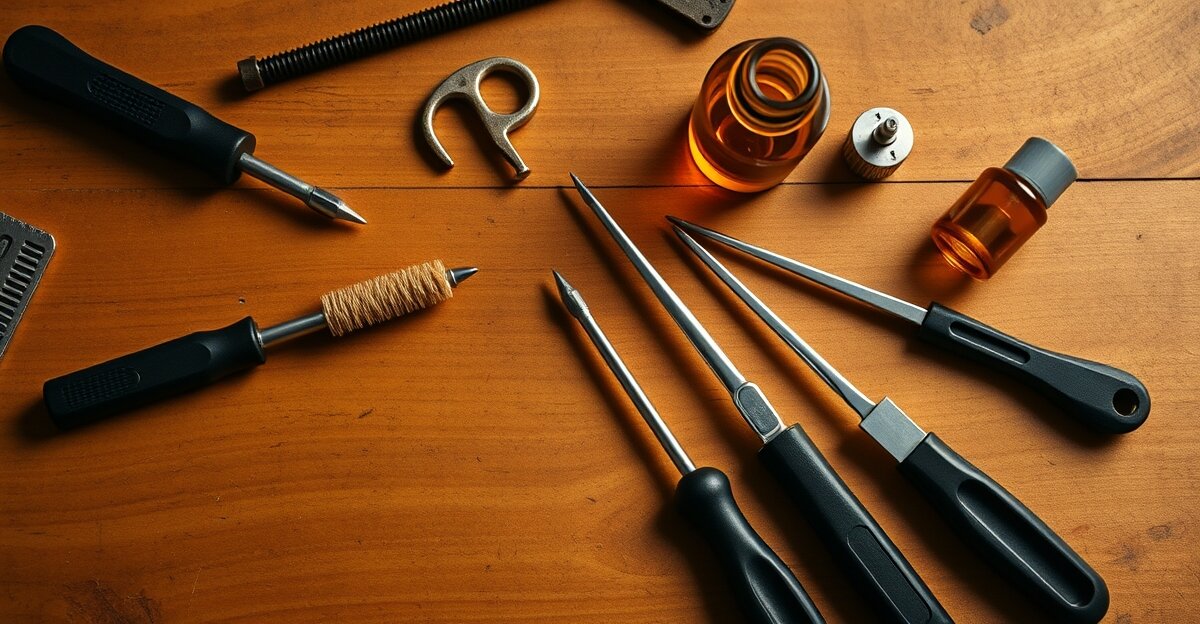
Beyond that, here’s what you need to get started:
- JIS screwdrivers: 0.6mm, 0.8mm, 1.0mm (dedicated set, not Phillips substitutes)
- Movement holder: NH35-compatible movement ring to hold the movement stable
- Case opener: Friction ball or rubber case knife
- Loupe: 5x–10x for general work; 15x for pivot inspection
- Anti-magnetic tweezers: Curved tip, at least AA or SA grade
- Demagnetizer: AC or DC, $50–100
- Lubricants: Moebius 9010 (escapement oil), 8000 (mainspring grease), HP1300 (keyless works)
- Cleaning solution: Lighter fluid or specialized watch cleaner for parts cleaning
Parts sources for Japanese movements:
- Cousins UK (cousinsuk.com): Largest UK supplier, ships worldwide, solid NH35 and Miyota stock
- eBay Japan: OEM Seiko parts direct; cheapest option if you’re comfortable with shipping times
- OFREI (ofrei.com): Best US option for fast domestic shipping
- Etsy watch modding community: Stripped parts, individual components at low cost
Essential Tools for Swiss Movement Repair
Swiss movement work demands a step up in tooling precision. A Bergeon screwdriver set runs $80–150, and you’ll genuinely feel the difference in how they engage the screws compared to cheaper alternatives. For Swiss work, cheap tools cause expensive mistakes.
- Bergeon screwdriver set: 0.6–1.2mm Swiss-standard precision set ($80–150)
- ETA-specific movement holder: Caliber-dependent, not universal
- Timing machine: A Timegrapher 1000 or similar; you cannot properly assess a Swiss service without one ($100–300)
- Ultrasonic cleaner: Strongly recommended for Swiss parts cleaning ($80–200 for entry-level)
- Lubricants: Moebius 9415 (keyless works), D5 grease (cannon pinion), 9010 (escapement)
- Anti-magnetic tweezers: Non-negotiable for Swiss hairspring work
Parts sources for Swiss movements:
- Jules Borel (julesborel.com): Largest US Swiss parts distributor, good ETA and Sellita coverage
- Cousins UK Swiss section: Comprehensive catalog but professional pricing
- Esslinger (esslinger.com): Good alternative for ETA parts, US-based
- Important note: ETA has been progressively restricting parts sales to non-certified watchmakers. Sellita has stepped into the gap somewhat, but Swiss parts sourcing requires more effort than Japanese equivalents.
Tool Investment Comparison
| Tool Category | Japanese Starter Setup | Swiss Starter Setup |
|---|---|---|
| Screwdrivers | $20–40 (JIS set) | $80–150 (Bergeon) |
| Lubricants (full set) | $30–60 | $80–150 |
| Timing machine | Optional ($100–300) | Strongly recommended ($100–300) |
| Ultrasonic cleaner | Optional | Recommended ($80–200) |
| Movement holder | $10–20 | $20–40 |
| Total starter kit | $150–250 | $400–700 |
This gap matters. If you’re deciding which path to learn on, Japanese movements let you develop real skills with a $150–250 initial investment. Swiss work requires nearly triple that before you’ve touched a single watch.
10-Year Cost of Ownership
This is where the real-world case for understanding your movement type gets concrete. For a detailed look at repair cost patterns across movement types, our mechanical watch repair basics article covers the broader picture.
Let’s look at what you’d realistically spend over ten years on a watch powered by each movement type.
| Service Event | Japanese (NH35) DIY | Japanese (NH35) Pro | Swiss (ETA 2824) Pro |
|---|---|---|---|
| Initial tool investment | $150–250 | $0 | $0 (professional handles) |
| Year 1–5 service | $40–80 | $150–200 | $200–350 |
| Mainspring (if needed, yr 8–10) | $40–80 | $80–120 | $120–180 |
| Year 6–10 service | $40–80 | $150–200 | $250–400 |
| Parts (incidentals) | $20–40 | $30–50 | $80–200 |
| 10-year total | $290–530 | $410–570 | $650–1,130 |
A few things jump out here.
DIY on Japanese movements saves money over professional service, but the savings aren’t dramatic compared to the skill development you get. The bigger gap is between Japanese professional service and Swiss professional service: roughly $200–600 over a decade depending on what fails.
If you own a watch with a Valjoux 7750 chronograph movement, add 30–40% to those Swiss professional service figures. Chronograph service takes longer and requires more expertise.
The NAWCC (National Association of Watch and Clock Collectors) has noted publicly that Japanese movements represent a more accessible entry point for new watchmakers precisely because the parts cost and service intervals are more forgiving. That same logic applies to the hobbyist owner.
When to DIY vs. Call a Professional
Here’s the decision framework I’d use if you’re standing at a workbench right now trying to decide.
Always DIY-friendly (either movement type):
- Demagnetization
- Crystal replacement
- Strap and bracelet work
DIY-friendly for Japanese movements specifically:
- Rotor swap (2/10 difficulty)
- Hack spring replacement (4/10)
- Stem and crown replacement (3/10)
- Basic cleaning and re-lubrication with practice (6/10)
- Mainspring replacement with a good guide (6/10)
Send to a professional:
- Any Swiss movement full service
- Japanese jewel or balance assembly work (if amplitude is critically low)
- Any escapement adjustment on either movement type
- Valjoux 7750 chronograph mechanism, full stop
The value test: If you own a watch worth more than $500, consider professional service regardless of movement type. The risk of a DIY error that causes cascading damage (a dropped part, a scratched dial, a bent pivot) is real, and the repair cost of fixing a mistake can exceed the original service cost.
If your watch is worth under $300, the economics of DIY Japanese movement work make good sense. A $50 demagnetizer and $30 in lubricants can address the two most common failure points. For a $250 Seiko, that’s a reasonable investment.
For Swiss movements at any price point, I’d honestly direct most hobbyists toward building skills on Japanese movements first. The watchmaking communities on r/Watchmaking and r/Seiko consistently recommend starting on NH35s before attempting ETA work, and I think that’s right. The NH35 is forgiving enough that mistakes are recoverable. The ETA 2824 is not.
We covered the repair cost comparison for luxury Swiss movements specifically in our piece on Rolex vs. Seiko repair costs if you want to see how those figures scale.
Pulling It All Together
The real difference between Japanese and Swiss watch movement repair isn’t a quality hierarchy. It’s a design priority hierarchy. Japanese movements prioritize accessibility and affordability. Swiss movements prioritize precision and longevity.
Both philosophies produce excellent movements. But they require completely different approaches when something goes wrong.
If you own a Seiko NH35 or Miyota-powered watch: start with a demagnetizer, invest $150–250 in basic tools, and know that most common repairs are genuinely within reach. The hobbyist watch repair community has produced guides, parts sources, and YouTube walkthroughs specifically because these movements reward curiosity.
If you own an ETA 2824 or Valjoux 7750 watch: budget for professional service every 3–5 years, find a certified watchmaker you trust, and know you’re not cutting corners by sending it out. The design demands it.
Either way, understanding what’s inside your watch changes how you think about ownership. You’re not just wearing a time-telling device. You’re maintaining a mechanical instrument, and knowing which one you have determines how that relationship works.
Ready to get started on Japanese movement work? Our guide to mechanical watch repair basics covers the tools and first steps in detail.
Frequently Asked Questions
Is it worth repairing a Japanese watch movement yourself?
For most common issues, yes. Demagnetization, rotor swaps, and hack spring replacement are all realistic DIY repairs on movements like the Seiko NH35 or Miyota OS20, with difficulty ratings of 1–5 out of 10. If your watch runs 10 minutes fast or stops unexpectedly, demagnetization is almost always the first thing to try, and it requires no disassembly at all.
Why is Swiss watch repair so much more expensive than Japanese?
Swiss movements like the ETA 2824 use jeweled pivot bearings throughout, run at tighter manufacturing tolerances, and require proprietary lubrication formulations applied to 18–20 specific points. Each of those factors adds time and expertise to a service. A full ETA 2824 service runs $250–400 professionally; a Seiko NH35 service runs $120–200. The gap comes from the precision required, not from any artificial markup.
How often should I service a Seiko NH35 vs. an ETA 2824?
A Seiko NH35 should be serviced every 5–7 years under normal daily wear conditions. An ETA 2824 needs service every 3–5 years due to its higher beat rate (28,800 BPH vs. 21,600 BPH) and tighter tolerances. Swiss movements accumulate wear faster at the higher frequency and require more frequent attention to stay within specification.
What is a JIS screwdriver and do I really need one?
Yes, you really need one. JIS (Japanese Industrial Standard) screws are visually similar to Phillips screws but have a shallower cross pattern. Using a Phillips screwdriver on JIS screws strips the heads, often permanently. A JIS screwdriver set covering 0.6mm, 0.8mm, and 1.0mm costs $20–40 and will prevent the most common beginner mistake in Japanese movement repair.
Where is the best place to buy Seiko NH35 parts?
For the widest selection: Cousins UK (cousinsuk.com) ships worldwide and has excellent NH35 and NH36 coverage. For best pricing: eBay Japan has OEM Seiko parts at lower cost, though shipping takes 2–3 weeks. For US-based fast shipping: OFREI (ofrei.com) is the most established American watch parts distributor. Individual small parts like hack springs and click springs are also available from the Etsy watch modding community, often stripped from donor movements.
One thought on “Japanese vs. Swiss Watch Movements: Which Is Easier to Repair?”
Comments are closed.