
Film Camera Light Seal Replacement: The Complete DIY Guide
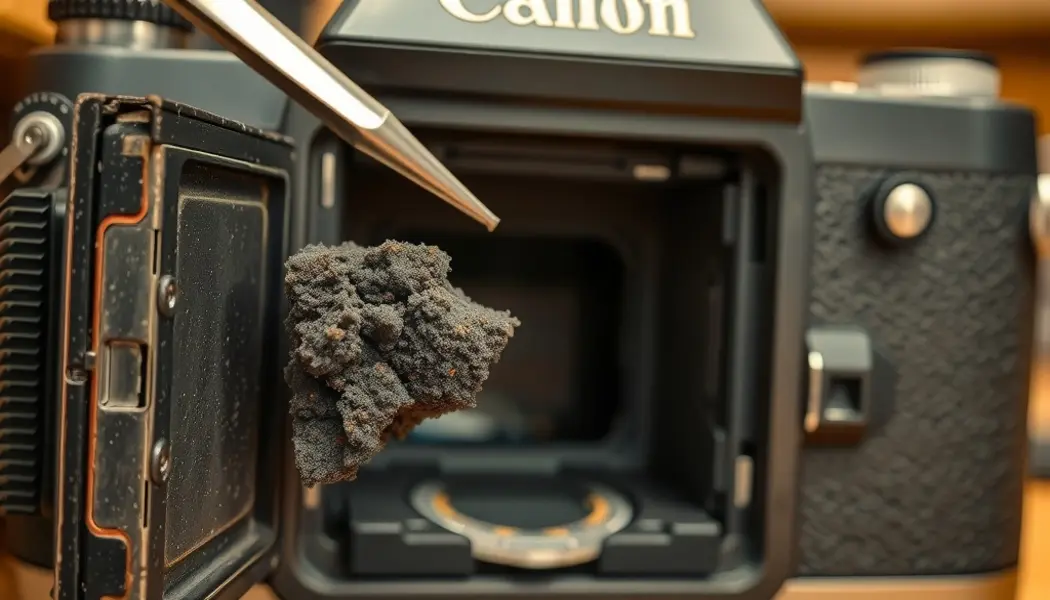
Every film camera that uses a door or back panel to seal out light relies on foam seals — strips and patches of open-cell polyurethane foam that compress against the camera body to block stray light from fogging the film. And every single one of those foam seals, on every film camera ever made, will eventually decay. Not might. Will. The foam breaks down chemically over 20-30 years regardless of how well the camera was stored. On a camera from the 1970s or 1980s, the seals are almost certainly beyond serviceable life — sticky black goo in the best case, crumbled dust in the worst.
Replacing film camera light seals is the single most common DIY repair in film photography, and it’s genuinely accessible to beginners. The tools are minimal, the materials cost under $15, and a successful replacement takes about 90 minutes including drying time. The payoff: a camera that previously produced fogged, unusable film becomes fully functional.
Light seal replacement requires removing all old foam from the door channels, mirror bumper position, and hinge channel, then fitting new pre-cut foam strips with self-adhesive backing. The critical steps are thorough old seal removal (this is 70% of the work) and clean installation with no gaps or overlaps at corners.
Signs Your Light Seals Need Replacing
Don’t assume your seals are fine just because the camera “seems” to seal when you close the door. Failed seals don’t always look failed — the foam can appear intact while having lost all its compression and resilience. Check for these indicators:
Fogged edges on developed film — the most diagnostic symptom. Light leak fogging appears on the edge of the frame, usually along one or both sides of the strip. The fog is typically a warm orange-red color on negative film (it represents additional light exposure in an area that should be unexposed). The pattern often has a gradient — bright at the edge, fading toward center — rather than a sharp line.
Light streaks near sprocket holes — if the fogging runs parallel to the sprockets rather than across the frame, the hinge-side channel seal is the likely culprit. The hinge is the most common failure point on many cameras.
Black sticky residue on the door edge — open the film door and run a fingernail along the foam channels. If you get a black, gummy residue, the foam has entered its adhesive stage of decomposition. It will still block some light but is no longer reliably compressing.
Foam crumbling when touched — if the foam is beyond the sticky stage, it crumbles at the lightest touch. This is late-stage decomposition. The camera cannot be trusted with film until this is addressed.
No foam at all — not uncommon on cameras that were poorly stored or have had amateur work done. If you open the door and the channels are empty, that’s clear enough.
Which Cameras Need This Most
Any 35mm SLR or rangefinder from the 1970s and 1980s that you’re considering loading with film should have the seals inspected first. The most commonly encountered cameras that need seal replacement:
- Canon AE-1 and AE-1 Program (1976-1984) — by far the most common film camera in circulation; seal failure is near-universal on unserviced examples
- Pentax ME Super (1980-1985) — notorious for the hinge channel seal, which tends to become extremely sticky and is difficult to clean
- Olympus OM-1 and OM-10 (1972-1987) — the mirror bumper seal is particularly critical on OM bodies and often overlooked in partial seal jobs
- Minolta X-700 and X-570 (1981-1985) — typical foam decay; generally straightforward to reseal
- Nikon FM and FM2 (1977-2001) — the FM series uses the same foam type; the door channel seals on an FM from the early 1980s are usually past service life
All of these cameras use the same basic foam type — open-cell polyurethane, typically 1mm thick for the door channels and slightly thicker for the mirror bumper. This means the same seal kit works across all of them, which is why pre-cut kits are available in camera-specific versions for all the popular models.
Tools and Materials
- Pre-cut light seal kit — available on eBay from sellers like AKI-ASAHI for $5-15; search “[camera model] light seal kit.” Pre-cut kits include foam strips dimensioned for each seal location on your specific camera model, with adhesive backing.
- Alternatively: foam sheet stock — 1mm black self-adhesive craft foam (available from hobby stores or Amazon) works for most door channels; 2mm for mirror bumper positions. Buy a sheet and cut to size.
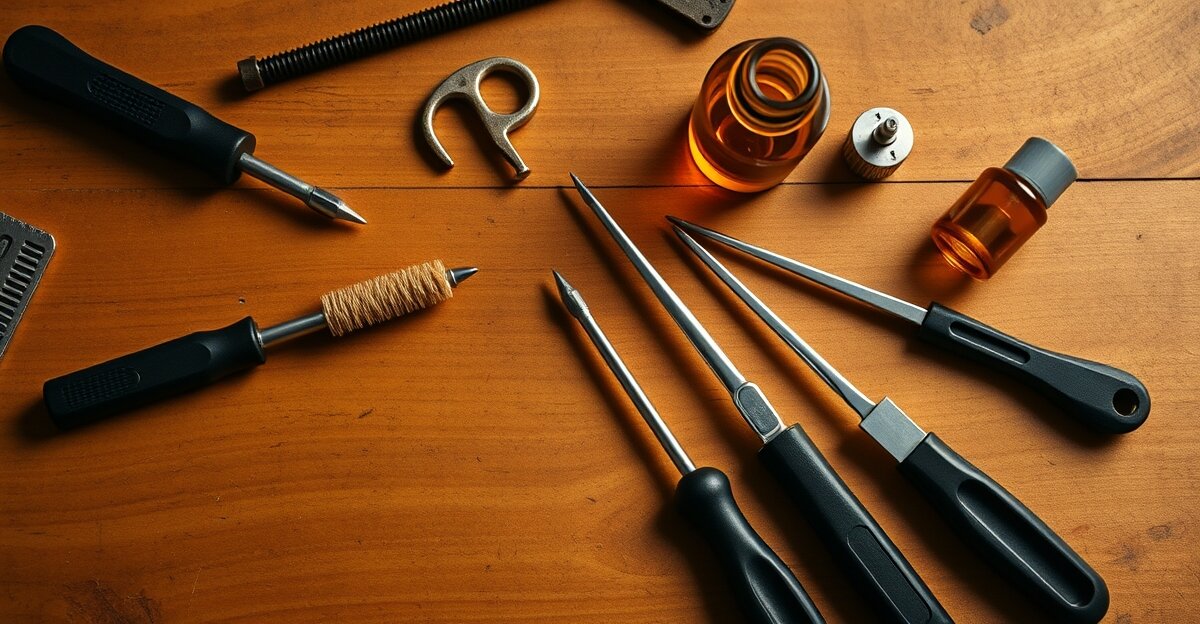
- Plastic toothpick or cocktail stick — for removing old foam from channels; not metal tools
- Wooden toothpick — for pressing new foam into corners and channels
- Isopropyl alcohol 90%+ — for cleaning channels after foam removal
- Cotton swabs (Q-tips) — for applying IPA and cleaning
- Tweezers — for handling new foam strips without contaminating the adhesive
- Small scissors — for trimming foam to exact length
- Good lighting — a headlamp or articulated desk lamp; you need to see into the channels clearly
Removing Old Seals
This is the step that takes the most time and care, and it’s the most important one. New foam installed over residue from old foam won’t adhere properly and won’t compress to a clean seal.
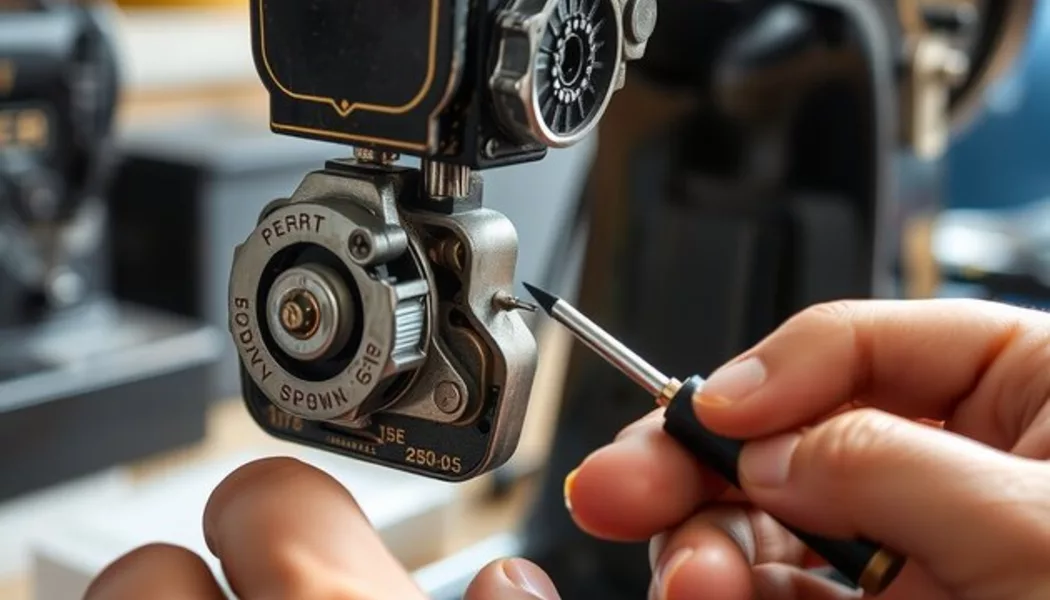
The rule: use plastic tools only. No metal scrapers, no X-Acto blades, no dental picks. Metal tools scratch the camera body, damage the channel surfaces, and can dig into the thin alloy or plastic of camera bodies. A plastic cocktail stick or toothpick has just enough hardness to scrape dried foam residue without damaging the substrate.
The removal process:
- Open the film door and identify all seal locations — on a typical 35mm SLR there are three main areas: the door channel (the groove that runs around the perimeter of the film door opening), the hinge channel (the small strip at the hinge side), and the mirror bumper (the pad at the top of the mirror box that the mirror contacts when it flips up).
- Apply IPA to the old foam — dampen a cotton swab with isopropyl alcohol and run it along the old foam. IPA softens the adhesive and helps release the foam from the channel. Let it sit for 30-60 seconds before scraping.
- Scrape along the channel — use the plastic toothpick to scrape along the bottom and sides of the channel, working the old foam loose. Work in short sections. On sticky foam (the semi-degraded kind), the material will roll up like an eraser — this is the easiest removal. On crumbled foam, work carefully to collect all the pieces.
- Use cotton swabs for residue — once the bulk of the foam is out, use IPA-dampened swabs to scrub the channel clean of any remaining adhesive residue. Change swabs frequently. You want a clean, bare surface with no black smearing.
- Check with a light — shine a flashlight along the channels from a raking angle. Any remaining residue will be visible as a slightly shiny or textured patch. Channels should look uniformly clean.
On the hinge channel specifically: this is usually the most contaminated spot. The hinge-area foam tends to compress more and accumulate more debris. Spend extra time here. On Pentax ME Super cameras, be prepared for the foam to have essentially bonded to the channel — patience and IPA are your tools.
Cutting New Seals to Size
If using a pre-cut kit, your strips are already dimensioned — check the kit’s instructions for which strip goes where. If cutting from foam sheet:
| Seal Location | Foam Thickness | Width |
|---|---|---|
| Door channel (most cameras) | 1mm | Width of the channel groove |
| Hinge channel | 1mm | Width of the channel groove |
| Mirror bumper | 2mm | Width of the mirror bumper pad |
Cut strips slightly long — you’ll trim to exact length during installation. Length accuracy matters more than width; width just needs to fill the channel without protruding above the channel edge when compressed.
Thickness is critical. Foam that’s too thin won’t compress to seal. Foam that’s too thick will prevent the door from closing completely or will build up stress on the hinges. The correct thickness is measured compressed in the channel — the foam should compress to essentially nothing (a hair-thin line of contact) when the door is closed firmly.
Installing New Seals
Installation technique:
- Start with the long runs first — the top and bottom door channel runs, then the sides, then the hinge channel, then the mirror bumper last
- Peel the backing just ahead of where you’re laying — don’t peel the whole strip at once; the adhesive will pick up dust and the strip will stick to itself
- Press into the channel firmly — use a toothpick to press the foam down into the base of the channel, not just onto the surface. The foam should sit in the channel, not perch on top of it.
- Mitre the corners — at each corner of the door channel, cut the foam at a 45-degree angle so the two pieces meet cleanly without a gap or overlap. A gap at a corner is a light path. Use sharp scissors and take your time at corners.
- Butt-join straight sections — where two pieces meet on a straight run, cut both ends square and butt them tightly together. No overlap (creates a bump that prevents the door from sealing flat). No gap (creates a light path).
- Mirror bumper installation — the mirror bumper pad is typically a single patch, not a strip. Cut it to exactly the dimensions of the original pad footprint (which you should have cleaned clean enough to see). Press firmly and evenly.
Testing Before Loading Film
Never load film to test your seal job — that wastes a roll and 36 frames of potential evidence. Test first:
Visual gap test: Close the camera door and look carefully at the hinge line and door edges in strong light. Any gap in the foam will appear as a light sliver. Run your finger along the door edge — you should feel even, consistent compression resistance everywhere.
Torch test: Take the camera into a darkened room (a bathroom with the light off and towels under the door works). Open the film door. Hold a bright LED flashlight against the outside of the camera and run it along every edge. Inside the camera, watch for any light bleed through the seal areas. Close the door and repeat from the inside out. Any light getting through shows a seal gap.
The newspaper test: With the camera loaded with unexposed film (development can confirm this but costs a roll), close the door and immediately open it — if any light seeps in during those few seconds, the seals aren’t blocking. Better: run this test against a bright window.
Model-Specific Notes
Canon AE-1: Three seal locations — door channel, hinge channel, and mirror bumper. The AE-1’s door channel is relatively deep and takes 1mm foam well. The mirror bumper is particularly important on the AE-1 because mirror slap is a known issue; a correctly installed 2mm mirror bumper dampens this.
Pentax ME Super: The hinge channel seal is notoriously stubborn to remove. The foam tends to polymerize and bond to the channel surface. IPA helps, but plan for 20+ minutes on this one channel alone. The ME Super also has a thin strip of seal material that runs along the inside of the door at the latch-side edge — this is often missed and is a common source of residual light leaks after an otherwise complete seal job.
Olympus OM-1 and OM-10: The mirror bumper is the single most critical seal on OM bodies. The OM mirror travels a longer path than most SLRs, and the bumper has to absorb more impact. Use 2mm foam here, not 1mm. Also check the viewfinder blackout strip at the top of the mirror box — this is a separate thin strip that some kits include and some don’t.
For more on keeping vintage film cameras in working order, see the vintage equipment restoration guide. And if you’re working on a Canon AE-1 specifically, the companion guide on removing AE-1 battery corrosion covers the other most common repair those cameras need.
Frequently Asked Questions
How long do replacement light seals last?
Quality replacement foam seals typically last 10-15 years before showing signs of compression loss. The original seals on 1970s-1980s cameras were made from similar materials and lasted 20-30 years, so modern replacements made from slightly more stable foam formulations may do as well or better. Cameras stored with the door closed (compressing the seals constantly) will wear them faster than cameras stored with the door slightly ajar to let the seals rest.
Can I use weatherstripping foam from a hardware store?
You can, but with caveats. Standard door weatherstripping foam is usually too thick (3-6mm) and too large in cell size. The ideal foam for camera seals is a fine-cell open foam at 1mm thickness — it needs to compress to near-nothing when the door closes. If you use hardware store foam, find the thinnest, finest-cell option available and test compression before committing. Pre-cut camera-specific kits are the better choice for the $8-12 cost.
My camera still has light leaks after a new seal job. What did I miss?
Check the corners first — a gap at any corner is a reliable light path and the most common post-installation leak source. Then check the hinge channel specifically. Then look for any place where the foam has bunched up (creating a high spot that causes the door to not seat flat). Finally, check that the mirror bumper foam isn’t too thick — if it’s preventing the mirror from fully seating, there may be a gap between the mirror box and the film plane that causes internal fogging even with perfect door seals.
Do I need to reseal a camera that I’m only using indoors?
Yes — light leaks care nothing about whether you’re indoors or outdoors. Any light-colored room, window light, or lamp can cause fogging through failed seals. The only time you might get away with failing seals is shooting in very low light conditions, but that’s not a reason to skip the repair. If you’re loading film into the camera, the seals should be serviceable.
One thought on “Film Camera Light Seal Replacement: The Complete DIY Guide”
Comments are closed.