
Pfaff 130 Sewing Machine Repair: 5 Common Problems & Fixes
Pfaff 130 Sewing Machine Repair: 5 Common Problems & Fixes
You bought a Pfaff 130 at a thrift store for $35, or maybe your aunt’s machine has been sitting in a cabinet for twenty years waiting for someone brave enough to plug it in. Either way, you’re now asking the internet why it won’t thread properly, why the bobbin is a tangled disaster, or why the motor sounds like it’s thinking very hard and going absolutely nowhere.
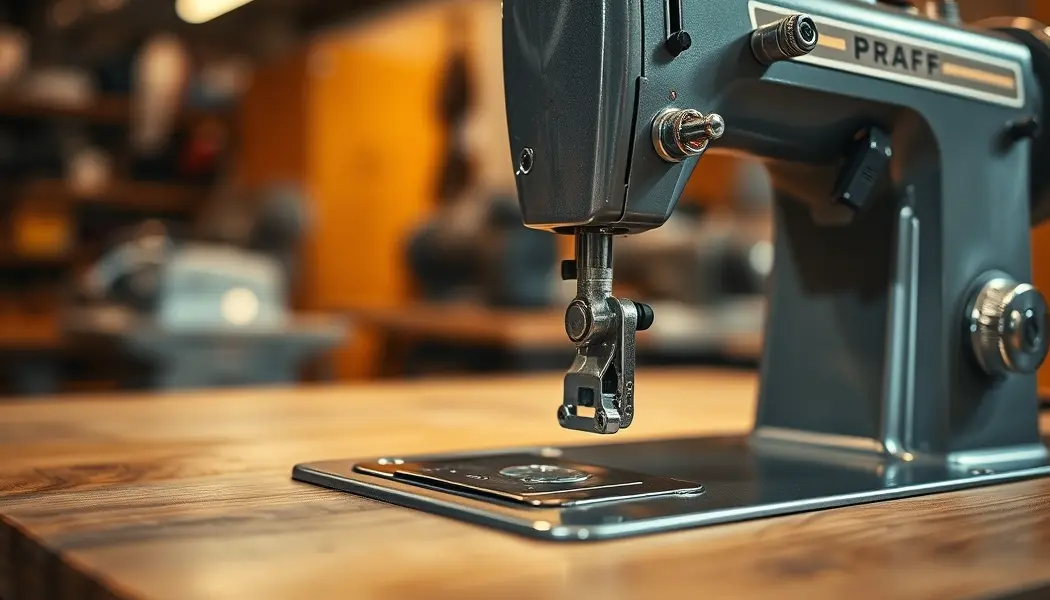
Good news: most Pfaff 130 sewing machine repair work is well within reach for anyone who owns a screwdriver and can follow a numbered list. The Pfaff 130 is a West German-made mechanical workhorse from the 1950s and 60s. These machines were built to last generations — and with the right attention, they still do. But “lasting” doesn’t mean maintenance-free, and a machine that’s been sitting ignored in a basement for two decades is going to need some coaxing back to life.
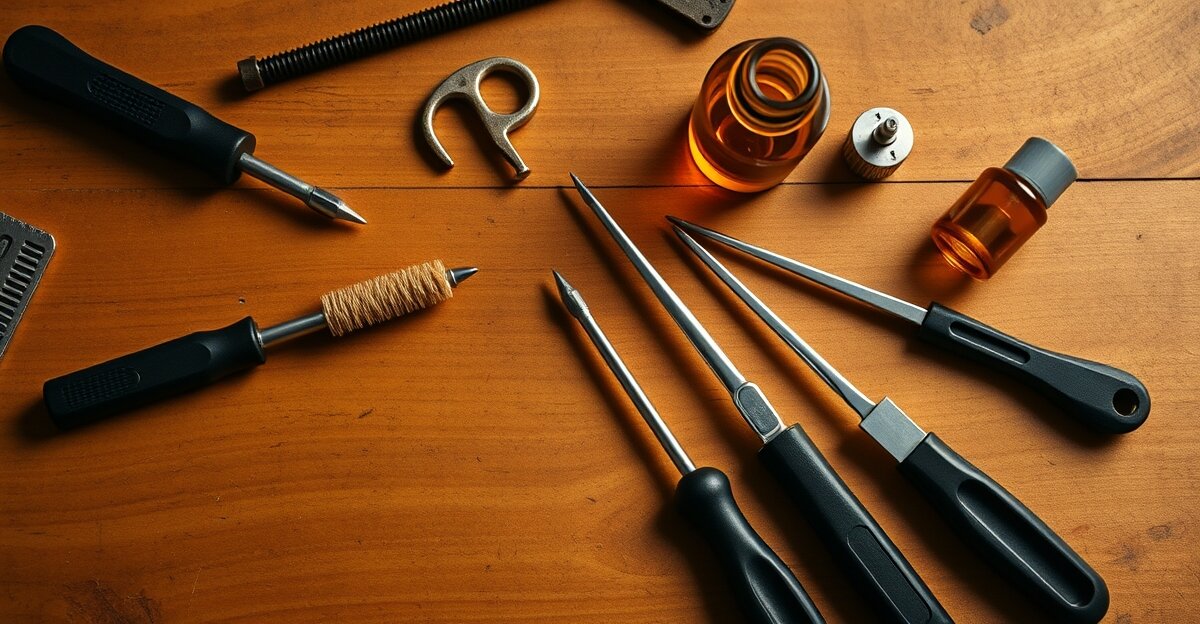
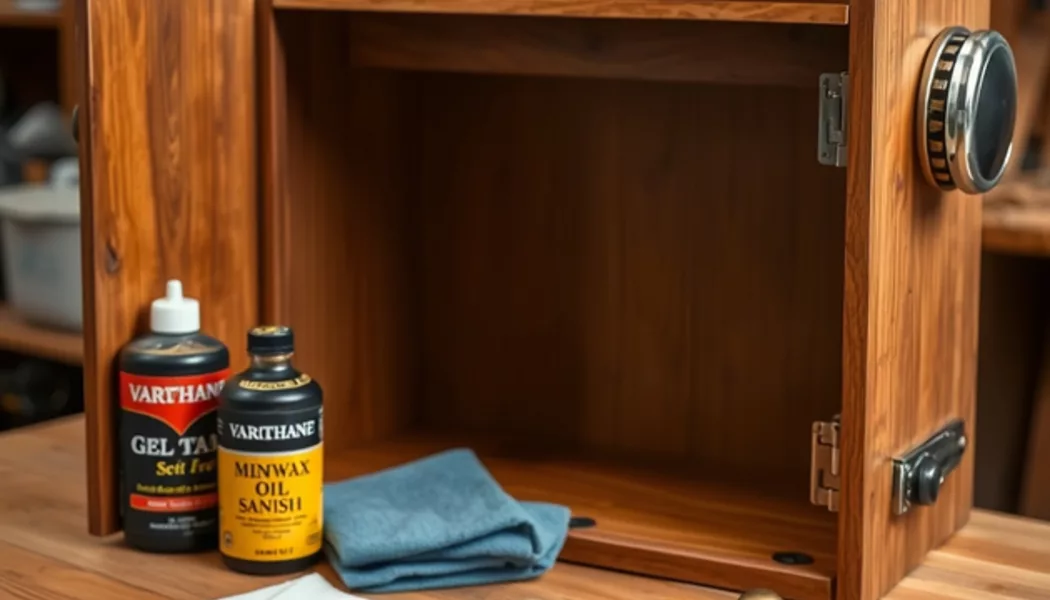
This pfaff 130 sewing machine repair guide walks you through the 5 most common problems, exactly what causes them, and how to fix them yourself. Most repairs take 1–2 hours and cost $10–$50 in parts. Whether you just scored one at a thrift store or inherited a family heirloom, consider giving it a look at our Vintage Sewing Machine Cabinet Restoration guide if the cabinet needs love too — but first, let’s get the machine itself running right.
Should You Repair Your Pfaff 130 or Buy New?
Before we get into the fixes, let’s be honest about the math. Pfaff 130 sewing machine repair makes financial sense in most cases — but not every case.
The Repair ROI Breakdown
| Scenario | Cost |
|---|---|
| Pfaff 130 used (thrift/eBay) | $40–$150 |
| DIY repair (parts only) | $10–$100 |
| Professional repair | $100–$250 |
| New entry-level machine | $150–$400 |
A thrifted Pfaff 130 at $75 plus $40 in DIY parts gets you a $115 machine that sews through denim like it’s tissue paper. An equivalent new machine costs $200–$300 — and won’t have the all-metal construction these vintage Pfaffs are built with.
When repair is clearly worth it:
- Threading, tension, or bobbin issues (cheap, fast fixes)
- Motor just needs lubrication (30-minute job, $5 in oil)
- Sentimental value is involved
- You want a machine that actually lasts
When you might walk away:
- Motor is burned out and smells acrid (replacement: $50–$150, plus labor)
- Timing is off and you’re not comfortable with internal gear work
- Frame is cracked or bent
For the vast majority of Pfaff 130 problems, though, you’re looking at the fixable kind. Let’s go through each one.
Pfaff Sewing Machine Repair: Is the 130 Worth Fixing?
Pfaff sewing machine repair costs $80–$150 at a general shop, $120–$200 at a specialist. Every problem in this guide is DIY-fixable for $0–$30 in parts. The 130 was built with industrial tolerances to be serviced — parts are standardized and still available. The built-in IDT (Integrated Dual Feed) adds moving parts versus a standard machine, but also makes Pfaff sewing machine repairs more predictable once you know what to look for.
Problem #1: How to Fix Threading Issues on Your Pfaff 130 Sewing Machine
This is the single most common complaint you’ll see on any sewing forum or Reddit thread about Pfaff 130 sewing machine repair. Nine times out of ten, what looks like a mechanical failure is actually a threading problem in disguise.
What You’ll See (Symptoms)
- Thread snaps during sewing, sometimes mid-seam
- Needle skips stitches — one row looks fine, the next is dotted gaps
- Machine won’t pick up the bobbin thread at all
- Thread keeps tangling or balling up underneath the fabric
Why It Happens (Root Causes)
The Pfaff 130 has a specific upper thread path that’s different from Singer or Brother machines. If you’re following generic threading instructions, you’re probably missing a tension guide somewhere. Other culprits:
- Bent or dull needle — This is the sneakiest one. A bent needle looks fine to the naked eye but will break your thread every single time. If your machine was stored improperly or hit something solid, the needle took the damage.
- Tension disc lint buildup — Old lint packed into the tension discs blocks the thread from seating properly, causing erratic tension and breaks.
- Needle not fully seated — On the Pfaff 130, the needle must go all the way up and the flat side must face the correct direction. Half a millimetre short causes missed stitches.
Similar threading issues affect many vintage machines — if you’re also working on a Singer, our guide on Singer 99K timing issues covers related troubleshooting logic that applies across mechanical machines.


How to Fix It (Step-by-Step)
- Remove the needle — Note the position before you pull it out. The flat side of the needle shank faces away from you on the Pfaff 130.
- Start fresh with threading — Lift the presser foot (this opens the tension discs), then rethread the entire upper path from scratch. Reference your Pfaff 130 manual or search “Pfaff 130 threading” on YouTube — there are solid video walkthroughs.
- Inspect the needle — Hold it against a light and look down the shank. Any curve at all? Replace it. A bent needle isn’t worth keeping.
- Clean the tension discs — Slide a thin strip of paper between the discs and pull it through slowly. Repeat with a fresh strip until it comes out clean. You’ll be surprised how much lint comes out of a machine that “looks fine.”
- Reinstall the needle fully — Push it all the way up into the clamp before tightening. No half-measures.
- Hand-turn the wheel — Rotate the handwheel slowly. The thread should slip through the path smoothly with no catching.
- Test-sew on scrap — Use a fabric that matches your project weight. If it sews two lines cleanly, you’re done.
Parts & Costs
- Replacement needles (pack of 10): $5–$8 (Amazon, search “Pfaff 130 needles” or 15×1 size)
- Tension spring (if broken, not just dirty): $8–$15 (eBay)
When to Call a Pro
If you’ve rethreaded three times and the bobbin thread still won’t engage, the issue may be in the timing — specifically, the needle bar height. That’s a job for a technician unless you’re comfortable with internal adjustments.
Problem #2: Fixing Pfaff 130 Bobbin Problems
Bobbin issues are the second tier of complaints, just below threading. They often get mistaken for tension problems because the symptoms overlap — but the fix is different.
What You’ll See (Symptoms)
- Bobbin winds unevenly, creating a lopsided spool
- Thread tension is too loose from the bottom side
- Thread tangles or nests in the bobbin area after a few stitches
- Lower thread breaks repeatedly even with correct threading
Why It Happens (Root Causes)
- Worn or loose bobbin case tension spring — This tiny spring controls how much resistance the lower thread gets as it feeds. When it weakens, lower tension goes slack.
- Mismatched bobbins — The Pfaff 130 uses a specific bobbin type. Drop-in modern bobbins from a random parts drawer often don’t fit quite right and cause erratic tension.
- Overfilled bobbin — Winding the bobbin all the way to the brim creates too much bulk, and the thread doesn’t feed smoothly. Fill to about 80% capacity.
- Bobbin case misalignment or scratches — A scratch on the bobbin case race causes the thread to snag intermittently, producing inconsistent lower tension.
How to Fix It (Step-by-Step)
- Remove the bobbin case — Open the slide plate, remove the bobbin, then pop out the case itself.
- Inspect the tension spring — Run your fingernail under it. It should feel firm and snap back. If it flops loosely, it needs adjustment or replacement.
- Adjust the spring if loose — Most Pfaff 130 tension springs have a tiny adjustment screw. A quarter-turn clockwise usually tightens it. Go slowly — over-tightening causes the opposite problem.
- Use the correct bobbin — Pfaff 130 machines use metal bobbins. Verify your bobbin type against the manual. Plastic bobbins from generic packs often fit poorly.
- Re-wind the bobbin to 80% capacity — Consistent, even winding at moderate speed. Don’t rush the winding.
- Reinstall the bobbin case — You should feel and hear a small click when it seats correctly.
- Test with contrasting thread — Use a different colour for the bobbin than the top thread. This makes it immediately obvious which side has the tension problem.
Parts & Costs
- Replacement bobbin case: $15–$25 (eBay, search “Pfaff 130 bobbin case”)
- Matched metal bobbins (set of 5): $8–$12 (Amazon)
- Bobbin tension spring: $5–$10 (specialist sewing retailers)
When to Call a Pro
If the bobbin case is visibly cracked or the race is scratched deeply enough to catch your fingernail, replace the case rather than adjust it. A cracked bobbin case can’t be adjusted back to reliable performance.
Problem #3: Solving Pfaff 130 Tension Issues
Here’s a truth that’ll save you hours of frustration: most “tension problems” on a Pfaff 130 aren’t tension problems. They’re threading problems or lint problems that show up as tension symptoms. Adjust the dial all you want — it won’t fix a lint-clogged disc or a needle that’s one notch out of its seat.
That said, real tension problems do happen. Here’s how to tell the difference and fix both.
Recognizing Tension Problems
- Lower thread shows on top of fabric — Upper tension is too loose, or lower tension is too tight
- Upper thread shows on the bottom of fabric — Upper tension is too tight, or lower tension too loose
- Stitches bunch and pucker — Usually upper tension too tight for the fabric weight
- Stitches look fine from the top but the underside is loopy — Classic sign of lint in the tension discs
Why Your Tension Dial Isn’t Fixing It
About 60% of tension calls are user error — the dial just needs adjusting. But the other 40% are:
- Lint packed between the tension discs (the number one overlooked cause)
- A bent or dull needle (causing skipped stitches that look like tension issues)
- Wrong thread type for the fabric (heavy upholstery thread on a lightweight cotton will fight the machine)
- Presser foot pressure set too high (smashing the fabric instead of guiding it)
- Needle not fully inserted
The Tension Fix (Step-by-Step)
- Start at the default — Pfaff 130 tension dial defaults to 4 or 5 for medium-weight fabrics. Set it there before anything else.
- Test on a scrap — Use the same fabric as your project. Don’t test on tissue paper and then sew denim.
- Adjust in 0.5 increments — Loose stitches? Increase by 0.5. Too tight? Decrease by 0.5. Make one change, test, observe.
- After 3 adjustments with no improvement, stop turning the dial — The problem isn’t the dial setting. It’s lint.
- Clean the tension discs — Raise the presser foot (this opens the discs). Slide a thin strip of paper between them. Pull it through slowly without tearing. Repeat until the paper comes out clean. This step alone fixes a large percentage of tension complaints.
- Check the needle — Replace it if there’s any doubt. A fresh needle costs pennies.
- Retest — Two clean rows of balanced stitches means you’ve got it.
Pro Tips for Different Fabrics
| Fabric Type | Tension Setting |
|---|---|
| Lightweight (chiffon, silk) | 2–3 |
| Medium weight (cotton, linen) | 4–5 |
| Heavy (denim, canvas) | 5–7 |
| Stretch fabrics | 3–4 |
Different thread weights also demand different settings. Heavy-duty thread on a lightweight fabric will always fight your machine.
Problem #4: Pfaff 130 Motor Troubleshooting — Won’t Start or Wheel Stuck
Motor problems are where some people throw their hands up and take the machine to a shop. But before you do, try this: the most common “motor failure” on a Pfaff 130 is actually a seized motor shaft — dried lubricant that’s locked everything in place. It sounds ominous. It’s often a $5 fix.
What’s Wrong (Symptoms)
- Machine won’t turn on at all — no response to the foot pedal
- Motor hums but the handwheel won’t turn
- Machine starts and then stops, or bogs down under light pressure
- Wheel turns by hand but machine cuts out under power
Root Causes
- Seized motor shaft — Dried lubricant from years of disuse is the #1 motor issue on vintage machines
- Loose foot pedal connection — The controller cord connection at the machine loosens over time
- Frayed or internally broken power cord — Visible damage or an internal break that only shows under load
- Lint pack around the motor — Accumulated fluff restricts airflow and causes thermal overload
- Thermal cutout triggered — Many vintage motors have a heat protector; if the machine ran hot, it tripped off
How to Fix It (Step-by-Step)
- Check the obvious first — Is the foot pedal cord firmly seated at the machine connection? Wiggle it. Try a different outlet.
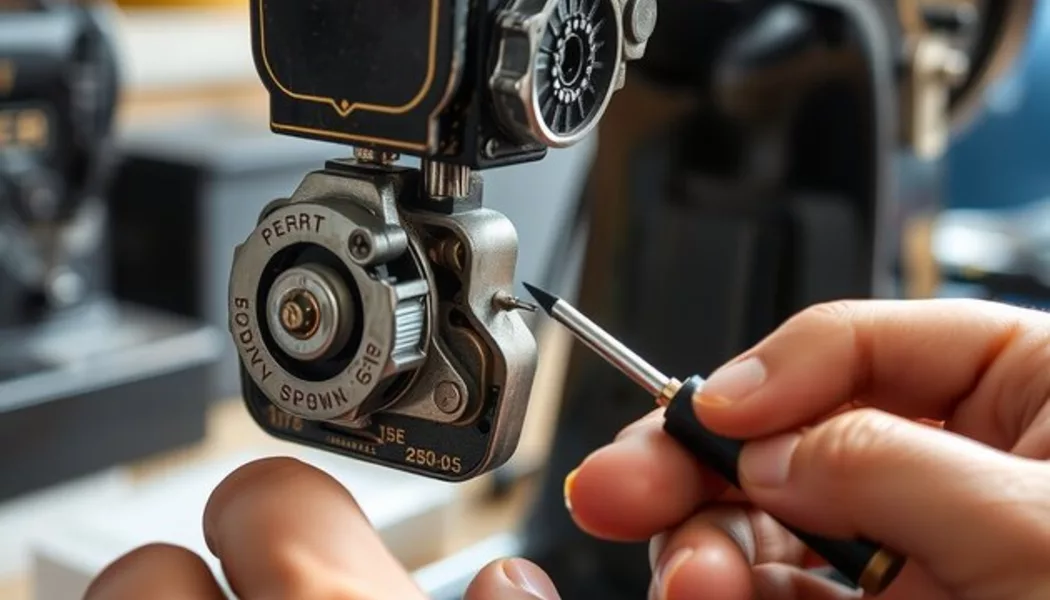
- Motor hums but wheel won’t turn — This is the seized shaft. Apply 1–2 drops of quality sewing machine oil directly to the motor shaft bearing. Don’t soak it — one or two drops is enough.
- Let it sit 30 minutes — Seriously. Let the oil penetrate before you do anything else.
- Turn the wheel by hand — Not under power. Rotate the handwheel manually. You’ll feel resistance at first. Keep gentle, steady pressure until it begins to move more freely.
- Test at low speed — Plug in and press the pedal lightly. Let the machine build momentum slowly rather than flooring it.
- Check for thread wraps — A jammed motor sometimes has a thread or fibre wrapped around the shaft. Open the access panel (bottom of the machine) and look.
- Power cord problem — Inspect the full length of both cords. A cut or crack is a fire risk. Replacement cords run $15–$25 and are worth the swap.
For guidance on which oil to use and where all the lubrication points are on a vintage machine like this, our detailed post on how to oil a vintage sewing machine covers exactly that — including which parts to avoid oiling (yes, there are parts you shouldn’t oil).
When to Replace the Motor
If you smell something acrid or burnt — stop. That’s electrical burning, and it means the motor winding is damaged. Don’t keep running it. Replacement motors for the Pfaff 130 run $50–$150 on eBay and from vintage sewing machine parts dealers. At that point, a professional’s assessment is worth the consultation fee.
Problem #5: Fixing Feed Dog Issues on Your Pfaff 130
The feed dogs are the little toothed teeth under the needle plate that grip the fabric and move it forward as you sew. When they stop doing that job, your stitches pile up in one place, your fabric sits still while the needle punches holes in the same spot, and nothing good comes of any of it.
What’s Happening (Symptoms)
- Fabric doesn’t advance while sewing
- Feed dogs are visibly stuck in the down position
- Fabric moves backward or skips erratically
- Inconsistent stitch length even at a fixed setting
Root Causes
- Lint and fluff jammed in the feed dog mechanism — This is by far the most common cause; the feed dog area is a lint magnet
- Feed dog set to “down” position — Some machines have a drop-feed lever; check it hasn’t been flipped accidentally
- Presser foot pressure set too high — The foot is pressing so hard on the fabric that the feed dogs can’t pull it through
- Reverse button stuck internally — A sticky reverse mechanism causes the dogs to fight themselves
- Feed dog linkage shaft bent — Rare, but possible if the machine was dropped or something got jammed hard
How to Fix It (Step-by-Step)
- Lower the presser foot and clean the area first — Remove the needle plate screws and lift the plate off. You’ll likely find a wool blanket of accumulated lint under there.
- Clean thoroughly — Use a stiff-bristled brush (an old toothbrush works fine) and/or compressed air. Vacuum gently around the feed dog assembly.
- Check the drop-feed setting — Look for a lever near the handwheel or on the back of the machine. Make sure it’s in the “up” (normal sewing) position.
- Verify presser foot pressure — The pressure dial should be at a normal setting, not maximum. Heavy pressure defeats the feed dogs on lighter fabrics.
- Hand-turn the wheel and watch — With the throat plate off and presser foot up, slowly rotate the handwheel. You should see the feed dogs rise and fall in a smooth oval motion. Any sticking or grinding means something’s obstructed.
- Oil the linkage — If the feed dogs move but feel stiff, apply 1–2 drops of sewing machine oil to the feed dog linkage shafts on either side.
- Check the reverse lever — Press and release the reverse button deliberately. It should spring back crisply. If it feels sticky or stays down, there’s a mechanical bind.
Parts & When to Seek Help
Replacement feed dogs for the Pfaff 130 run $20–$40 on eBay. If the feed dog shaft itself is bent, you’re looking at an internal teardown that’s worth handing off to a technician — the linkage geometry is precise and difficult to realign without experience.
Where to Find Pfaff 130 Parts and What They Cost
Good news on the parts front: the Pfaff 130 is well enough loved by the vintage sewing community that most common components are still findable. You’re not chasing unobtainium.
Best Places to Buy
- eBay — Your first stop for vintage-specific parts. Search “Pfaff 130 parts” and you’ll find most what you need. About 70–80% of common components show up regularly. Watch for sellers with clear photos and return policies.
- Etsy — Artisan and specialty sellers who focus on vintage sewing machines. Prices run higher ($15–$50 per part) but sellers tend to be knowledgeable and reliable. Good for bobbin cases, presser feet, and parts that need to be authentic Pfaff.
- Amazon — Best for consumables: needles, bobbins, sewing machine oil, generic presser feet. Same-day or Prime delivery if you’re mid-project. Authenticity matters less here.
- Local repair shops — Don’t overlook your local sewing machine dealer. They sometimes stock legacy parts for machines they’ve serviced for decades. Worth a phone call.
- Facebook groups — Search for “vintage sewing machines” or “Pfaff collectors” groups. Active communities with part swaps, donations, and people who’ve been fixing these machines for thirty years.
Common Pfaff 130 Parts & Estimated Costs
| Part | Estimated Cost | Best Source |
|---|---|---|
| Needles (pack of 10) | $5–$8 | Amazon |
| Bobbins (set of 5, metal) | $8–$12 | Amazon / eBay |
| Bobbin case | $15–$25 | eBay / Etsy |
| Tension spring | $5–$10 | Specialist retailers |
| Presser feet (specialty) | $10–$20 | eBay / Etsy |
| Motor shaft lubricant | $4–$8 | Amazon |
| Power cord | $15–$25 | Amazon / eBay |
| Replacement feed dogs | $20–$40 | eBay |
| Replacement motor | $50–$150 | eBay / specialist |
Shipping note: Factor in 5–10 business days for eBay and Etsy orders. Order your parts before you disassemble anything — there’s nothing worse than a machine in pieces waiting on a part that’s two weeks out.
Keep Your Pfaff 130 Running: Maintenance Schedule
The majority of the problems above are preventable. A Pfaff 130 that gets basic regular attention will run for another fifty years without drama. Here’s a practical schedule:
Monthly
- ☐ Brush lint out of the feed dog area and bobbin compartment
- ☐ Inspect the needle — replace if bent, dull, or if it’s been in for more than 8–10 hours of sewing
- ☐ Wipe down the exterior with a dry cloth
Every 3 Months
- ☐ Apply 1–2 drops of sewing machine oil to the motor shaft bearing
- ☐ Clean the tension discs with the paper-slip method
- ☐ Wind a test bobbin and check tension consistency
- ☐ Oil the other lubrication points listed in your manual (shuttle race, hook, main shaft)
Every 6 Months
- ☐ Inspect the power cord and foot pedal cord for cracks, kinks, or fraying
- ☐ Check the full thread path for lint accumulation
- ☐ Sew a tension test swatch on medium-weight fabric and verify stitch quality
Annually
- ☐ Full professional tune-up ($50–$100) — worth it every year or two
- ☐ OR: DIY deep clean + full lubrication (about 2 hours with our vintage sewing machine oiling guide)
- ☐ Inspect motor pulley and any drive belts for wear and cracking
Storage Tips
- Always cover the machine when not in use — dust is the enemy
- Store in a dry, climate-controlled space (basements are murder on these old machines)
- Don’t leave thread on the machine during storage — it attracts insects and causes tension disc corrosion
Pfaff Sewing Machine Repair: What You Can Fix at Home
The Pfaff 130 has earned its reputation as one of the toughest vintage sewing machines you can buy. Built in West Germany through the 1950s and 60s, these machines have all-metal construction, precision-machined gears, and a hook timing system that holds its settings through decades of use. But “durable” doesn’t mean maintenance-free — every Pfaff sewing machine repair job starts with the same handful of common problems that show up on virtually every machine that’s been sitting unused for years.
The most common Pfaff sewing machine repair issues are tension problems (upper thread breaking or skipping), bobbin case wear (thread tangles underneath the fabric), and hook timing drift (stitches that form inconsistently regardless of tension settings). All three are DIY-friendly with basic tools and $10–$50 in parts. You don’t need a sewing machine technician’s training to fix them — you need patience, a screwdriver set, and this guide.
The cost comparison makes DIY compelling: a professional shop charges $80–$150 for a standard Pfaff sewing machine repair service. If you’re dealing with tension issues, that’s a 20-minute fix with $0 in parts. If you need a new bobbin case, you’re looking at $15–$25 on eBay and about an hour of your time. Even more complex work — like cleaning the motor or adjusting the feed dog height — is well-documented for the Pfaff 130 and doesn’t require specialized tools beyond what you’d find at any hardware store.
Where DIY stops making sense: burned motors (that acrid, smoky smell means rewinding or replacement, a professional job), cracked frames, and precise hook timing re-synchronization. For everything else, Pfaff sewing machine repair at home is genuinely achievable — and given what these machines are worth when running properly, it’s almost always worth trying.
How do I fix Pfaff 130 tension problems?
Tension issues usually stem from improper threading or lint in the tension discs. First, rethread the machine completely with the presser foot UP to open the tension discs. If that doesn’t work, adjust the tension dial gradually in 0.5 increments. Clean the tension discs by sliding a paper strip between them. The bobbin tension screw on the bobbin case can also be adjusted clockwise for tighter stitches—a quarter-turn is usually enough. Test on scrap fabric between each adjustment.
Where can I find Pfaff 130 replacement parts?
OEM Pfaff parts are available from authorized dealers (expensive). For affordable alternatives: eBay for vintage-specific parts (search “Pfaff 130 parts” or specific component names), Etsy for artisan sellers with authentic pieces, and Amazon for consumables like needles and bobbins with fast shipping. Local sewing machine repair shops often have salvage parts. Facebook vintage sewing communities frequently have part swaps. Budget 5–10 days for eBay/Etsy delivery.
Is the Pfaff 130 worth repairing?
Absolutely—in most cases. The Pfaff 130 is known for durability and smooth stitch quality. Most common repairs (belt replacement, tension adjustment, motor service) cost $50–$200 DIY or $150–$400 through a professional. Since used Pfaff 130s sell for $100–$300, repairs are justified if the machine is sentimental or you plan heavy use. Walk away if facing a burned-out motor (acrid smell), severe timing problems, or cracked cast iron in the frame.
How do I thread a Pfaff 130 sewing machine?
The threading path: (1) Raise the presser foot to open tension discs. (2) Guide thread through the top thread guide above the needle. (3) Pull thread down through the tension assembly (you should hear a click). (4) Thread through the lower guide just above the needle. (5) Insert thread through the needle eye front-to-back. (6) For the bobbin, insert it into the bobbin case with thread tail exiting to the left, then tug the top thread to catch the bobbin loop. Always raise the presser foot before threading—this is the most common mistake.
Why won’t my Pfaff 130 thread properly?
Most threading failures are path errors or mechanical issues, not fabric-related. Check the specific upper thread route for the Pfaff 130 (it differs from Singer or modern machines). Then: swap the needle for a fresh one (bent or dull needles are invisible to the eye but break thread every time), and clean the tension discs using the paper-slip method—lint-clogged discs cause threading to fail even when the path is correct. If those three steps don’t fix it, the needle bar height may be off, which requires professional adjustment.
How do I fix bobbin issues on a Pfaff 130?
Most bobbin problems stem from three things: worn bobbin case tension spring, wrong bobbin type, or overfilled bobbins. Remove the bobbin case and check if the tension spring feels firm or floppy. A quarter-turn on the adjustment screw often fixes a loose spring. Always use metal bobbins that match Pfaff 130 specifications—plastic universal bobbins fit poorly. Wind the bobbin to 80% capacity, not full. If the bobbin case is cracked or deeply scratched, replace it (eBay: $15–$25).
What does it cost to repair a Pfaff 130?
DIY repairs typically cost $10–$100 in parts (needles, bobbins, bobbin cases, springs). Professional shop repairs run $75–$200 for common problems. A new entry-level machine costs $150–$400 but lacks the all-metal durability of vintage Pfaffs. If your repair bill is under $150 and the machine is otherwise sound, fixing it makes more financial sense than replacing it. The cost-per-use over a 10-year lifespan heavily favors repair.
Can I fully service a Pfaff 130 myself?
About 80% of maintenance is DIY-friendly: cleaning, lubrication, threading, bobbin adjustment, tension calibration, and feed dog cleaning. Internal timing adjustments and motor replacement require professional tools and experience. If you’re comfortable with a screwdriver, can follow instructions, and take your time, you can handle most Pfaff 130 sewing machine repair at home. The hardest part is usually patience—not rushing each step.
How often should I service my Pfaff 130?
Monthly: lint cleaning and needle inspection. Every 3 months: oil the motor shaft, clean tension discs, test bobbin wind. Annually: full professional tune-up ($50–$100) or DIY deep clean with comprehensive lubrication. A well-maintained Pfaff 130 runs trouble-free for decades. Machines requiring major repairs are almost always ones that sat neglected for years. Consistent attention prevents 90% of problems.
Your Pfaff 130 Is Worth Fixing
Most Pfaff 130 problems have a straightforward solution. Threading issues, bobbin tension, stuck feed dogs, a seized motor shaft — these are fixable with basic tools and $10–$50 in parts. The math works: a $100 thrifted Pfaff 130 plus $50 in repairs gives you a $150 all-metal mechanical sewing machine that will outlast most modern alternatives.
Start with threading and tension first. Genuinely, 80% of the complaints people post about these machines dissolve when you rethread correctly, swap the needle, and clean the tension discs. If that doesn’t solve it, work through the bobbin section. Save the motor and feed dog diagnosis for last — they’re less common and take a bit more time.
If you’re also thinking about restoring the cabinet that came with your machine, our Vintage Sewing Machine Cabinet Restoration guide walks through the whole process. There’s something satisfying about getting both the machine and the cabinet back to working order.
Whether you’re a right-to-repair advocate, a practical hobbyist, or someone just trying to finish a quilt with your grandmother’s machine, the Pfaff 130 sewing machine repair process is straightforward and genuinely rewarding. These machines were built to be serviced. A little attention, a few dollars in parts, and they’ll keep running another fifty years.
Have a Pfaff 130 problem not covered here? Drop it in the comments — the vintage sewing community is generous with knowledge, and someone’s almost certainly been there before.
3 thoughts on “Pfaff 130 Sewing Machine Repair: 5 Common Problems & Fixes”
Comments are closed.