
I Fixed 3 Broken Watches in One Weekend—Here’s My Complete Method
Your $150 Seiko 5 is losing 30 seconds a day. The local watchmaker quotes you $350 for a full service. The watch isn’t worth that—but it matters to you, and you’re handy enough to take apart a bike derailleur without losing anything. So the question becomes: can you service it yourself?
Last spring I sat down with three broken watches on a Saturday morning—a Seiko SNK371, an ETA 6497-powered homage, and a battered Omega Seamaster with a cal. 30T2—and worked through all three by Sunday evening. None of them had seen oil in at least a decade. The Seiko gained 42 seconds a day before I started; it now runs at +4. The ETA had frozen solid; it now winds and runs beautifully. The Omega needed professional help for a bent pivot, which is exactly the kind of thing this guide will teach you to recognize before you make it worse.
That weekend taught me the mechanical watch repair basics that no YouTube video ever laid out clearly in one place: which oil goes where, what tools you actually need versus what’s nice to have, and—critically—when to stop and call a pro.
This guide covers what’s safe for beginners. I’ll flag the red lines clearly. After a first service, you’ll have saved $250–$300 and picked up a skill set that transfers to every mechanical watch you’ll ever own. Just as vintage sewing machines require precision lubrication with the right oils in the right places (→ How to Oil a Vintage Sewing Machine), mechanical watches demand the same attention to detail—wrong oil in the wrong spot causes more damage than no oil at all.
Here’s everything I did, step by step.
1. Is This the Right Project for You?
Before you crack open anything, run this decision matrix honestly.
Watch value under $500 retail? DIY is smart. Heirloom piece or anything over $1,000–$2,000? Send it to a professional. The cost of a pro service is cheap insurance on a watch with real monetary or sentimental value.
Is it working but sluggish? Good candidate. Runs 30–60 seconds slow per day, feels gritty when you wind it, power reserve seems shorter than it used to be—all signs of dried-out oil, not mechanical damage. Does it have a broken balance wheel staff, a bent pivot, or a cracked jewel? Stop right there. Those repairs require a lathe, replacement parts, and years of experience. No beginner guide covers that, and this one won’t pretend to.
Common model or rare find? Seiko 7S26, ETA 6497/6498, Tissot ETA 2824—go for it. Hundreds of service tutorials exist, parts are cheap, and these movements were designed to be serviceable. A rare pocket watch movement from 1905? Not your first project.
Five honest questions before you start: 1. Can you work with tweezers without shaking? 2. Do you have 4–6 uninterrupted hours? 3. Are you comfortable photographing everything before you touch it? 4. Can you accept the possibility that something goes wrong? 5. Is the watch worth more to you than the $50–$150 in tools you’re about to buy?
If you answered yes to all five, keep reading. If you hesitated on #4, that’s fine—just something to know about yourself going in.
2. Tools & Materials You’ll Actually Need
Tier 1 Essentials — About $50 Total
You can do a basic service on a Seiko 7S26 with just these:
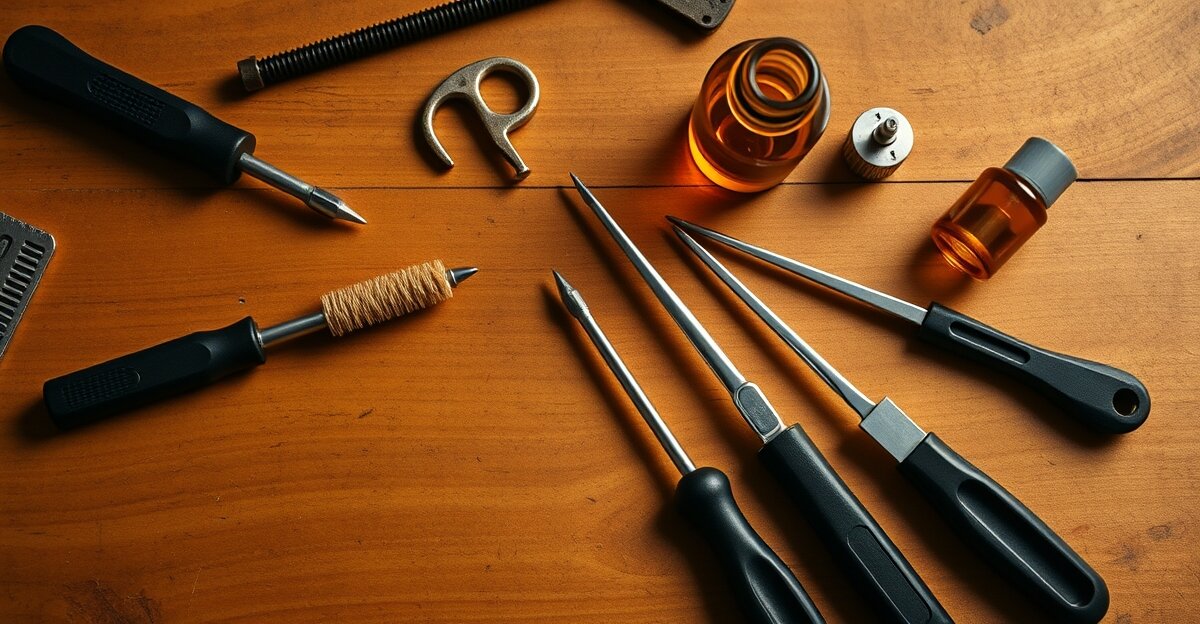
- Rodico blue clay ($8–12) — the unsung hero of watch cleaning. Press it gently onto a jewel surface, pull away, and it lifts contaminants without scratching. Think of it as a precision eraser for tiny ruby bearings.
- Precision tweezers — two types: straight-tip for flat parts, curved-tip for springs. Non-magnetic is important. Bergeon’s antimagnetic tweezers are worth the extra $10 over generic imports.
- Peg wood sticks ($10–15) — wooden dowels you use to ream out pivot holes without scratching. A Q-tip leaves fibers. Peg wood doesn’t.
- Small screwdrivers — The Bergeon 6899 set is the standard. Five blade sizes cover 95% of what you’ll encounter on Seiko and ETA movements. The blades are hardened steel and won’t strip screw slots. Don’t use eyeglass screwdrivers—they’re soft and will round off slots in watch screws faster than you’d believe.
- Watch hand remover — The Bergeon 7767 is the tool here. Its nylon-tipped jaws protect dial surfaces while lifting hands straight off the cannon pinion. Generic knockoffs bend the hands on the way up.
- Magnification — a 10x loupe is the minimum. A watchmaker’s loupe that clips onto your glasses works better than a handheld one if you’re working for more than 20 minutes.
- Parts tray — any segmented tray with a cover. Losing a click spring on a carpeted floor ends your Saturday.
Tier 2 Enhanced — Add $100–$150
- Moebius oil set (9010, 8000, D5, 9501) — covered in detail in Section 6
- Micro-oiler — a fine-tipped applicator for delivering single drops. A sharpened pegwood stick technically works, but a real oiler gives you control
- Light naphtha (Ronsonol lighter fluid works) — for degreasing parts in a glass jar. Cheaper and safer for beginners than an ultrasonic cleaner
- Timing machine or phone app (Timegrapher app is free; a physical Timegrapher machine runs $80–$200) — tells you your movement’s beat rate so you know if the service actually worked
Tier 3 Full Setup — Add $200+
- Ultrasonic cleaner (40W) — faster degreasing, but introduces risks: can unseat loose jewels if the movement wasn’t fully disassembled first. Use only on individual parts, never on an assembled movement
- Movement holder — holds the movement while you work; saves your fingers
- Case-back remover — universal friction remover or a model-specific wrench
Safety basics: Work on a white sheet of paper so fallen parts are visible. Good lighting (a daylight lamp, not yellow incandescent). Keep your workspace clear of food, drink, and any magnetic sources. A cell phone left two inches from your movement will magnetize the hairspring.
3. Pre-Repair Assessment
Don’t touch a screwdriver until you’ve done this.
Visual inspection checklist: 1. Wind the watch. Does it feel smooth, gritty, or completely seized? 2. Set the time. Does the crown engage normally, or does it skip? 3. Check oil color under a loupe. Clear oil = recently serviced. Amber = aging. Dark brown or sticky black residue = long overdue. 4. Look at the dial for rust staining near the crown, which signals moisture intrusion. 5. Check the caseback seal—cracked rubber means the movement has been breathing ambient air (and dust, and humidity) for years.
Find the service manual before you start. For a Seiko 7S26, Cousins UK hosts the official Seiko service bulletin as a free PDF. For ETA movements, COUSINS and Ranfft’s movement database have caliber-specific documentation. Download it, print it, keep it next to you.
Photograph everything. Top, bottom, side angles. Before you remove a single screw, you need a visual reference. Photographs have saved my hide more than once when I couldn’t remember which way a click spring was oriented.
4. Safe Disassembly
Work in a sequence. Watch movements don’t forgive random tinkering—take parts off in the correct order and you’ll reassemble them cleanly. Skip the order and you’ll be staring at a pile of mystery springs.
Step 1: Open the caseback. Most modern Seikos use a screw-back; engage the case wrench in the notches and turn counterclockwise. Snap-back cases use a case knife at the small notch in the bezel—gentle prying, never force.
Step 2: Release the mainspring before removing the movement. On the 7S26, the click (the small pawl that locks the ratchet wheel) must be held back while you allow the crown to unwind the mainspring slowly. Don’t let it snap—a sudden release can dislodge parts.
Step 3: Extract the movement. Use movement cushions or your fingers along the edges—never press on the dial or the hands. Orient it correctly and set it in your movement holder.
Step 4: Remove hands and dial. The Bergeon 7767 hand remover goes under the hour and minute hands with the nylon feet resting on the dial. Squeeze gently and lift straight up. Forcing hands at an angle bends them. Once hands are off, the dial usually lifts free after releasing two small dial screws (or feet, depending on the model).
Step 5: Bridge and plate removal. Work from the top of the movement downward. Remove the balance wheel assembly first—it’s the most sensitive part and the most likely to be damaged if something falls on it mid-disassembly. Place it in a dedicated, covered container.
Screw organization: I use a printed movement diagram and tape each screw next to the hole it came from. Overkill? Maybe. But watch screws vary by 0.1mm increments and putting the wrong screw in the wrong hole strips the threads.
Common disassembly mistakes to avoid: – Forcing a screw that won’t turn (it may be threaded left-handed on some winding mechanisms) – Touching pivot tips with bare fingers (skin oils corrode steel) – Removing the balance wheel without first noting which direction the hairspring coils
5. Cleaning Phase
Initial Inspection
With everything apart, look at each part under your loupe. You’re looking for: – Jewels: Should be smooth, clear, and bright. Pitted or cloudy jewels indicate wear; a light cleaning won’t fix physical damage. – Pivots: The tiny cylindrical tips of the gear shafts. Should be mirror-smooth. Scoring or flatting means friction damage—a professional repair, not a cleaning problem. – Old oil: If you can see dark residue in the jewel holes, you definitely needed this service. The residue is oxidized oil mixed with metal particles—it increases friction rather than reducing it.
Degreasing Methods
Chemical method (recommended for beginners): Drop individual parts into a small glass jar of light naphtha (Ronsonol lighter fluid works perfectly). Let them soak 10–15 minutes. Gently agitate. Transfer parts to a second jar of fresh naphtha for a rinse. Remove and let air-dry on lint-free cloth or tissue paper.
Ultrasonic method: Fill with water and a few drops of dish soap or dedicated watch cleaning fluid. Run 5-minute intervals at low temperature (never hot). This is faster but requires complete disassembly—attempting to ultrasonically clean a partially assembled movement can dislodge loose jewels.
Do not use WD-40, rubbing alcohol, or acetone. Alcohol evaporates and leaves residue. Acetone can strip dial printing and lacquer finishes.
Rodico Clay Cleaning
After naphtha cleaning, use Rodico for the jewels. Roll a small piece into a ball, press it lightly onto the jewel surface, and pull straight away. Don’t twist or drag—you’re lifting contamination, not scrubbing it. One press per jewel is usually enough. The Rodico should come away slightly discolored if the jewel was dirty.
Do this for every visible jewel in the train bridges and the pallet fork. Do not use Rodico on the balance hairspring—it’s far too delicate and will deform under even gentle pressure.
Staging Parts
Once cleaned and dried, organize parts on a folded sheet of lint-free tissue. Keep similar parts together (all bridge screws, all train wheels, balance assembly separate and covered). If anything still looks oily or discolored after cleaning, run it through naphtha again. Don’t proceed to lubrication until every part looks clean under your loupe.
6. Mechanical Watch Repair Basics: Lubrication Masterclass
This is where most beginners go wrong, and where most of my early mistakes lived too. More on that in a moment.
The Moebius Oil Placement Guide
Different parts of a watch movement need different lubricants. Using the wrong oil—or too much of the right one—causes exactly the kind of damage you’re trying to prevent.
| Oil | Viscosity | Primary Use | Placement | Max Application |
|---|---|---|---|---|
| Moebius 9010 | Extra-thin | Escapement jewels | Pallet fork jewels, escape wheel pivot holes | 1–2 drops total |
| Moebius 8000 | Medium-thin | Mainspring barrel, gear train | Barrel arbor, center wheel, pinion pivot holes | 1 drop per bearing |
| Moebius D5 | Light grease | Keyless works | Winding stem, date cam mechanisms | 0.5 drop (minimal) |
| Moebius 9501 | Thin synthetic | Cannon pinion | Cannon pinion shaft under the dial | Single drop |
9010 goes only on the escapement—the pallet fork jewels and escape wheel. It’s extra-thin because the escapement operates at high frequency (your movement is ticking 6–8 times per second) and heavier oil would add drag. 8000 handles the slower-moving gear train—heavier components that need more viscous film protection. D5 is a light grease for the keyless works, which are the external winding and setting mechanism; these parts move slowly and infrequently, but need protection against corrosion and wear. 9501 goes on the cannon pinion—the friction-fit post that holds the minute hand. Too much here and the hour and minute hands won’t track together properly.
Application Technique
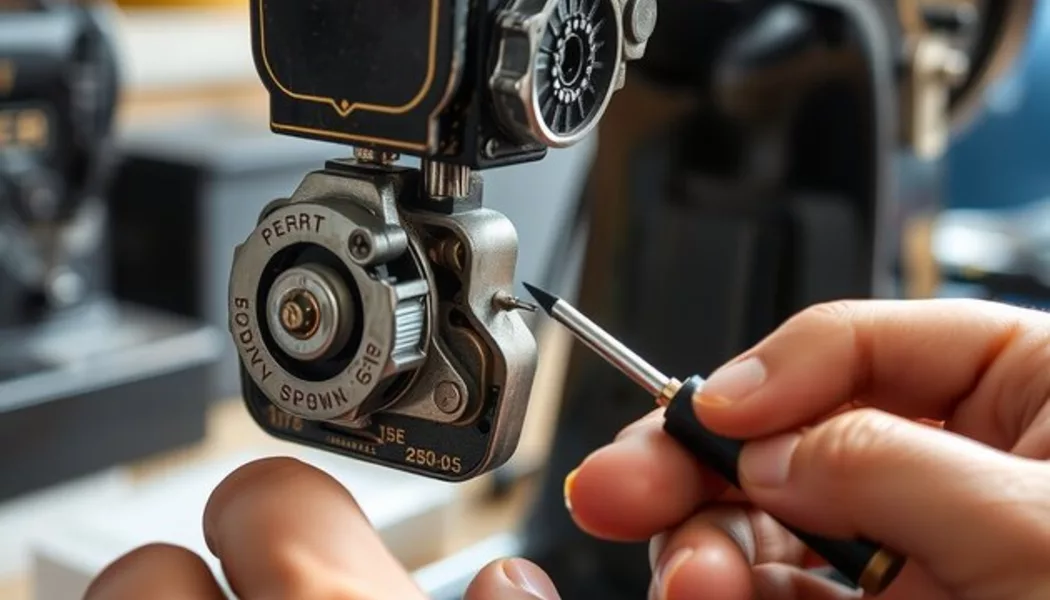
Use a micro-oiler for 9010 and 9501. Dip the tip, let the excess fall away, and apply a single small bubble to each jewel surface. “One drop” for watch purposes means about 0.05–0.1mm in diameter under magnification—roughly the size of a period at the end of this sentence. If oil is migrating across a jewel surface or pooling in the hole, you’ve used too much.
For 8000 on the pivot holes, touch the oiler to the hole opening—capillary action draws oil in naturally. You don’t need to push it in.
Personal lesson: The first time I serviced an ETA 6497, I got overconfident with the 9010 on the pallet stones. I figured if a little was good, a little more would be better. The watch ran for about four hours, then slowed to 30 seconds per day loss. When I opened it back up and looked under the loupe, the oil had migrated off the jewel surfaces and pooled at the base of the pallet fork arbor—exactly where it creates drag instead of reducing it. I had to completely re-degrease the escapement and start the lubrication over. One drop on each pallet stone is the absolute maximum. I now do less than that.
Model-Specific Lubrication Notes
Seiko 7S26: The 7S26 has 21 jewels across the train and escapement. Focus 9010 on the pallet fork jewels (two surfaces per fork, impulse and locking faces) and the escape wheel pivot holes. Use 8000 on the five main gear train pivot holes in the main plate and bridges. Apply D5 to the winding and setting levers. Apply 9501 to the cannon pinion shaft before dial installation.
One common 7S26 mistake: over-oiling the calendar driving wheel. It uses a felt washer for its friction mechanism. Oil the pivot, not the wheel itself—oil on the felt destroys the calendar’s date-jump mechanism.
ETA 6497/6498: The 6497 is a manual-wind movement with a beautiful open 3/4 plate design—you can see most of the gear train without removing bridges. 17 jewels total, which means fewer lubrication points than the 7S26. The large diameter makes it forgiving to work on. Apply 9010 to the pallet fork jewels (same as above), 8000 to the train pivot holes. The 6497 doesn’t have a calendar mechanism, which removes one complication.
Omega 30T2: The cal. 30T2 is a mid-complexity automatic movement with 17 jewels and an automatic winding rotor. The tolerances are tighter than Seiko or ETA movements, and the rotor assembly has its own lubrication requirements (a drop of 8000 on the rotor bearing). If this is your first service, the 30T2 is achievable—but go slowly. If you find anything bent, scored, or out of the ordinary during disassembly, close it back up and take it to a professional. The 30T2 is collectible enough to warrant professional care if something is genuinely wrong.
⚠️ Lubrication Mistakes Callout 1. Overdoing pallet stone oil — single most common cause of a watch slowing down after a DIY service 2. Using 9010 on the mainspring barrel — wrong viscosity; use 8000 instead 3. Skipping old oil removal — new oil on top of oxidized old oil makes drag worse, not better 4. Over-lubricating the cannon pinion — watch stops or the hands slip out of sync 5. Not checking timing before reassembly — you’ll have to open it again
7. Reassembly
Work from your photos. Lay each reference image next to your workspace and tick off each component as it goes back in.
Spring orientation is the most critical step. Before you set the barrel bridge back in place, confirm the mainspring feeds correctly into the barrel arbor. Before the balance wheel goes in, confirm the hairspring is centered over the regulator pins and coils in the correct direction. Getting this wrong means the watch either doesn’t run at all or runs wildly out of rate.
Screw technique: Seat each screw by hand, then snug it with the Bergeon 6899 driver—hand-tight only. Watch screws don’t need torque. Over-tightening strips threads in a brass plate faster than you’d expect, and stripped threads mean a movement replacement, not a screw replacement.
Dial and hand installation: 1. Lower the dial carefully onto the movement, engaging the dial feet with their slots or tightening the dial screws. 2. Install the cannon pinion (if removed) and apply your single drop of 9501 first. 3. Set the hour wheel and the minute wheel back under the dial. 4. Install the hour hand first, pressing straight down onto its post until you feel a slight click. 5. Install the minute hand, aligning it with the 12 o’clock position. 6. Install the second hand (if present) straight down onto the balance staff post.
Pre-closure checklist: – Do all wheels turn freely when you wind the crown gently? – Does the balance wheel swing freely in both directions? – Do the hands clear each other and the dial surface? – Does the date change at midnight position?
Don’t close the caseback until you’ve tested timing.
8. Timing & Testing
A timing machine (or the free Timegrapher app on your phone) picks up the tick-tock sound of the escapement and displays your movement’s beat rate and amplitude. Run the movement for at least an hour before you trust the reading.
Expected results for a freshly serviced movement: – Seiko 7S26: +/- 10–15 seconds per day is normal for this grade. The 7S26 isn’t a precision caliber, so don’t expect COSC standards. – ETA 6497: +/- 5–10 seconds per day is achievable with good lubrication and correct beat. – Omega 30T2: +/- 5 seconds per day is reasonable after a proper service.
If the movement is running more than 20 seconds fast per day, the most likely culprit is the balance hairspring being magnetized or the beat error being off. If it’s running slow, over-lubricated escapement or a mainspring that didn’t fully release tension.
Test in multiple positions. A movement runs differently flat on the bench, crown-up, crown-down, and on the wrist. A swing of 15–20 seconds per day between positions is normal. A swing of 60 seconds suggests something is wrong with the balance staff or jewels.
Wear the watch for 24–36 hours before closing the caseback permanently. Document the baseline rate. If everything looks good, seat the caseback and you’re done.
9. Model-Specific Deep Dives
9.1 Seiko 5 7S26 Service
The 7S26 is the training ground of modern watch repair hobbyists, and for good reason. It’s the most-discussed movement on r/Watches (800,000+ members), it’s cheap enough that a mistake doesn’t ruin you, and service documentation is freely available from Cousins UK.
The SNK371 (field watch case) and the SKX007 (diver) both run the 7S26 with minor variations. The SKX has a screw-down crown that requires an extra gasket check; the SNK uses a simple push-pull crown. Otherwise the service procedure is identical.
Calendar wheel handling: The 7S26’s date mechanism is driven by a toothed date driving wheel that engages the calendar ring. When removing the date wheel assembly, take note of the spring positions—there are three or four small springs that tension the date mechanism, and they will launch themselves across the room if you’re not careful. Photograph them before removal.
Typical improvement after service: A 7S26 that was losing 40 seconds per day before service should run to within +/- 10 seconds per day after. If you’re still at -30 seconds after a clean service, the beat adjustment needs tweaking—a simple half-turn of the beat adjustment device (the small lever on the balance cock) can bring it into spec.
9.2 ETA 6497/6498 Service
The ETA 6497 is what WOSTEP (the Watchmakers of Switzerland Training & Education Program) uses as a teaching movement. That tells you everything about how serviceable it is. The large diameter (36.6mm), open 3/4 plate design, and 17 jewels make it forgiving for beginners. You can actually see the gear train working while the movement runs—useful for diagnosing issues.
The 6498 is the same movement in a slightly larger diameter (36.6mm vs. 36.0mm); internally identical. The Unitas 6498 is the pre-ETA version of the same caliber and services identically.
Unique challenge: the balance wheel on the 6497 is exposed and has no protective cock on three sides. If you set the movement down and the balance wheel snags on something, you’ll bend the hairspring. Always move the 6497 with the balance wheel facing up.
9.3 Omega 30T2 and Hamilton 992
The Omega 30T2 is a significant step up from Seiko/ETA. It’s a mid-sized automatic caliber used in Seamasters from the late 1950s through the early 1970s, and the tolerances are tighter throughout. The rotor winding mechanism adds complexity that doesn’t exist in manual-wind movements.
The Hamilton 992 is a high-grade American pocket watch caliber—beautiful to look at and historically significant, with 21 jewels and a 4/0 (42mm) movement size. Both of these are achievable as a second or third project, but they’re not first-project material.
For either: if you open it and find anything bent, anything broken, or any evidence of a prior amateur service gone wrong, close it up and take it to a certified watchmaker. The BHI (British Horological Institute) maintains a directory of UK watchmakers; the American Watchmakers-Clockmakers Institute (AWCI) covers North America.
10. Common Mistakes & Troubleshooting
The 7 Mistakes Most Beginners Make
- Over-lubrication — by far the most common. Oil migration gums up the escapement. When in doubt, use less.
- Wrong oil for the component — using 9010 on the mainspring or D5 on the escapement. Match oil to function.
- Not removing old oil — fresh oil on top of oxidized oil makes drag worse. Degrease everything first.
- Over-tightening screws — brass plates strip easily. Hand-tight only with a correctly-sized blade.
- Skipping documentation — not photographing spring orientations before removal. This will catch you.
- Ignoring warning signs — continuing disassembly when parts won’t move freely. Forcing things breaks things.
- Rushing — watch repair rewards patience. Give yourself the full 4–6 hours and take breaks.
Troubleshooting Decision Trees
“My watch runs slow after cleaning” 1. Check timing amplitude — if below 200°, the mainspring isn’t delivering full power (under-wound, or barrel issue) 2. Inspect escapement under loupe — is there oil migration? 3. Check beat error — if over 1.0ms, beat adjust the balance 4. Confirm mainspring is fully wound and mainspring hook is engaged 5. If still slow, the mainspring itself may be fatigued and need replacement
“My watch stopped completely” 1. Is it wound? (Obvious, but check it.) 2. Does the balance wheel swing freely? If not, something is fouling it—a stray spring, bent hairspring, or debris. 3. Is the escapement disengaged? Check that the pallet fork is engaging the escape wheel teeth. 4. Is the cannon pinion slipping? If hands are moving but the watch has no power reserve, the cannon pinion is loose.
When to call a professional: – Any bent pivot or staff – Cracked or chipped jewel – Any watch worth more than $500–$1,000 – Movements with complications (chronograph, perpetual calendar, moon phase)
11. Next Steps & Building Your Knowledge
I’m not a certified watchmaker—I want to be clear about that. Everything in this guide comes from hands-on experience with hobbyist-grade movements, WOSTEP training materials I’ve studied independently, and years of mistakes and corrections. For anything complicated or collectible, a certified watchmaker is the right call. The BHI and AWCI both maintain searchable directories of qualified professionals.
That said, for common everyday movements like the Seiko 7S26, ETA 6497, and ETA 2824, the DIY approach is well-established in the hobbyist community. The r/Watches and WatchUSeek forums both have active service threads where experienced hobbyists share results, troubleshoot problems, and review technique.
Your maintenance schedule going forward: A daily-wear mechanical watch needs a full service every 3–5 years. An occasional-wear piece, every 5–10 years. A watch in storage should have its mainspring wound monthly to keep the oil from settling and drying on the lower parts of the movement.
Your next project: If the Seiko 7S26 went well, try an ETA 2824-2—an automatic movement with a date that’s used in hundreds of Swiss brands. Step after that? The ETA Valjoux 7750, a column-wheel chronograph, which is genuinely one of the most satisfying movements to service once you’ve built the foundational skills.
Conclusion
Three watches, one weekend, $50 in supplies. That was the deal. The Seiko runs at +4 seconds per day. The ETA 6497 runs like a different watch—smooth, consistent, 42-hour power reserve instead of the 28 it was limping along at before. The Omega 30T2 went to a professional, which was the right call.
The mechanical watch repair basics aren’t magic. They’re patience, the right tools, the right oil in the right place, and the discipline to stop when something doesn’t look right.
Key takeaways: – Match your watch to your skill level: Seiko 7S26 or ETA 6497 for first projects – Tier your tool investment: $50 gets you started, $200 gets you serious – Lubrication is the job: Moebius 9010 on the escapement, 8000 on the train, D5 on keyless works, 9501 on the cannon pinion – Over-oiling causes more damage than under-oiling – Test timing before you close the caseback – Know when to hand it to a professional
The Bergeon 7767 and the Bergeon 6899 screwdrivers have been on my bench for three years now. They’ve paid for themselves many times over.
Drop your model in the comments—I’m happy to answer questions specific to your movement.
How to Repair a Watch: Where to Start as a Beginner
The first question most beginners ask isn’t “what tools do I need?” — it’s “where do I even start?” Knowing how to repair a watch means knowing how to diagnose it first. Opening a watch without understanding what’s wrong is how you create new problems.
Before you touch a screwdriver, work through this diagnostic sequence:
Step 1: Identify Watch Type (Quartz vs Mechanical)
This sounds obvious, but it changes everything about how to repair watches. A quartz watch with a dead battery stops completely and restarts immediately after battery replacement — no disassembly required beyond the caseback. A mechanical watch that’s stopped needs winding first (if manual) or vigorous movement (if automatic). If a fully wound mechanical watch won’t tick, then you have an internal problem worth investigating. If a quartz watch keeps stopping even with a new battery, you’re likely looking at a faulty coil or damaged circuit board — professional territory for most beginners.
Step 2: Check the Crown
Pull the crown out to its winding position and try to wind the watch. You should feel resistance building with each turn. No resistance at all = possible broken mainspring. A crown that wobbles or doesn’t engage = crown tube damage or stem problem. Crowns that spin freely in one direction but grip in the other are working normally — that’s the click mechanism preventing overwinding.
Step 3: Basic Visual Inspection
Hold the watch caseback under bright light and tilt it. Through a display caseback, you can often see dried lubricant (dark brown gummy residue on train wheels), a loose part rattling around, or a visibly broken component. Even without seeing inside, check whether the seconds hand is moving at all, whether it’s jumping erratically, or whether the hands are touching each other and causing drag.
How to repair a watch efficiently starts at diagnosis, not disassembly. Experienced watchmakers spend 5–10 minutes observing a watch before they open it — and that observation often tells them exactly where the problem is. Beginners who skip this step often open a watch, find nothing obviously wrong, and reassemble a watch that has the same problem they started with.
Essential Tools for Beginner Watch Repair
You don’t need a full workshop to start learning how to repair watches. A basic toolkit covers 80% of beginner repairs:
- Bergeon 6899 screwdriver set — hardened blades that don’t strip screw slots. Don’t substitute eyeglass screwdrivers.
- Case opener — either a Jaxa wrench (for screw casebacks) or a snap-back tool (for push-on backs). Wrong tools scratch case tubes permanently.
- Bergeon 7767 hand remover — nylon-tipped for safe hand removal without dial damage
- 10x watchmaker’s loupe — clip-on types are more comfortable for extended work than handheld
- Rodico blue clay — lifts small parts and cleans jewel surfaces without scratching
- Movement holder — a plastic ring that holds the movement stable during work
- Parts tray with lid — watch movements contain springs and screws smaller than a grain of rice; a covered tray is mandatory
Total cost for a functional beginner toolkit: $50–$100. The Bergeon tools are the highest-quality items in watchmaking and available on Amazon and WatchGarage — buy them once and they last for decades.
FAQ
How often should I service my mechanical watch?
For a daily-wear piece, plan on a full service every 3–5 years. Watch oils degrade over time—even if the watch is running fine, old lubricant becomes gummy and actually increases friction rather than reducing it. For occasional-wear or stored watches, 5–10 years is a reasonable interval, though you should still wind the mainspring monthly during storage. Watches like the Seiko 7S26 are forgiving—they’ll run with dried-out oil for years, just not accurately.
What tools do I need to clean a mechanical watch at home?
The minimum viable kit for a Seiko 7S26 service: Bergeon 6899 screwdriver set, Bergeon 7767 hand remover, Rodico blue clay, non-magnetic tweezers (two types), peg wood sticks, a 10x loupe, and a glass jar of light naphtha for degreasing. Budget around $50 for these basics. Add a Moebius oil set and micro-oiler for another $60–$80. You don’t need an ultrasonic cleaner to do a proper service—chemical degreasing in naphtha works just as well for beginner movements.
Should I clean my watch myself or take it to a watchmaker?
Use this simple decision matrix: if the watch is worth less than $500 and the movement is a common caliber (Seiko 7S26, ETA 6497, ETA 2824), DIY is a reasonable approach. If it’s a heirloom piece, a rare movement, or anything worth more than $1,000–$2,000, the professional service cost is cheap insurance. If you open the movement and find physical damage—bent pivots, cracked jewels, broken springs—stop immediately and take it to a pro. DIY servicing expands your toolkit; it doesn’t replace a trained watchmaker.
What oil should I use to lubricate a watch movement?
Use Moebius lubricants and match them to function. Moebius 9010 (extra-thin) on the escapement jewels only. Moebius 8000 (medium-thin) on the mainspring barrel and gear train pivot holes. Moebius D5 (light grease) on the keyless works—winding stem and date mechanism. Moebius 9501 (thin synthetic) on the cannon pinion. Using the wrong oil in the wrong place—particularly using a heavier oil on the escapement—causes drag and dramatically slows or stops the watch.
How do I know if my watch needs servicing?
The clearest signs: losing more than 15 seconds per day (or gaining more than 10) when it used to be accurate; shorter power reserve than usual; a gritty or rough feel when winding; watch stops randomly even when wound; visible dark or sticky residue in the movement if you can peer through the caseback. If your watch is more than 5 years old and has never been serviced, it probably needs one—even if it seems to be running fine. Oil degrades on a timeline regardless of whether the watch is worn.
Can I repair a mechanical watch at home without training?
Yes — with the right tools and genuine patience, basic mechanical watch repair is accessible without formal training. Cleaning, oiling, regulating beat rate, and replacing a mainspring are all learnable skills with excellent documentation available online. The learning curve is real: watch movements work in three dimensions at microscopic scale, and mistakes have consequences. Start with a low-value watch you can afford to experiment on — a $20 thrift-store Seiko is the ideal first practice piece. Build skills on inexpensive movements before touching anything valuable.
5 thoughts on “I Fixed 3 Broken Watches in One Weekend—Here’s My Complete Method”
Comments are closed.