
How to Replace a Watch Mainspring: DIY Guide for Beginners
You wind your vintage Omega Seamaster and it snaps — not dramatically, but suddenly the rotor just spins freely with no resistance. Or the watch was running fine yesterday and today it won’t tick at all, no matter how much you wind it. Nine times out of ten, you’ve just met a broken mainspring. It’s the most common catastrophic failure in any mechanical watch, and the good news is it’s also one of the most fixable.
Replacing a watch mainspring means removing the old barrel, extracting the broken spring, fitting a new one, and reinstalling everything correctly. A replacement mainspring costs $5–$25 depending on the movement. A watchmaker charges $80–$200 for the same job. With a basic set of watch tools and a couple of hours, this is a DIY repair that’s within reach for careful beginners — and this guide walks you through every step.
Signs of a Broken Watch Mainspring
The mainspring is the coiled steel ribbon stored inside the barrel — when you wind the crown, you’re tightening this spring, and as it slowly uncoils, it drives every gear in the movement. A broken mainspring is the single most common reason a vintage watch stops completely and doesn’t respond to winding at all.
Here’s how to tell if that’s what you’re dealing with, versus normal wear or other faults:
Watch Stops Suddenly (No Warning)
A healthy mainspring runs down gradually over its power reserve — 40 hours, 72 hours, or whatever the manufacturer spec is. A broken mainspring stops the watch instantly, with no gradual slowdown. One moment it’s running, the next it’s dead. If you’re used to the watch’s behavior and it just stopped without warning, that’s your first clue.
Crown Winds With No Resistance (or Too-Easy Winding)
When you wind a mechanical watch, you should feel increasing resistance as the spring tightens. A broken mainspring means the crown turns with almost no resistance at all — it just spins freely, because there’s nothing to tension. Some broken mainsprings still feel slightly resistant (if they’ve broken near one end and the other portion is still coiled), but the watch won’t run.
The “Slipping” Mainspring Symptom
Some older mainsprings don’t break cleanly — they lose their “set” (the spring tension that keeps the outer coil hooked in the barrel). This produces a distinct symptom: the watch runs fine initially after winding, then stops prematurely, and when you wind it again, you feel winding resistance but the watch still won’t run. The spring is slipping in the barrel rather than transferring energy. You might also notice the watch suddenly gaining or losing dramatic amounts of time — 5–10 minutes per day rather than the expected seconds. A slipping mainspring is effectively a broken mainspring for practical purposes: it needs replacement.
Other conditions can mimic a broken mainspring — a seized barrel arbor, dried-out lubricants causing a frozen gear train, or a broken jewel. But if you’re seeing the combination of sudden stoppage, no winding resistance, and a watch that’s more than 20 years old with no service history, a broken mainspring is where to start your investigation.
Watch Mainspring Replacement Cost: DIY vs Professional
The watch mainspring replacement cost varies widely depending on whether you do it yourself or hire a watchmaker — and the gap is significant enough to make DIY worth considering for any watch under $500 in value.
DIY Mainspring Replacement Cost
The mainspring itself is cheap. For a common movement like the Seiko 7S26, ETA 2824, or Unitas 6497, replacement mainsprings run $5–$15. Rarer or more specialized movements (some vintage Omega or Longines calibers) might push to $20–$25. Sourcing options:
- Cousins UK (cousinsuk.com) — the best-stocked watch parts supplier in Europe. Ships internationally. Search by caliber number and they’ll give you the exact spring spec you need.
- Jules Borel (julesborel.com) — US-based supplier with excellent vintage coverage. Their mainspring database goes back to mid-century Swiss calibers.
- eBay — good for NOS (new old stock) mainsprings for rare vintage calibers. Buy from sellers with watchmaking history, and check that the spring dimensions match your barrel specifications.
Beyond the spring itself, you need basic watch tools: a case opener ($10–$20), a mainspring winder ($15–$30 — the most critical specialized tool for this job), precision tweezers, and rodico cleaning clay. If you already have these from previous watch work, the watch mainspring replacement cost drops to just the spring price.
Professional Watchmaker Cost
A local watchmaker will typically charge $80–$200 for a mainspring replacement, depending on the movement complexity and what else they find when the watch is open. Most will recommend a full service at the same time — cleaning, oiling the train wheels, checking jewels — which pushes the total to $150–$350. That’s the right call for a watch worth $1,000+. For a $100 vintage Seiko or an inherited dress watch, the DIY math makes more sense. The professional route is also appropriate if the barrel cap or arbor is damaged alongside the spring, since that requires machining skills beyond beginner scope.
Tools You’ll Need
Before you open the case, get these in front of you:
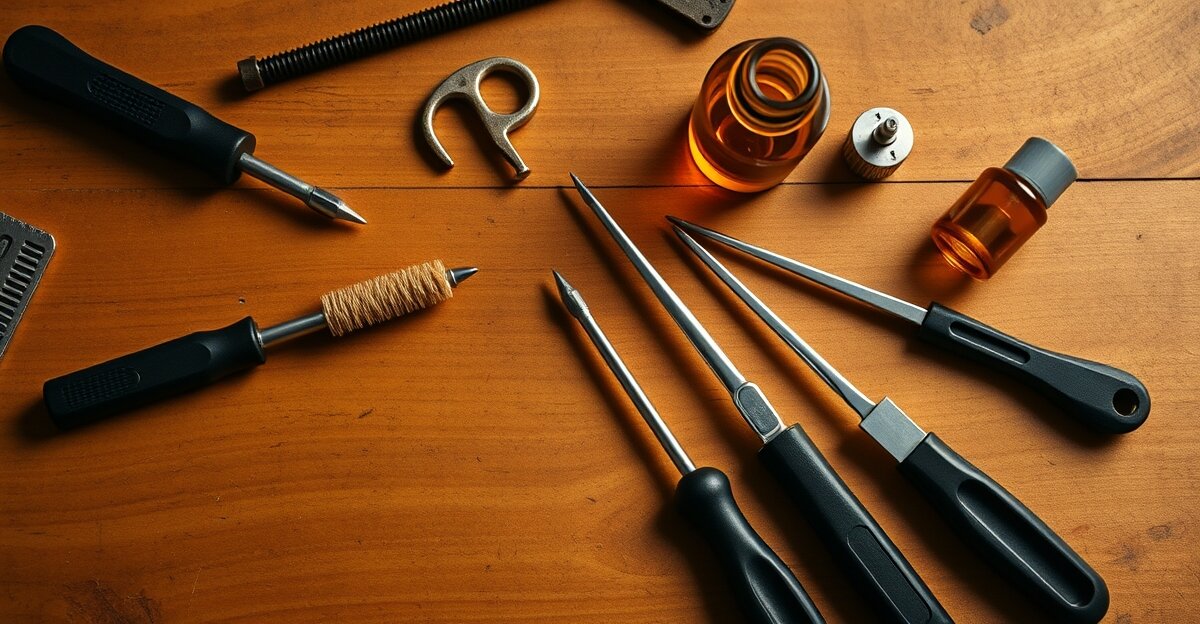
- Bergeon 6899 screwdriver set — hardened blades that won’t strip watch screw slots. Non-negotiable.
- Mainspring winder set — a set of cylindrical drums in different diameters. You coil the new spring into the winder, then push it into the barrel as a unit. Working without one risks kinking the spring and ruining it.
- Bergeon 7767 hand remover — nylon-tipped jaws that pull hands without scratching the dial.
- Rodico blue clay — for lifting small parts without contaminating pivot holes.
- 10x loupe — minimum magnification for working on movement parts.
- Case knife or Jaxa wrench — for opening screw-back or snap-back cases.
- Parts tray with lid — a watch mainspring repair generates more tiny parts than you’d expect.
Step-by-Step: Replacing a Watch Mainspring
Step 1: Identify Your Movement and Source the Right Spring
Open the caseback and photograph the movement. Find the caliber number — it’s usually printed or engraved on the movement, often on the rotor or a bridge. On Seiko movements, it’s on the rotor (7S26, NH35, etc.). On Swiss movements, look on the main plate or barrel bridge.
Search Cousins UK or Jules Borel for your caliber number and “mainspring.” You’ll need to match three dimensions: width (height of the spring ribbon), thickness, and length. The correct spring will be listed by caliber — don’t guess on dimensions. A spring that’s too wide won’t fit the barrel; too narrow and it won’t produce enough torque.
Step 2: Remove the Movement
Open the caseback. Locate the crown-release lever (on most modern watches, pressing a small button or lever at the 3 o’clock position allows the crown to pull free). Pull the crown to the first click position, press the lever, and the crown slides out — the movement can now be pushed out from the front with a wooden stick through the lug hole, or out the caseback on watches where the movement lifts from the back.
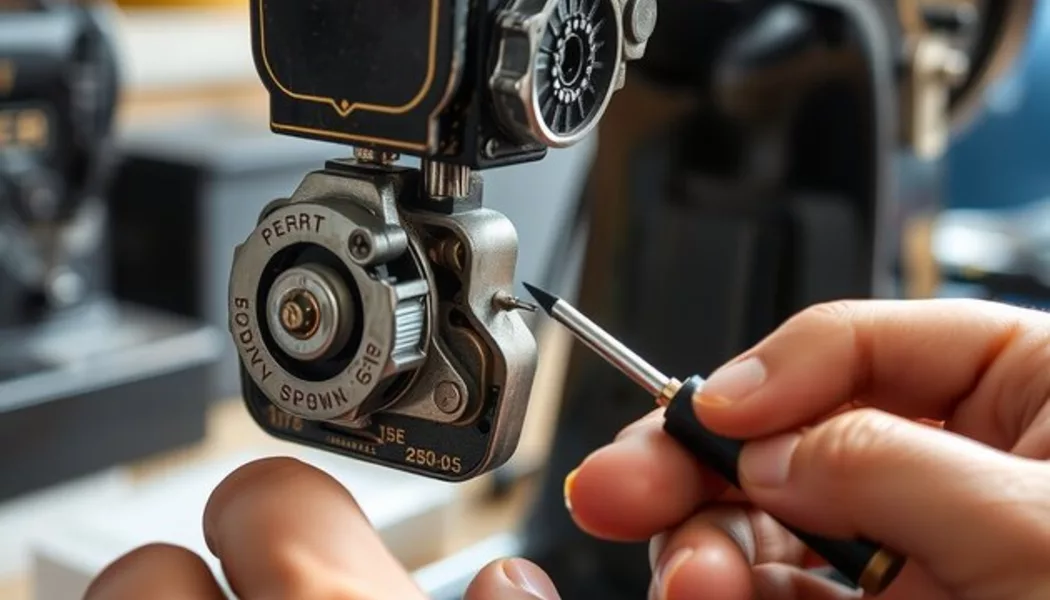
Place the movement in a movement holder (a small plastic ring that holds it stable without pressure on the dial). Remove hands using the Bergeon 7767 hand remover — position the jaws under the hour and minute hands, spread gently and pull straight up. Mark the dial position for reassembly.
Step 3: Locate and Remove the Barrel
The mainspring lives inside the barrel — a circular drum with a lid (the barrel cap). On most movements, the barrel is under the barrel bridge, which is a large bridge plate held by 2–3 screws on one side of the movement. Remove the bridge screws, lift the bridge carefully, and the barrel should lift free.
Important: before removing any bridge, ensure the mainspring is fully unwound. If the watch was running, the spring has tension. Pull the crown to winding position and let it spin backwards against its detent until all tension releases. A barrel with a wound spring under the bridge will shoot across the room when the last screw releases.
Step 4: Open the Barrel and Remove the Broken Spring
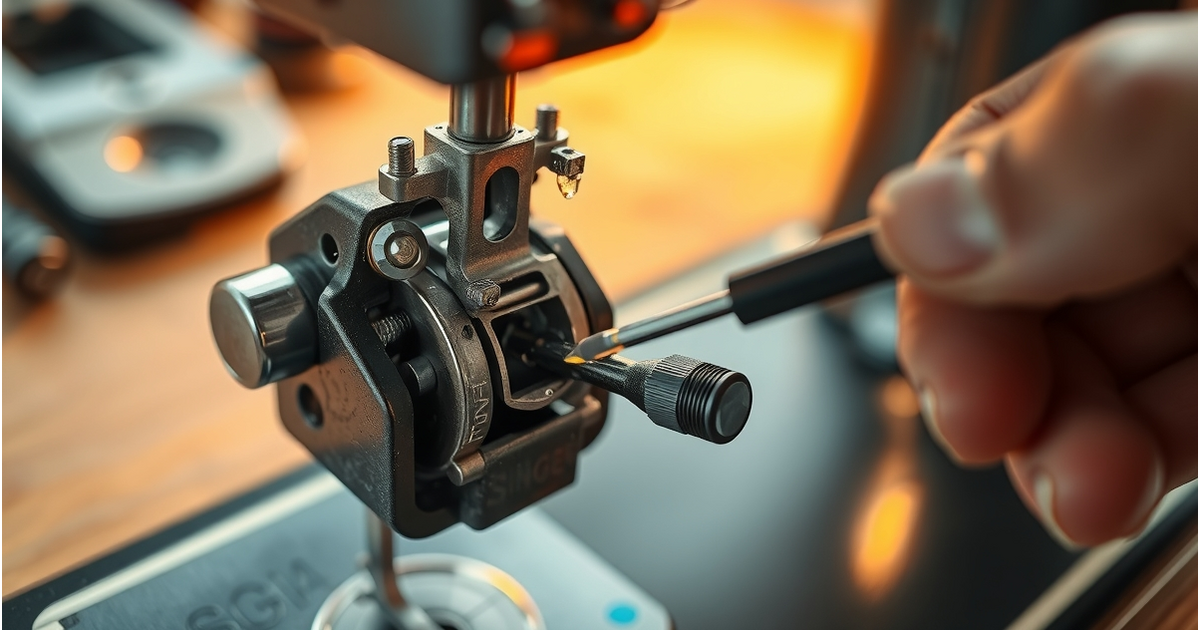
The barrel cap pops off with a small flathead screwdriver inserted into the seam around the edge. Work around the circumference gently — don’t pry at one point or you’ll distort the cap. Once open, the barrel arbor (the central spindle) and the coiled spring are visible.
Lift the arbor out. The mainspring should lift out in a coil — if it’s broken, you may find two or more pieces. Note how the spring hooks to the arbor at the inner end (usually a hook or post) and how the outer end clips to the barrel wall. Take a photo before removing anything. Clean the barrel interior with peg wood and naphtha.
Step 5: Wind the New Spring Into the Barrel
This is where the mainspring winder earns its place. Choose a winder drum that’s slightly smaller than your barrel interior. Place the new spring in the winder — outer end goes in first, and you coil it by rotating the drum. Wind it down to a diameter smaller than the barrel interior.
Apply a small amount of mainspring grease (Moebius 8200 is standard) to both faces of the spring — not too much, just a thin film. Then position the winder over the barrel and press the spring down into it in one firm, smooth push. The spring expands to fill the barrel.
Hook the inner end to the arbor post, drop the arbor back in, and snap the cap back on. Test that the arbor turns freely and builds resistance as you rotate it — that means the spring is seated correctly and generating torque.
Step 6: Reinstall and Test
Return the barrel to its seat in the movement, replace the bridge, and torque the screws to finger-tight. Replace hands (watch the canon pinion alignment carefully — the minute hand and hour hand need to be perpendicular to each other at 12 o’clock). Wind the crown slowly and feel for proper resistance building. Put the movement back in the case, replace the crown, and let it run for 24 hours on your timing machine or phone app before declaring victory.
Common Mistakes (And How to Avoid Them)
- Installing the spring without a winder: Hand-coiling a mainspring and dropping it in is almost impossible without kinking it. A kinked spring breaks within days.
- Using the wrong spring dimensions: Width is critical — a spring even 0.5mm too wide will jam in the barrel and stop the watch immediately.
- Over-greasing: Excess mainspring grease migrates into the gear train and clogs jewels. A thin film is sufficient.
- Not photographing before disassembly: The position of the click spring and setting lever is hard to remember without a reference photo.
- Forgetting to release spring tension before removing the barrel bridge: The barrel will launch across your workspace.
When to Call a Watchmaker
Some situations call for professional hands, even if you’re comfortable with the basics:
- The barrel arbor is bent, cracked, or the barrel walls are scored — these need machining
- The movement has 20+ jewels and multiple complications (chronograph, calendar) — more to disassemble and more to break
- You find additional damage when the watch is open: bent pivots, broken jewels, damaged click springs
- The watch is worth more than $500 — professional service cost is justified insurance
For a standard 3-hand automatic or manual-wind watch on a common movement, though, mainspring replacement is genuinely beginner-friendly — arguably the easiest internal repair you can do on a mechanical watch. The parts are inexpensive, the process is logical, and the result (a watch that actually runs) is immediately satisfying.
Frequently Asked Questions
How do I know if my mainspring is broken or just unwound?
Wind the crown fully — if the watch still won’t run and the crown offered almost no resistance during winding, the mainspring is almost certainly broken or slipping. A watch that’s simply run down will restart after winding and will show normal tension while you wind it. An unwound spring builds resistance; a broken mainspring doesn’t.
Can I replace a mainspring without a mainspring winder?
Technically yes, but practically it’s very difficult. Without a winder, you’re hand-coiling the spring tight enough to fit in the barrel — which usually means some lateral kinking, which creates a stress point that breaks quickly. A decent mainspring winder set costs $15–$30 and is reusable across dozens of movements. It’s worth the investment if you plan to do more than one repair.
What causes a mainspring to break?
Age and metal fatigue are the primary causes — a mainspring in a vintage watch may have been wound and released tens of thousands of times over 40–60 years. Lack of lubrication accelerates wear: as mainspring grease dries out, friction increases at the barrel wall and the spring eventually cracks. Some older mainsprings (pre-1960s) were made from carbon steel that corrodes; modern stainless alloy springs last longer. Improper storage (leaving a watch fully wound for years) also fatigues the spring over time.
How long does a replacement mainspring last?
A properly installed mainspring with correct lubrication should last 20–40 years in normal use. Modern alloy springs (Nivaflex and similar) are substantially more durable than the carbon steel springs used in pre-1970s watches. The biggest factor is whether the watch receives periodic servicing — a movement that gets lubricated every 5–7 years will be much easier on its mainspring than one that runs dry for decades.
Is watch mainspring replacement cost worth it on a cheap watch?
At $5–$15 for the spring and a couple of hours of your time, DIY watch mainspring replacement cost is almost always worth it on any watch with sentimental value. Even for a $30 thrift-store find, the repair cost is minimal compared to replacement. The only case where it doesn’t make economic sense is paying a watchmaker $150+ for a mainspring service on a watch worth less than that — in that scenario, DIY or replacement both beat professional service.
How do I know if my watch mainspring is broken?
A broken mainspring stops the watch instantly with no gradual slowdown, and winding the crown produces no resistance. If the watch ran fine yesterday and today it won’t run despite full winding, your mainspring is almost certainly broken. A functioning mainspring should feel increasing resistance as you wind it.
Can I replace a watch mainspring at home?
Yes. Mainspring replacement is one of the most accessible DIY watch repairs. You’ll need a mainspring winder ($15–$30), basic watch tools, and a replacement spring ($5–$25). The process takes 1–2 hours for most common movements. The hardest part is identifying the correct spring dimensions for your specific watch caliber.
How much does mainspring replacement cost?
A DIY mainspring replacement costs $5–$25 for the spring itself plus tools (which are reusable). A professional watchmaker charges $80–$200 for the same service, often bundled with a full service ($150–$350 total). For watches under $500 in value, the DIY cost savings are substantial.
3 thoughts on “How to Replace a Watch Mainspring: DIY Guide for Beginners”
Comments are closed.